

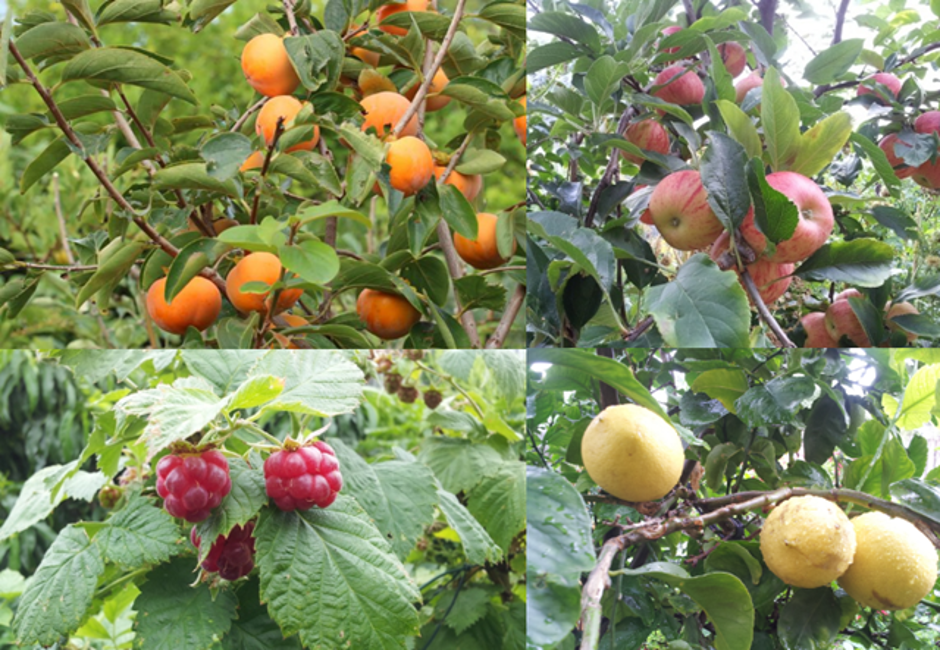
Welcome to All Nations Food Forest – Melbourne’s First Council-Built Food Forest Project, and possibly the first in Australia!
Food forests are Nature’s way of growing food, the most sustainable and productive system known, that requires minimal effort to maintain by taking advantage of ecological processes that have evolved and been perfected over hundreds of millions of years.
In the simplest terms, food forests are constructed to resemble natural temperate forests, but are filled with the useful and edible trees and plants that we have chosen. They are an ecological garden design and differ from any other food production system because they are true living ecosystems!
Real forests don’t need any work, they self-maintain — no pesticides, herbicides, weeding, crop rotation, mowing or digging. Food forests don’t need any of this either! If we look beyond our modernised culture to Nature’s most advanced, life-abundant plant-growing systems, it’s clear that working with Nature is the wisest and most productive path to sustainable food production.Less work, more food, all natural! Why would you do anything else?
So we decided to build one in public space!
This is the first in a series of ongoing articles which will document the progress of this project as a case study in urban agriculture, which can hopefully serve as a template for other community groups or local government bodies who are looking to initiate similar projects which aim to put food production in public space .
First, we look briefly at the projects that served as forerunners to this one, and then we will delve into how this project was initiated.
In the articles that follow, we will look at the practical design and construction details, costs, negotiations with council, and management strategies. We’ll also report on the garden’s long-term progress to assess how successfully a food forest model in open public space performs over time, especially in the wake of a changing climate.
The Background and History
The All Nations Food Forest grew out of the success of the Northcote Library Food Garden (NLFG), a communal garden where all gardeners share the whole site all the produce. NLFG incorporates some elements of food forest gardening, and the small scale food forest garden that I designed there was inspired by the success of my own demonstration backyard food forest, so there’s a bit of history to explain!
I’ve been a public advocate for food forest gardening for a long time, and I built Melbourne’s first demonstration backyard food forest in 2008, made possible by pioneering a way to scale food forests down to urban environments through backyard orchard culture. I designed and built a proof-of-concept demonstration gardenthat produced the equivalent of over 14 tonnes per acre in its fourth year, all from a sustainable, organic, water-efficient garden that uses natural pest controls; I document this on my website, Deep Green Permaculture. This demonstration backyard food forest garden won the Darebin Sustainability award for the house and garden category in 2013. It featured prominently in the Australian Open Garden Scheme in early 2014, where we had the most visitors of all the produce gardens in Victoria, with 480 people visiting in a single weekend.
Technically, I pioneered a small-scale intensive food production technology, proved how much food it was possible to produce in limited space, showed the world what one person can achieve on their own, and received official recognition. Having achieved what I initially set out to do, the question inevitably arose: what next?
There are lots of issues needing attention in the world, important things that make a difference. With the issues of climate change, peak oil and food security looming on the horizon, the call to action couldn’t be clearer. The majority of people live in cities, where the least food is grown, and that’s a problem in the making if there ever was. Through my work it became clear that any efforts in sustainable food production needed to include a critical element – community. The most resilient model of food production doesn’t rely only on rural agriculture to feed city dwellers, because every little patch of soil growing food adds up, no matter where it is. With peri-urban agriculture growing food in market gardens at the fringes of cities and urban agriculture producing food within cities to supplement what we grow in rural areas, we eliminate weak links and single points of failure in our food production systems.
To get food forests into public space, building one in a community garden was a good place to start, and that’s where Northcote Library Food Garden provided the ideal opportunity.
Before All Nations Food Forest – The Northcote Library Food Garden
The Northcote Library Food Garden was developed by the City of Darebin as part of its sustainable food program. A community consultation process began in late April 2011 and the first community planting day was held three months later in July.
Here is an early description from the garden’s own web site:
A committed group of residents manages the gardenfor the benefit of the community. It is a productive growing space, as well as a place for gathering, for education and for demonstrating sustainable gardening practices. The Northcote Library Food Garden joins an exciting array of sustainability and gardening projects and networks operating in the inner-Northern suburbs of Melbourne.
The garden features three large communal growing bedsplanted with annual and perennial edible plants, along with a variety of companion and beneficial plants. In addition, a Food Forest is taking shape in another bed. The Food Forest follows the principles of other forests, with a canopy, mid-layer and ground covers, however, the Food Forest’s layers are made up of fruit trees, and edible shrubs, berries and herbs. Children love stepping along the forest pathway through the fruit trees, searching for berries to munch on!
The garden has been established as a communal plot to maximise growing space. It functions using a communal planting and harvest model. A monthly planting, harvest, and working bee day takes place on the second Sunday of each month, with gardeners committing an additional 1-2 hours a week of their available time. On community days, the available harvest is shared with those present, and gardeners are welcome to harvest a reasonable share of anythingready to pick at any other time. The garden is chemical-free and operates using broad permaculture and organic principles.
A native plants and bush food area began at the southern end of the garden in Winter 2012, and it will be expanded over time.
Gardening workshops are held from time to time as part of broad educational aims for the garden. The Northcote Library Food Garden is open for members of the public to enjoy, and it is hoped that it will become a place where the community can meet, children can explore, and people can learn about growing their own food.
The site started as a vacant block of land with grass and native beds lining the fences. The lawn area was dug out and two large raised beds were constructed, which were filled with a fine grey dusty sand that was meant to be ‘soil’. The surrounding areas were covered with landscaping toppings which made the garden more manageable, and a water tank with pump was installed. They cleared parts of the native beds to create more garden space. The council consulted with the public and oversaw the formation of an interim management committee of community members who took ownership of the garden.
The committee went on to create a few more groups:
- technical advisors who provide technical expertise, initiate projects, run workshops and are tasked with increasing the skills within the gardening group and the community in general
- gardeners who work in the garden and take produce home
- friends of the garden. which consist of individuals and other community groups who are affiliated with the garden
One of the members of the committee, Charlie Si, who specialises in networking, connecting groups and people, formed the advisory group, which consists of four members:
- Angelo Eliades, as the permaculture food forest and perennial plant specialist
- John Pinniger, the co-founder of Permaculture Victoria and Heritage Fruit Society, as the orchard and heritage fruit specialist
- Damien Curtin, caretaker of Herring Island, as the Australian native plant specialist
- Seila Hierk, of Child’s Play Permaculture, is an agriculturalist, teacher and permaculture designer who specialises in intensive annual food production systems, school gardens and Asian vegetable gardening.
On handover, there was no budget, therefore no plants, we were given a site plan (see below) and we took it from there. Charlie contacted many other community groups and gardens, who kindly donated enough plants and fruit trees to nearly fill the whole community garden on the first community planting day. I designed a mini food forest, a multisensory children’s food forest, which was to become the bridging project to All Nations Food Forest a year later.

The NLFG Children’s Food Forest
The space allocated for a small food forest was very small, situated in an existing native plant garden bed between a shed and a giant eucalyptus tree, backed by a shady fence. Luckily the soil was decent, far netter then the imported soil in the garden beds.The idea was to create a garden area that was accessible to children where they could browse and forage for fruit and berries. I created the design and produced the design rationale, as detailed below.
The Northcote Library Food Garden (NLFG) showcases various styles of gardens and gardening techniques – traditional style organic vegetable gardens, an indigenous/native Australian bush food area, an ornamental flower garden and a food forest garden.
Northcote Library Food Garden – Children’s Food Forest Design Rationale
The food forest was designed with children in mind. The aim was to design a natural garden space which children could explore and interact with, engaging all their senses. In such a space, they could experience the sights, smells and textures of a ‘sensory garden’, and also harvest tasty fruits and berries.
Introduction
The children’s food forest is also an educational space for adults, as it is also a proper working demonstration food forest gardening system. As such, it is a sustainable, small scale, intensive food production system which emulates a natural woodland forest. Like all food forest gardens, It is comprised mainly of perennial plants, displays multiple ‘layers’ of plants from ground covers and small herbs through to shrubs, fruit trees and climbers. It is a productive, biodiverse living ecosystem that utilises natural pest and weed controls, such as companion plants to repel pests and attract beneficial insects. It is one of the most sustainable gardening models because it works with nature, and lets nature do all the hard work – no digging, spraying or weeding!
Designing a food garden for children requires more planning than a regular garden used by adults as there are more considerations to take into account. The Children’s Food Forest garden design accommodates the needs and requirements of children, as detailed below.
- Design
- Natural Spaces
- Multiple functions
- Scale
- Seasonal Interest
- Natural Boundaries
- Safety, Health & Education
NLFG Children’s Food Forest Construction
With only donated plants, we began construction of the garden. This is what the children’s food forest looked like on the planting day in June 2011.
Maintenance

It’s hard to see what the design is supposed to look like, as only the major foundation plants are shown in the design schematic, all the companion plants are not marked in the design simply because in the garden they occupy all available space in great numbers in the garden to leave no bare soil, if they were included in the diagram it would render it unreadable.Proper measurements are denoted in metres to give a sense of human proportion, as opposed to ratios such as 1:1000 which are meaningless and relative to the size of the paper they are printed on.


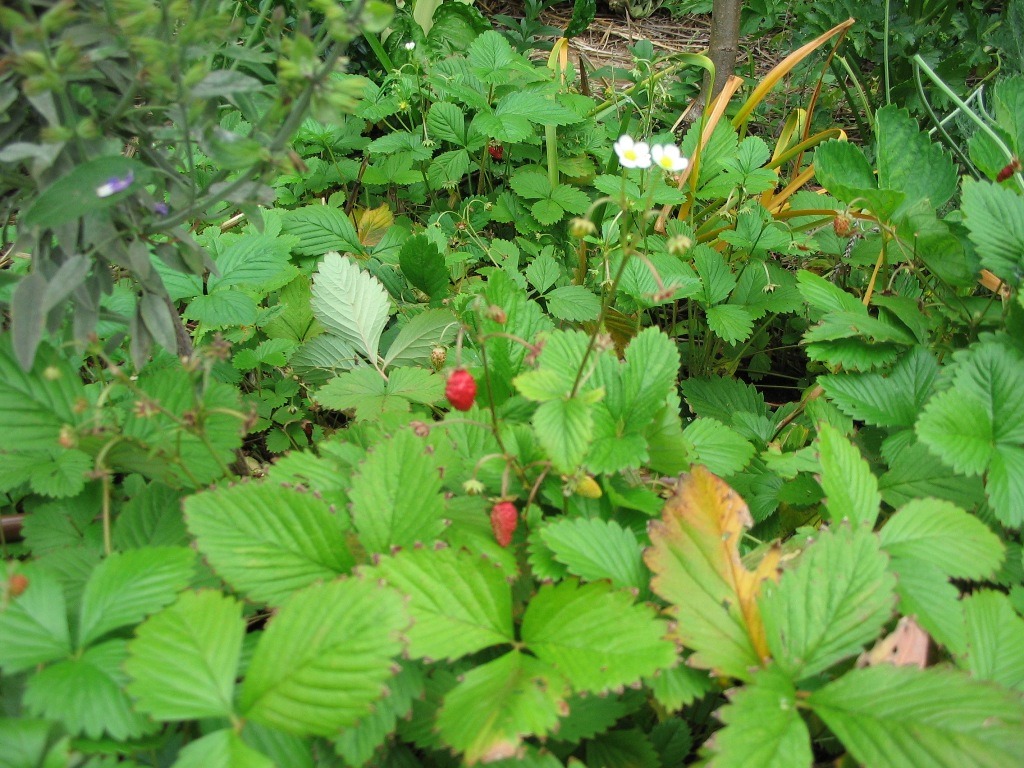
These photos were all taken two to three years ago, and the garden has grown considerably since then and has gone through further changes as decided upon by the gardeners who work on the communal plot.
The Birth of the All Nations Food Forest Concept
The success of NLFG inspired the advisory group to attempt something bigger and more significant in terms of community benefit.
All Nations Park was an obvious site choice as it is close nearby and only a short walk away. This park has a colourful past, It started off as a clay hole for the Northcote Brickworks, then became a council tip, which was then capped and converted into parklands. Being on top of a landfill site would make it the technically most complicated choice, with the most stringent and restrictive conditions in terms of what we can and can’t do there, but as a template for other public space gardens, if it can be done here, then it can be done anywhere else with much less trouble.
When we researched the council history and spoke to people who were formerly in government, we discovered that our chosen site had an even more colourful past than we first imagined. All Nations Park was meant to be designed with a theme in mind, representing the various ethnicities in Darebin, hence ‘all nations’, which it more or less failed to live up to its name because of the major political drama that transpired before the project was completed.
in 1997, the Kennett State Government ran an inquiry into dissatisfaction with the performance of the first Darebin Council, and the Elsum Report they commissioned found that factional differences led to poor governance on the Council. As a result, the State government sacked the entire Council and appointed a commissioner, until an elected council was reinstated about eighteen months later, in 1998. It appears that during the caretaker period orders were given to finish the project as soon as possible. This explained why the design feature that is supposed to represent all the nations is a tokenistic partially-failing olive grove planted uncreatively in a grid in poor soil that barely holds the roots of many of the trees. There’s also a slowly failing circular planting of ornamental Nashi pears which even the possums won’t eat, which fall to the ground. It was left at that; the rest is predominantly eucalypts and some unspectacular shrubbery.
We, as a group, looked at the site and figured it could be enhanced significantly to better represent “All Nations”, and to draw more people tothe park, to build community, and to provide food. So Charlie, John and I thought up an event that we could run under the Sustainable Living Festival, where we could bring together representatives from the council’s Sustainability department and members of the general public, and walk through the park, and share ideas of how we could improve it with a food forest.
In coming up with the theme of the event, we looked at what we were proposing, a community food forest, and Charlie had the realisation that it was also about creating community, bringing people together, growing food for food security, and looking to forests as a strategy of increasing tree canopy coverage as part of the City of Darebin Urban Forest Strategy where the council in 2013 promised to double tree canopy area in 15 years. So the theme became Community + Food + Forest.
Sustainable Living Festival 2012 – Community Food Forest- Saturday 25th February 2012
Posted on February 21, 2012 by Angelo (admin)
Community + Food + Forest
With a push within the Darebin Environmental Community for a Food Forest to complement the Northcote Library Food Garden, interested locals and others are invited to join a discussion and site visit to plan for an approach to Council.
Collaborating Groups: Heritage Fruit Society, Transition Darebin, Permaculture Inner North, Friends of Herring Island, Deep Green Permaculture
This is what we advertised, and we got a huge crowd. The response was great from both the council and the public; we had sown the seeds of an exciting new project!

After a successful event, we advertised to invite members of the general public to join the upcoming project. Valuing community ourselves, we contacted the Dunstan Food Forest group in Moreland and the Ashburton Food Forest group, both of which were already well ahead of us. They were working on slightly different projects; theirs weren’t built by the council. The former group was proposing to resurrect an abandoned food forest from way back, which had become an orchard, and the latter group was in the process of acquiring a new site in public space, which they would construct themselves. As a community, we visited each other’s sites and shared.. ideas, which was tremendous. As a historical note, both these groups have completed their projects successfully, as ours is still in progress as I write this piece.
Our next big step was to put together a formal proposal for the council, outlining the benefits of a food forest in public space. More of this in the next article, which you can read here: All Nations Food Forest – Proposal and Pre-Design Considerations
Please feel free to comment or ask questions about any aspect of this project. Thanks.