

Overview
- Name: Broccoli
- Botanical Name: Brassica oleracea var. italica
- Plant Family: Brassicaceae (Mustard Family)
- Native to: Originally cultivated in the Mediterranean region, now grown worldwide.
Description
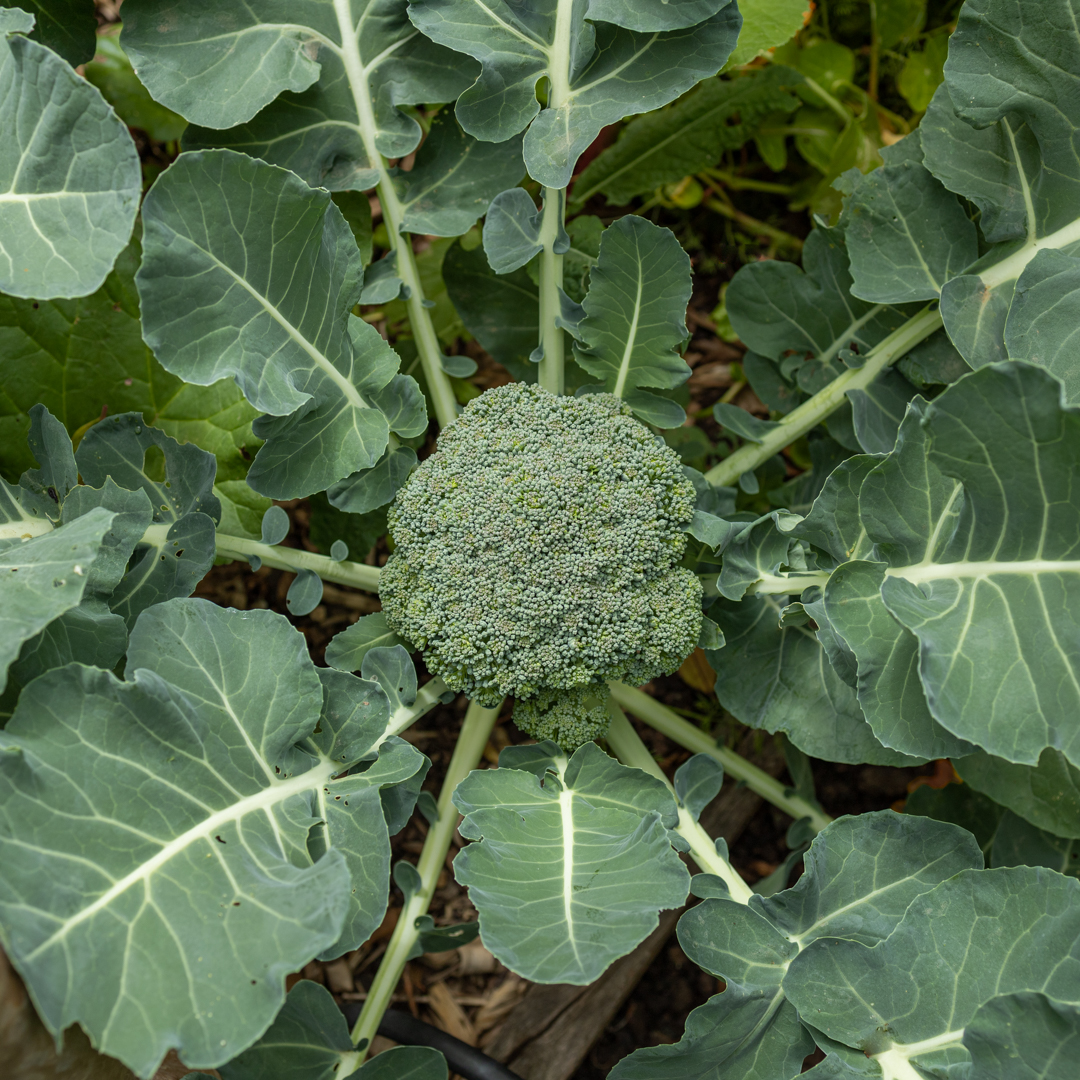
Broccoli is an annual plant cultivated for its edible flower heads and stalks. It grows a thick, fibrous stalk topped with a dense cluster of green flower buds known as the “head.” The plant can reach a height of up to 1 m (3.3 ft). The leaves are large, waxy, and bluish-green, forming a loose rosette around the stalk. If left to mature, the flower buds will bloom into small, yellow flowers.
Broccoli is a herbaceous plant that can be annual or biennial, depending on the variety, which can grow up to 1 meter (3.3 ft) tall. It is grown for its edible flower heads which are used as a vegetable. The plant has a thick green stalk that supports broad, leathery, oblong leaves ranging from gray-blue to green in colour. It produces large, branching green edible flower heads that eventually bloom, opening into numerous small white or yellow flowers.
Interesting Facts
- Broccoli is a descendant of a wild cabbage native to Europe and has been cultivated for over 2,000 years.
- It is rich in vitamins K, C, and A, as well as fiber and various antioxidants.
- Broccoli was first introduced to the United States by Italian immigrants in the early 20th century.
- There are several varieties of broccoli, including calabrese broccoli, sprouting broccoli, and broccoli rabe.
- The word “broccoli” comes from the Italian word “broccolo,” which means “cabbage sprout.”
- Broccoli is considered an edible flower. The part of the broccoli that we commonly eat, the green tree-like structures, are actually clusters of the immature flower buds (florets) of the plant.
What is the Difference Between Broccolini, Broccoletti and Sprouting Broccoli
Broccolini, broccoletti, and sprouting broccoli are all terms that refer to types of vegetables closely related to broccoli but each with distinct characteristics:
- Broccolini is a hybrid vegetable, also known as “baby broccoli,” which is a cross between broccoli and Chinese broccoli (gai lan). It has long, slender stalks topped with small florets that resemble those of broccoli but are much smaller and more delicate. Broccolini has a sweeter and milder taste compared to regular broccoli. It was developed in Japan and is valued for its tender stems and mild flavor, making it a popular choice in cooking for steaming, sautéing, or roasting.
- Broccoletti is often confused with broccolini, but is actually more similar to what is known in the U.S. as “broccoli rabe” or “rapini”. Unlike broccolini, broccoletti is not a hybrid but rather a close relative of the turnip. It has more leafy greens around its buds, and the buds themselves are much smaller than those of typical broccoli. Broccoletti has a slightly bitter taste and is commonly used in Italian cuisine, especially in pasta dishes and sautéed with garlic and olive oil.
- Sprouting Broccoli: Also known as “calabrese” in some countries, sprouting broccoli is closer to wild cabbage than the common broccoli. It features numerous small heads (florets) and many thin stalks, which can be green, white, or purple depending on the variety. It has a more robust, earthy flavor compared to regular broccoli and is highly nutritious. Sprouting broccoli is versatile in the kitchen, suitable for steaming, stir-frying, or as an addition to salads.
All these vegetables are part of the Brassicaceae family and share nutritional benefits, including high fiber, vitamin C, and cancer-fighting properties. Each offers unique flavors and textures to a variety of dishes.
Basic Growing Information
- Sun Requirements: Full sun
- Water Requirements: Medium
- Soil Types and Properties: Moist, fertile, well-draining soil, rich in organic matter
- Soil pH: 6.0-7.0
- Pot Size for Container Growing: Minimum of 30 cm (12 in) in diameter and depth
Planting
Broccoli is a cool-season crop that grows best at soil temperatures between 10-25°C (50-77°F). It thrives in cool climates, and can be grown both in spring and autumn (fall). In areas with very hot summers, they should be planted during autumn.
- Best Time to Plant
- Climates with freezing winters: Spring
- Climates with milder winters: Autumn
Note: Check gardening calendars for the best planting times in your location.
- Spacing: 45-60 cm (18-24 in) between plants, and 60 cm (24 in) between rows
- Seed Sowing Method: Sow seeds directly into ground, or sow seeds into seed tray and then transplant seedlings
- Seed Sowing Depth: 1 cm (½ in) deep
- Time to Harvest: 10-16 weeks when planted from seed
- Mature Height/Spread: 45-90 cm (18-36 in) tall, 45-60 cm (18-24 in) spread
- Grown From: Seeds
Care and Maintenance
- Watering Tips: Keep soil consistently moist prevent them from bolting (going to seed), but not waterlogged. Avoid wetting the flower heads as they develop.
- Fertilisation: Apply balanced fertilizer every 3-4 weeks. Broccoli has a high nitrogen requirement due to the reduced activity of soil microbes and soil nitrogen availability in late autumn and winter. It is important to incorporate organic matter such as manure and compost into the soil prior to planting to guarantee a sufficient nutrient supply for the broccoli during its growing season.
- Pruning: Remove yellowing leaves and side shoots for optimal growth.
- Support: Not necessary unless growing in windy conditions.
- Weeding: Broccoli has a very shallow root system so cultivating (digging) the soil around the plants to remove weeds should be avoided. Mulching around the plants helps control weeds and also conserves soil moisture and reduces the soil temperature.
Growing Difficulty
- Moderate Difficulty
Growing Tips
- Provide consistent moisture and protect from extreme heat.
- Mulch around plants to retain soil moisture and suppress weeds.
Companion Plants
- Good companion plants include: Beets, onions, radishes, celery, and spinach
- Avoid planting near: Strawberries, tomatoes, and climbing beans
Common Pests and Diseases
- Pests: Common pests include aphids, cabbage worms, and flea beetles.
- Prevention and control methods: Use row covers (fine insect netting), handpick pests, and apply insecticidal soap as needed.
- Diseases: Common diseases include clubroot, downy mildew, and powdery mildew.
- Prevention and control methods: Practice crop rotation, avoid overhead watering to avoid creating conditions favourable to fungal diseases, and remove affected plants promptly.
Harvesting
- Harvest Time: Broccoli is ready to harvest when the flower buds in the main head are firm and packed tightly, before the buds open, and the head is compact and typically 15-20 cm (6-8 inches) in diameter.
- Harvesting Tips: Harvest by cutting the stalk of the main head at a 45° angle, about 13–20 cm (5–8 in) below the head to encourage the production of new side shoot, which will continue to produce after the first harvest.
Propagation
- Produce New Plants From: Seeds
Culinary Uses
- Broccoli can be steamed, boiled, stir-fried, roasted, used in soups or eaten raw in salads. It pairs well with garlic, lemon, cheese, and nuts.
In conclusion, broccoli is a versatile, nutritious vegetable that rewards growers with a bountiful harvest when grown under the right conditions. With consistent care and attention, this cool-season crop can provide delicious, healthy produce from a relatively small garden space.
Feel free to share your carrot growing tips in the comments below, and include your climate/hardiness zone if it’s helpful.