

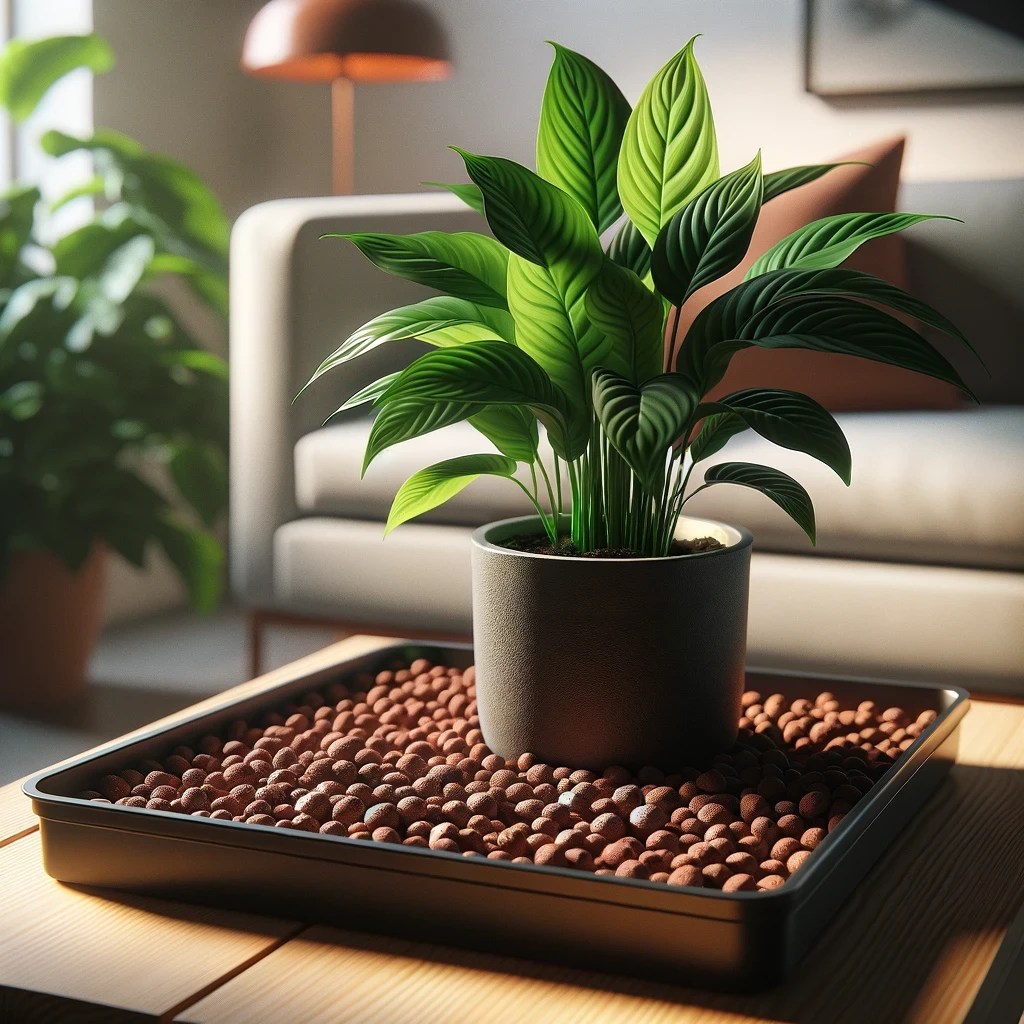
Indoor plants add a vibrant touch to any living space, but creating the right environment for them to flourish can be a challenge, especially when it comes to maintaining the proper humidity levels. This is where humidity trays come into play.
What is a Plant Humidity Tray?
A humidity tray is a simple yet ingenious device for maintaining the moisture level around houseplants, particularly those requiring a more humid environment than the typical indoor setting provides. It’s essentially a shallow tray filled with water, and pebbles or stones, that allows for the gradual evaporation of water, creating a localised humid microclimate.
How Does a Humidity Tray Work?
The science behind a humidity tray is straightforward. Water added to the tray evaporates slowly, increasing the moisture level in the air immediately surrounding the plant. This process mimics the plant’s natural humid tropical habitat.
The stones or pebbles in the tray serve a dual purpose, they:
- hold the plant pot above the water, preventing the roots from becoming waterlogged
- increase the surface area for evaporation

A Step-by-Step Guide to Constructing a Humidity Tray

- Select a Tray: Choose a shallow tray that is wider than the plant’s pot. A tray with a depth of about an 3-5cm (1-2 in) is ideal. Larger sized plastic pot saucers also work well.
- Add Pebbles or Stones: Fill the tray with a single layer of clean pebbles, gravel, or scoria stones, leaving some space at the top to prevent water from overflowing.
- Pour Water: Add water to the tray until it’s just below the top of the stones. The bottom of the plant pot should not touch the water.
- Position Your Plant: Place your plant pot on top of the stones. Ensure that it’s stable and centered.
- Refill As Needed: Check the water level regularly and add more to maintain a constant supply for evaporation.
The advantage of using scoria lies in its porous nature; these volcanic stones have numerous air spaces, making them significantly lighter and enabling the humidity tray to retain more water. Similarly, the clay balls utilised in hydroponics are highly porous and share comparable properties, but they are significantly smaller.
When to Use a Humidity Tray
A humidity tray is particularly useful:
- During winter, when indoor heating systems can reduce indoor humidity to levels too low for tropical plants.
- In arid climates where the dry ambient air lacks sufficient moisture.
- For plants in terrariums or enclosed displays where maintaining high humidity is essential.
Plants That Benefit from a Humidity Tray

Plants from tropical or subtropical climates will appreciate the boost in humidity. These include:
- Ferns: Such as the Boston fern or maidenhair fern, which thrive in moist environments.
- Orchids: Especially varieties like Phalaenopsis, and Vanilla Bean Orchids which prefer high humidity.
- Peace Lilies: These plants enjoy humid conditions and can benefit significantly from the extra moisture.
- Calatheas: Known for their need for high humidity, a tray can help prevent their leaves from curling.
- Aroids: Like the Philodendron or Monstera, which are native to tropical jungles.
Care and Maintenance of a Plant Humidity Tray
To ensure that the humidity tray remains effective and hygienic, clean it monthly to prevent mould and bacteria growth. Tip out the water and run water over the stones, this also helps clear algae and mineral deposits that can build up in the tray and stones.
To reduce mineral buildup if your tap water is hard, fill the tray with rainwater, distilled or filtered water. Also watch for signs of over-humidification, such as leaf rot or fungal growth, and make any necessary adjustments as needed.
What if Plant Roots Grow into the Humidity Tray?
To prevent plant roots from growing out of their pots and into the humidity tray, you can place a small plastic saucer under the pot. However, if the extension of roots into the humidity tray doesn’t bother you, it’s not a cause for concern. The plants are merely reaching for the extra nutrient-rich water and water-soluble fertiliser that drains from the pots into the tray with each watering.
In summary, a humidity tray is an easy, low-tech way to provide the moisture in the surrounding air that some houseplants crave. With proper maintenance, a humidity tray can be the perfect complement to your plant care routine that keeps your indoor garden thriving.