

This post is part-contributed and may contain affiliate links
A garden’s natural beauty undoubtedly lies in its soft landscaping—the living elements of the garden’s design such as trees, plants, flowers, and greenery that create a vibrant, thriving space. While these organic features are essential, adding functional hard landscaping can take your garden to the next level without sacrificing its natural charm.
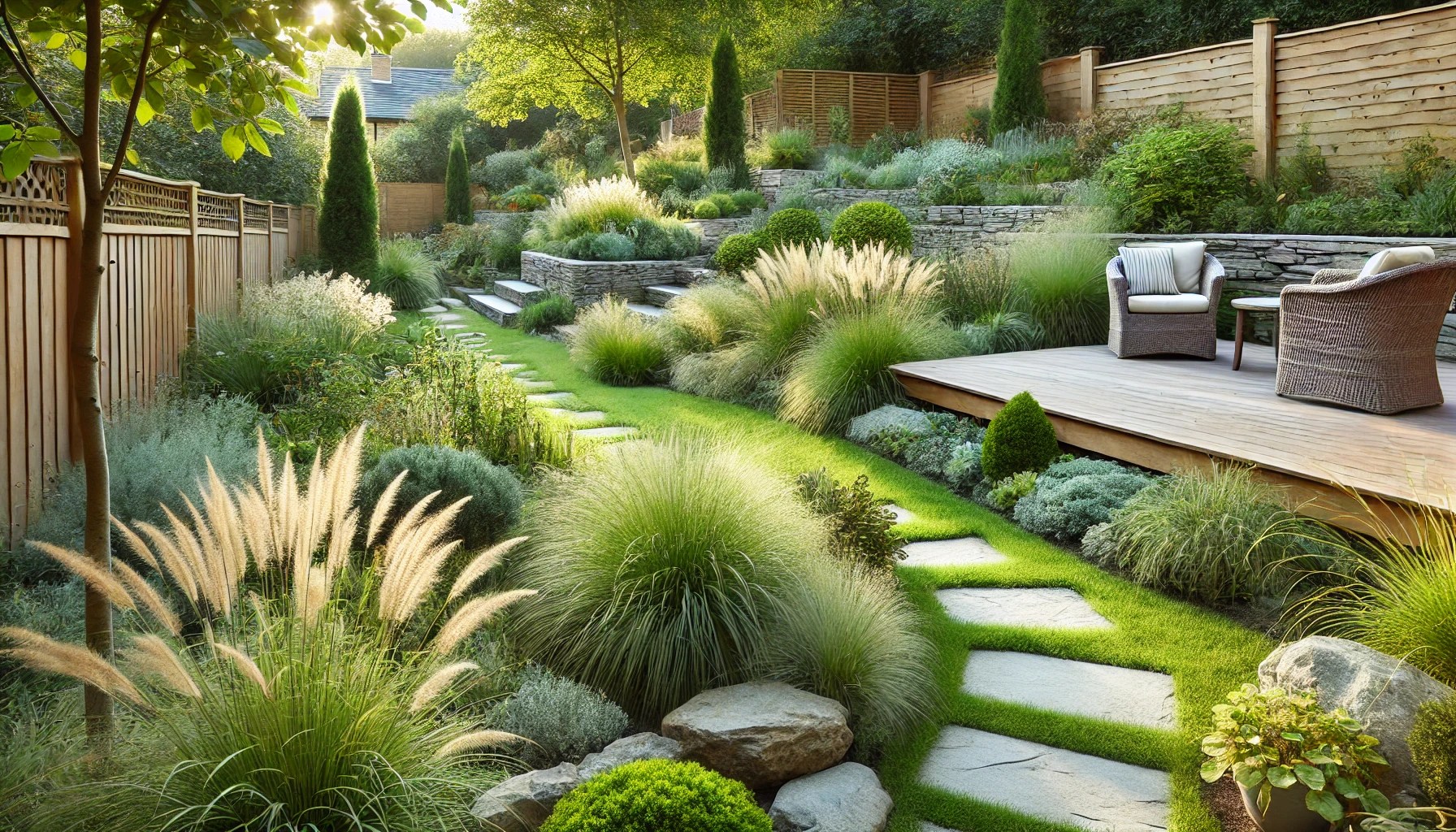
For those unfamiliar with the term, hard landscaping includes non-living elements of a garden, such as pathways, decking, and retaining walls. When thoughtfully integrated into a natural garden design, these landscaping features complement the organic aspects of your garden, providing structure, improving access, reducing maintenance and helping manage resources such as water. They can be used to create defined walkways, cozy seating areas, also enhance the garden’s overall design. This thoughtful blend of soft and hard landscaping brings both beauty and practicality to your garden, making it a more enjoyable and functional space.
With that in mind, here are some practical and stylish landscaping features to consider.
1. Paving: Creating Functional and Attractive Surfaces
Let’s start with paving, or paving stones, which are flat, usually rectangular or square pieces of material designed for creating durable outdoor surfaces. They are used in landscaping and construction to build pathways, patios, driveways, and other hardscape areas in gardens and outdoor spaces. Pavers come in various materials, including concrete, natural stone, and brick, each offering different aesthetic (color, texture, style) and functional properties.
As a design element, paving can be used to define spaces in a garden or backyard. Pathways guide movement through the garden, linking one area to another, such as a vegetable patch, herb garden, flower beds, and seating areas.
The Uses of Paving in the Garden
The benefits of using paving in the garden include:
Improved Function: A paved patio offers a stable surface for outdoor furniture, making it an ideal spot for dining, entertaining, or simply enjoying the outdoors. Well-designed paved paths help guide foot traffic, preventing wear on lawns and plant beds, and saving plants from being trampled. They also provide stable, clean paths through a garden, helping avoid muddy feet after rainy weather and minimizing the amount of mud and dirt tracked into the home.
Low Maintenance: Unlike lawns that require regular mowing or gravel paths that need frequent raking, paved surfaces are low-maintenance and can be easily swept clean. A paved path through a lawn area reduces the amount of lawn that needs mowing, effectively replacing a high-maintenance surface with a low-maintenance one, giving you more time to enjoy your outdoor haven.
Here is an example from DD’s Landscaping showing how paving can be used to create access through a lawn area, and reduce the area of lawn that needs to be mowed, saving time and effort.

Paved surfaces are also more sustainable that concreted areas, as paving is permeable, allowing rainwater to seep into the ground below rather than being directed into stormwater drains and carried offsite.
Visual Appeal: Aesthetically, paving can enhance the visual appeal of a garden and create a distinct look and feel. With a wide variety of materials, colors, and textures available, there are many options to complement a home’s style and the overall design of your garden. For example, a natural stone path meandering through wildflowers can create a rustic feel, while sleek, geometric concrete pavers on a patio perfect for alfresco dining might suit a modern garden.
Paving Materials
Select the right paving material to reflect the style of the garden.
- Natural Stone: For timeless elegance, materials like sandstone or slate offer unique patterns and hues that age gracefully.
- Brick: Ideal for a cottage garden feel, bricks provide warmth and charm, especially when softened by moss or creeping thyme between the joints.
- Modern Materials: If sleek and sophisticated is the vibe being sought, consider the various styles of concrete pavers for a contemporary edge.
Why You Might Need Paving
As a quick summary, consider paving if you want to:
- Reduce Lawn Maintenance: Paved areas require less care than grass.
- Increase Usable Space: Create areas for seating or entertaining.
- Improve Accessibility: Provide clear, stable paths for ease of movement.
2. Decking: Extending Your Living Space Outdoors
Everyone is familiar with decking, an elevated flat platform for various outdoor activities, typically made from wood or composite boards, and usually situated at the rear of a house.
As a design element, decking isn’t just an outdoor platform; it’s an extension of the home, a bridge between the comfortable indoor living spaces and the natural beauty of the garden. It creates a smooth transition between indoor and outdoor spaces, especially when built at the same level as the home’s entrance. Decking provides a versatile outdoor space that can be adapted for a multitude of uses—be it a lively barbecue with friends or a tranquil spot for yoga at sunrise.
The Advantages of an Outdoor Deck
The benefits of an outdoor deck include:
Usable Space Over Uneven Terrain: Decks can be built over sloped or uneven ground, creating usable outdoor space without extensive landscaping. They are also generally quicker to install compared to other hardscape features like patios.
Elevated Views: While pavers can create living spaces immersed within the garden, decking provides an elevated space, offering stunning views of the surroundings if the property allows.
Increased Versatility: Decks are ideal for setting up furniture for dining, lounging, or hosting gatherings. Being above the ground, decks dry faster after a rainstorm, unlike soggy lawns. A deck can be much more than just a flat platform. With options like built-in seating, planters for growing plants around the deck, or even an overhead pergola with flowering or productive plants, decks can be customized to fit any function or style.
Aesthetic Appeal: Wooden decks add warmth through the natural color of timber and the texture of wood grain, blending seamlessly with the organic elements of the garden to enhance its visual appeal.
Why You Might Need Decking
As a quick summary, consider decking if you want to:
- Maximize Outdoor Living: Create a functional space for relaxation and entertainment.
- Overcome Uneven Terrain: Level out slopes without extensive groundworks.
- Add Property Value: High-quality decking can increase the appeal and value of your home.
3. Retaining Walls: Transforming Sloped Areas
Retaining walls are structures designed to hold back soil, prevent erosion, and manage water runoff on sloped terrain. When used in gardens, they create flat, level, usable areas and add architectural interest.
As a design element, retaining walls enable creative landscaping on challenging terrains, allowing for features like waterfalls, garden beds, and seating areas that wouldn’t be feasible on a slope. They enhance the overall aesthetic by adding texture, layers, and structure to the garden. Constructed from materials such as stone, brick, or timber, retaining walls become attractive features themselves, helping to define and organize different zones within your outdoor space, whether it’s separating a play area from a vegetable patch or creating a focal point around a seating area.
In terms of design, retaining walls:
- Provide Dramatic Planting Opportunities: Retaining walls offer opportunities for dramatic planting by showcasing different plant species at varying heights. This layering effect creates a garden that appears fuller and more dynamic, with plants spilling over the edges of walls or arranged in tiers. By selecting plants suited to different microclimates (e.g., sun-loving plants on the top tier and shade-tolerant species at the base), you can maximize space and create lush, textured compositions that evolve with the seasons.
- Add Structure and Definition: Retaining walls clearly define and separate various garden areas, creating distinct zones for purposes like planting beds, seating areas, or pathways. By introducing terraces or multi-level spaces, they contrast with the softer, organic forms of plants and greenery, adding visual interest and creating a more organized and intentional landscape design.
- Create Height and Depth: In flat gardens, retaining walls introduce changes in elevation, adding height and depth that enhance visual appeal. Raised garden beds draw the eye upward, adding a dynamic element to the garden’s design. In sloped gardens, retaining walls manage elevation changes in a way that is both functional and aesthetically pleasing, transforming steep, unusable land into terraced levels that invite exploration.
The Uses of Retaining Walls in Gardens
There are several reasons for constructing retaining walls in the garden, including:
- Structural Support: Stabilize the soil on sloped areas to prevent soil movement and erosion.
- Increased Usable Space: Transform steep hillsides into a series of flat, usable spaces perfect for planting, seating, or recreation through terracing.
- Enhanced Drainage: Use retaining walls to create raised beds, making gardening easier on the back, providing excellent drainage for plants, and preventing water accumulation.
- Visual Appeal: Add depth and dimension to flat landscapes by using walls built with stone, timber, or gabions (wire cages filled with rocks) to introduce texture and serve as a focal point or backdrop for other garden elements.
Materials for Retaining Walls
Select the right material and style for the retaining wall to reflect the theme of the garden.
- Natural Stone Walls: Ideal for a rustic or traditional look, stones can be dry-stacked or mortared, offering both strength and beauty.
- Rendered Walls: For a modern garden, smooth, rendered walls painted in bold or neutral tones create a clean backdrop for plants.
- Timber Sleepers: Wooden walls bring warmth and are perfect for informal, country-style gardens.
Why You Might Need Retaining Walls
As a quick summary, consider retaining walls if you:
- Have Sloped Land: Make your garden more functional and accessible.
- Experience Soil Erosion: Protect your property and plants from erosion damage.
- Want to Add Interest: Use walls to create visual focal points and define spaces.
In conclusion, incorporating practical landscaping features like paving, decking, and retaining walls can transform your garden into a harmonious blend of beauty and function. These elements not only enhance the aesthetic appeal but also offer practical benefits such as improved access, increased usable space, and reduced maintenance. By thoughtfully integrating these features, you can create a visually stunning garden tailored to your needs, making every corner of your outdoor space more enjoyable and functional.