


Some plants can be propagated very easily by placing stem cuttings in water until they develop roots. It is one of the simplest forms of vegetative propagation and requires little more than a healthy cutting, a clean container, water and a suitable place to keep the cutting while roots develop.
This method works especially well with plants that readily produce adventitious roots, which are roots that develop from stems or other plant tissues rather than from the existing root system. Many soft-stemmed herbs, vegetables and moisture-loving plants have this ability and can begin producing roots from submerged stem nodes within days or weeks.
A node is the part of a stem where a leaf and its bud join the stem. The length of stem between two nodes is called an internode. Nodes are important when taking cuttings because they are active growth points. A node contains a bud with meristematic tissue, made up of cells that divide to produce new growth. The new roots do not normally grow from the bud itself, however. They develop from living cells in the stem around the node, particularly cells associated with the plant’s vascular tissues.
When a cutting is removed from the parent plant, these cells can be stimulated to begin dividing. The plant hormone auxin, which is produced mainly in young shoots and leaves and moves down the stem, promotes this change. The dividing cells form a root primordium, which is simply the beginning of a new root.
The root primordium develops a growing root tip and connects internally with the stem’s xylem and phloem, the tissues that transport water, minerals and sugars through the plant. The new root then grows outward through the stem and becomes visible.

This is why cuttings are commonly taken just below a node and why at least one node is kept below the waterline. In many easy-to-root plants, the node is a particularly favourable site for new roots to develop. Some plants can also produce adventitious roots from the internodes or from the cut end of the stem, so roots are not restricted to nodes.
Water propagation isn’t suitable for all plants. Some species root quickly and reliably in water, whereas others are more susceptible to rotting and are better propagated in a moist, well-aerated propagation medium. The method is therefore most useful when it is matched to plants that naturally respond favorably to it.
Choosing Suitable Cuttings for Water Propagation
Healthy, actively growing shoots make the best cuttings. Avoid stems that are diseased, damaged, heavily pest-infested, or already declining. Non-flowering shoots are generally preferable because flowers and developing fruit consume water and stored energy that the cutting needs for survival and root development.
Young or moderately mature growth usually roots more readily than old, heavily woody stems. For many soft-stemmed plants, a cutting about 8–15 cm (3–6 in) long is sufficient. There is usually no advantage in taking a very long cutting because, until roots have formed, the stem has no functioning root system to replace water lost through its leaves.
The cutting should include at least two nodes. One or more nodes can remain above the water to support leaves and new shoots, while at least one lower node can be submerged to provide a favourable site for root development.
How to Root Plant Cuttings in Water
The basic method is simple, but preparing the cutting properly greatly improves the chance of success.
- Take a healthy stem cutting. Select a vigorous, non-flowering shoot containing several healthy leaves and at least two nodes.
- Cut the stem just below a node. Use clean, sharp secateurs, scissors or a knife to make a smooth angled cut immediately below a node. The angled cut exposes a larger cut surface, which can improve water uptake while the cutting has no roots of its own. Positioning the cut just below a node is important for a different reason: in many plants, the living tissues around the node readily produce adventitious roots.
- Remove the lower leaves. Strip the leaves from the lower part of the cutting, leaving several healthy leaves at the top. Any leaves that would otherwise sit below the waterline must be removed because submerged foliage quickly decays. Remove flowers, flower buds and developing fruit as well.

- Place the cutting in clean water. Fill a clean glass, jar or other small container with enough water to cover the lower part of the stem. For many cuttings, submerging the bottom 2.5–5 cm (1–2 in), including at least one node, is sufficient. Keep all leaves above the waterline.
- Place the cutting in bright, indirect light. Keep the container in a warm, sheltered position with plenty of light but away from intense direct sun and drying winds. Until roots develop, the cutting cannot replace water lost through its leaves efficiently.
- Keep the water clean. Check the container every few days and replace the water approximately once or twice a week, or sooner if it becomes cloudy, discoloured or develops an odour. If a film develops inside the container, wash it before refilling it.
- Watch for root development. Depending on the plant and growing conditions, roots may begin appearing within several days or may take several weeks. Healthy new roots are normally pale cream or white and firm. If the submerged stem becomes dark, soft or slimy, it is rotting rather than rooting.
- Pot up the cutting once several healthy roots have developed. There is no need to wait until the container is filled with roots. Once several roots approximately 2.5 cm (1 in) or longer have formed, the cutting can usually be transferred into a small pot containing good-quality potting mix.
- Keep the newly potted plant protected while it establishes. Water thoroughly after potting so the potting mix settles around the roots, then keep the plant in bright indirect light and maintain even moisture while the roots adapt to growing in potting mix. Once new shoot growth begins, gradually move the plant into the normal growing conditions required by that species.
Technical Note: Why Make the Basal Cut at an Angle?
Before a cutting develops roots, it has no root system to replace the water being lost through its leaves. Water must initially enter through the freshly cut base of the stem, where the xylem—the plant tissue that normally carries water upward from the roots—is exposed.
Making the basal cut at an angle increases the amount of stem tissue and xylem exposed to the water. For a cylindrical stem, a cut made at 45° exposes about 41% more surface area than a straight cut across the stem. This gives the water contact with a larger area of the stem’s water-conducting tissues and can improve water uptake while the cutting is still rootless.
The angled cut and the position of the cut serve different purposes. The angled cut exposes more xylem for water uptake, while making the cut just below a node places the base of the cutting close to tissues that readily produce adventitious roots in many plants.
Once new roots have formed and become functional, they take over most of the plant’s water absorption, so the original cut surface becomes much less important.
Where to Keep Cuttings While They Root
The ideal position for water-rooted cuttings is warm, bright and sheltered, with plenty of indirect light but without intense direct sunlight.
The east side of a house often works well because it receives gentler morning sunlight while being protected from the stronger afternoon sun. The direction itself is less important than the actual conditions, however. A hot wall or exposed position can still cause excessive heat and water loss even if it faces east.
Indoors, cuttings can be kept near a bright window, but do not place them directly against the window pane. Sunlight passing through the glass can create a much hotter environment immediately beside the window than elsewhere in the room, particularly when the sun falls directly on the container and foliage. Keep cuttings at least 30 cm (12 in) away from the glass to reduce the risk of overheating. A bright position with indirect light is preferable to a sunny windowsill.
Where suitable indirect light is difficult to find outdoors, shadecloth, a verandah, greenhouse bench or larger established plants can be used to provide filtered light and shelter from wind. Gentle morning sun is usually suitable, but stronger late-morning, midday and afternoon sunlight should be avoided if it causes the cuttings to heat up or wilt.
Cuttings still need adequate light because their leaves continue to photosynthesise, producing the sugars needed to maintain the cutting and support new root growth. Keeping them in deep shade may reduce water loss, but insufficient light slows photosynthesis and can weaken the cutting. The aim is therefore bright light without excessive heat or direct sun.
Why the Water Needs to Be Changed
A stem cutting sitting in water is surrounded by microorganisms as well as water. Small amounts of plant tissue may begin decomposing, particularly if leaves or damaged stem tissue are submerged, and microbial populations can build up rapidly in stagnant water.
Replacing the water regularly helps keep the container clean, removes decomposing material and restores dissolved oxygen. There is no need to change the water every day, but it should not be allowed to become cloudy, foul-smelling or slimy.
Any leaves that fall into the water should be removed immediately. If the base of a cutting begins rotting, changing the water will not reverse the damaged tissue; the cutting is usually best discarded or recut above the damaged area if enough healthy stem remains.
What Happens When Roots Begin to Form
Rooting time varies considerably between species. Mint and basil may begin producing visible roots quite quickly under warm growing conditions, while rosemary, currants and other more woody plants may take much longer.
The first roots usually emerge from nodes or from tissue near the wounded base of the cutting. As these roots elongate, more lateral roots may develop and the cutting becomes progressively better able to take up water and nutrients.
It is tempting to leave a successful cutting in its jar until it develops a large mass of roots, but this is unnecessary and can make later transplanting more difficult.
Roots produced entirely in water develop under very different conditions from roots growing through an aerated potting mix. Water-grown roots may be more fragile and are adapted to continuous moisture. When moved into potting mix, they must adjust to a medium that contains both water and air-filled pore spaces.
For that reason, water propagation is best treated as the first stage of propagation rather than as a long-term growing method for plants that will eventually be grown in soil or potting mix.
Transferring Water-Rooted Cuttings into Potting Mix
Once a cutting has developed sufficient healthy roots, it can be transferred into a small pot filled with good-quality potting mix.
A cutting is ready to be transferred into potting mix once it has developed a small but established root system, with several healthy roots and the longer roots around 2.5 cm (1 in) long or more. The aim is to have enough roots to support the cutting after transplanting without leaving it in water until it develops a large mass of long, tangled roots.
Do not force long roots into a small planting hole or bend them sharply. Make a hole wide enough to accommodate the young root system, lower the cutting carefully into place and gently settle potting mix around the roots.
Water the pot thoroughly after planting. This helps settle the potting mix into contact with the roots and removes large air gaps.
During the first stage of establishment, keep the potting mix consistently moist but not waterlogged. A water-rooted cutting is accustomed to having moisture constantly available, so allowing the potting mix to dry severely immediately after transplanting can damage the young roots.
Keep the newly potted plant in the same type of bright, protected conditions it experienced while rooting. Once new growth appears, this usually indicates that the root system is functioning and expanding into the new medium. The plant can then gradually be moved into the normal light and watering conditions appropriate for that species.
Edible Plants That Root Readily in Water

Some edible plants are particularly well suited to propagation in water because their stems readily form adventitious roots. Although the same basic method is used for all of them, the most suitable cutting material and the way the plant is normally propagated differ from one species to another.
Basil
Basil (Ocimum basilicum) is one of the easiest culinary herbs to propagate in water. It is a soft-stemmed annual that readily produces new roots from stem cuttings, making it an ideal plant for learning the technique.
Take a healthy, actively growing shoot approximately 5–10 cm (2–4 in) long. Remove the leaves from the lower half of the stem and place the cutting in enough water to cover the bare stem without submerging any leaves. A node should be below the water because this is where roots commonly emerge.
Basil requires warmth to grow well, so cuttings should not be kept in a cold position. Illinois Extension notes that basil is sensitive to low temperatures, with growth affected well before freezing occurs. A warm position with good indirect light is therefore much more suitable than a cold windowsill.
Roots may begin developing over the following few weeks. Once they are approximately 2.5 cm (1 in) long, the cutting can be transferred into potting mix. If flower buds are present, remove them before taking the cutting so that the shoot remains in active vegetative growth rather than directing resources into flowering.
Water propagation is also a useful way to preserve a particular basil plant during the growing season. Because a cutting is a clone of its parent, it retains the same characteristics rather than introducing the genetic variation that occurs when new plants are raised from seed.
Mint
Mint (Mentha spp.) is particularly easy to propagate from stem cuttings. Peppermint, spearmint and cultivated mint varieties readily form roots in either water or moist potting mix.
Take a healthy stem tip around 5–10 cm (2–4 in) long and remove the leaves from its lower half. Place the bare portion of the stem in water while keeping all remaining foliage above the surface. Replace the water regularly and pot the cutting once a useful root system has formed.
Stem propagation has an additional advantage with mint because it produces a plant genetically identical to the parent. Seed-grown mint can vary in flavour, aroma and vigour, particularly because many cultivated mints are hybrids. Vegetative propagation is therefore the preferred way to preserve a mint with desirable characteristics.
Mint’s readiness to root from cuttings reflects its naturally vigorous vegetative growth. Established plants spread through underground rhizomes and can colonise a considerable area, so new plants produced from water-rooted cuttings are often best grown in containers or another location where their spread can be controlled.
Tomato
Tomatoes (Solanum lycopersicum) readily form adventitious roots from their stems, making the side shoots removed during pruning useful for propagation.
These side shoots, commonly called suckers, develop in the angle between a leaf and the main stem. The University of Georgia Cooperative Extension recommends selecting healthy suckers about 7.5–10 cm (3–4 in) long and standing them in a jar with the bottom 2.5–5 cm (1–2 in) submerged.
Keep the cuttings in a cool, well-lit position until roots develop. Rooting hormone is not required. Once rooted, the new tomato plants can be planted into the garden or into containers.
Freshly transplanted water-rooted tomato shoots should be protected from intense sun for the first few days while their roots establish in soil. This method is particularly useful for replacing a tomato plant damaged during the growing season or producing additional plants of a variety that is already performing well.
Tomatoes are unusually accommodating in this respect because stems naturally produce additional roots when buried in moist soil. Water rooting simply makes use of the same capacity before the cutting is planted.
Pineapple Sage
Pineapple sage (Salvia elegans) is exceptionally easy to propagate from tip cuttings, but the type of shoot selected makes a significant difference.
The best material is a soft terminal shoot with leaves but no flowers or flower buds. University of Wisconsin–Madison Extension notes that these soft, leafy terminals root more readily than flowering shoots or stems that have already become woody.
Remove the lower leaves and place the bare part of the shoot in water. Pineapple sage tip cuttings root readily in water without a rooting hormone. They can also be rooted in conventional propagation media, but water makes the developing roots easy to observe.
This species therefore illustrates why simply saying “take a cutting” is not enough. A soft, leafy shoot from actively growing vegetation is much better propagation material than a flowering stem or an older woody shoot.
Pineapple sage is also useful in a productive garden beyond its ease of propagation. Both the leaves and the red flowers are edible, and the flowers provide nectar for pollinating insects.
Sweet Potato
Sweet potato (Ipomoea batatas) is propagated vegetatively rather than by ordinary botanical seed. The shoots used for planting are known as slips, and they readily produce roots in water.
When shoots growing from a sweet potato storage root reach approximately 15–30 cm (6–12 in) in length, they can be carefully removed from the storage root. University of Georgia Extension recommends placing the slips in a cup with about half their length submerged. Roots can begin developing within a few days, and the water should be changed frequently during this time.
Once a slip has developed roots, plant it deeply enough to cover the roots and lower stem while keeping the leaves above the soil surface.
Sweet potato vines themselves can also be used as propagation material. Commercial sweet-potato production commonly uses vine cuttings as well as rooted slips, and unrooted vine cuttings can form roots very rapidly after planting under warm, moist conditions. Water rooting is therefore useful for the home gardener but is not biologically necessary before every sweet-potato cutting is planted.
This rapid rooting ability occurs because sweet-potato stems are already equipped to produce adventitious roots at their nodes. Research and production guidance describe root primordia associated with the nodes, allowing suitable stem material to establish quickly when placed under favourable conditions.
My own experience has been similar. Pieces of leafy sweet-potato vine will readily root when stood in water. A glass or cup is much more practical than the shallow saucers sometimes used for this purpose because several nodes can be kept in contact with water without submerging the leaves.
Nasturtium
Nasturtium (Tropaeolum majus) is another edible plant that roots readily in water.
University of California Cooperative Extension recommends taking a stem cutting approximately 10 cm (4 in) long, making the cut just below a leaf node and placing the cutting in water to root.
This ability is also apparent in the way trailing nasturtium stems behave in the garden. Where stems remain in contact with suitable soil, they may produce roots naturally. Water propagation takes advantage of the same capacity for adventitious rooting.
Nasturtiums are particularly useful in productive gardens because almost the entire above-ground plant has culinary uses. The leaves and flowers have a peppery flavour, and immature green seeds can be pickled and used in a similar way to capers. The flowers are also visited by bees, butterflies and hummingbirds.
Because nasturtium is generally a fast-growing annual or short-lived perennial depending on climate, propagation from cuttings is most useful when a particular plant is performing well and additional plants are wanted quickly during the growing season.
Malabar Spinach
Malabar spinach (Basella alba) is a tropical climbing vegetable grown for its fleshy edible leaves and young shoots. Despite its common name, it is unrelated to true spinach.
The plant naturally produces roots where its stems contact moist soil, and this same rooting ability makes it extremely easy to propagate in water. University of Wisconsin–Madison Extension specifically states that tip cuttings root readily in water.
Take a healthy growing tip containing several nodes, remove the leaves that would otherwise be submerged and place the lower part of the stem in water. Once roots have formed, the cutting can be planted into its permanent growing position or into a container.
Warmth is important. Malabar spinach is a genuinely tropical plant and grows poorly in cool conditions. Extension guidance notes that growth slows markedly when night temperatures remain below about 16°C (60°F), so water propagation is most successful when cuttings are kept warm and taken during active growth.
This method is useful for rapidly multiplying a productive plant during summer. It can also be used to preserve plants where winters are too cold for Malabar spinach to survive outdoors.
Longevity Spinach
Longevity spinach (Gynura procumbens) is a tropical perennial leafy vegetable with soft, somewhat fleshy stems that root extremely easily.
UF/IFAS Extension describes one of the simplest water-propagation methods possible: cut pieces of the soft stems and place them in a vase of water. The cuttings remain usable for harvesting leaves while fine, filamentous roots develop in the water. Once rooted, they can be planted into the garden or a container.
Unlike many plants where prolonged storage as a cutting quickly causes deterioration, longevity spinach stems can remain viable in water for a considerable period while roots develop. This makes it particularly convenient for sharing planting material or holding cuttings until there is time to pot them.
Choose healthy shoot tips rather than damaged or flowering material, remove any leaves that would sit below the waterline and keep the container in a warm position. The plant is frost sensitive, so cold conditions are unsuitable for both the cutting and the established plant.
The leaves and tender shoots can be eaten raw or cooked, making longevity spinach another useful perennial vegetable that can be multiplied with very little propagation equipment.
Cuban Oregano
Cuban oregano (Plectranthus amboinicus), also known as Caribbean oregano, Spanish thyme and Indian borage, is a fleshy-stemmed perennial herb that is extremely easy to propagate vegetatively.
North Carolina State University Extension describes it as very easy to propagate from stem cuttings. Illinois Extension provides a particularly useful water-rooting method: take a tip cutting containing four or five nodes, remove the leaves from all but the upper two nodes, then place the lower stem in a vase or jar of water. Refresh the water regularly while roots form.
Young shoots are especially convenient because Cuban oregano stems are succulent when young but become increasingly semi-woody as they mature.
Once a well-developed root system has formed, transfer the cutting to potting mix. The thick aromatic leaves are edible and are used fresh or dried as a strongly flavoured culinary herb.
The plant is frost tender, so water rooting is also an easy way to preserve it before cold weather. Rather than finding space indoors for a large established plant, a few small rooted tip cuttings can be kept and grown on for the following season.
Perennial Herbs That Root Best from Young Green Growth
The edible plants above generally produce roots readily from soft stems. Sage, thyme, oregano, rosemary and lemon verbena can also be propagated in water, but with these perennial herbs the maturity of the cutting becomes particularly important.
As the plants age, their stems become firmer and increasingly woody. Fresh tip growth and softwood shoots are therefore generally better propagation material than thick, old woody stems. Softwood is the current season’s growth that has begun to mature but has not yet become heavily lignified.
This is not a distinction between plants that “like water” and plants that “prefer soil.” All of these are terrestrial (land-growing) plants and will ultimately be grown in soil or potting mix. The relevant propagation difference is that their younger shoots produce better cuttings than their old woody framework.
Sage
Common sage (Salvia officinalis) gradually develops a woody base, but the fresh shoots produced during active growth make good propagation material.
University of Wisconsin–Madison Extension recommends taking softwood stem cuttings in summer and notes that they root readily without rooting hormone when placed in an appropriate propagation medium. Iowa State University Extension also includes sage among culinary herbs that can be rooted directly in a glass of water.
For water propagation, take a healthy young shoot approximately 5–10 cm (2–4 in) long. Choose flexible new growth rather than a thick section of old wood. Remove the leaves from the lower half, leaving the upper foliage intact, and place the stripped portion of the stem in water.
Avoid shoots that are already flowering. Sage is normally harvested before flowering for culinary use, and non-flowering vegetative shoots are also preferable for propagation because they are actively producing leaves and stems rather than investing in flowers and seed.
Change the water once or twice a week. Once the cutting has produced roots approximately 2.5 cm (1 in) long, transfer it into a freely draining potting mix and maintain even moisture while it establishes.
Vegetative propagation is particularly useful with named sage cultivars because cuttings reproduce the parent plant exactly, while seedlings may not retain cultivar characteristics.

Thyme
Common thyme (Thymus vulgaris) is a woody-based perennial that gradually becomes more open and woody through the centre as it ages. Fresh growth develops around the outer portions of the plant, and these younger shoots provide the most useful cutting material.
Iowa State University Extension states that thyme stem cuttings root readily under suitable conditions and specifically includes thyme among herbs that can be rooted in a glass of water.
Take a young leafy stem approximately 5–10 cm (2–4 in) long. Strip the foliage from the lower half of the cutting and submerge the bare stem while keeping the remaining leaves above the water. As with the other herbs, change the water regularly and transplant once roots are around 2.5 cm (1 in) long.
For conventional propagation, thyme can be propagated from softwood material, and semi-hardwood current-season growth can also be used. For simple water propagation, however, fresh leafy shoots are much easier to work with than the old, bare woody stems in the centre of an ageing plant.
That distinction becomes increasingly important as a thyme plant matures. Older plants commonly develop sparse, woody centres and are often replaced or divided to restore vigorous leafy growth. Taking cuttings from the younger growth provides an easy way to produce replacement plants before an old specimen declines.

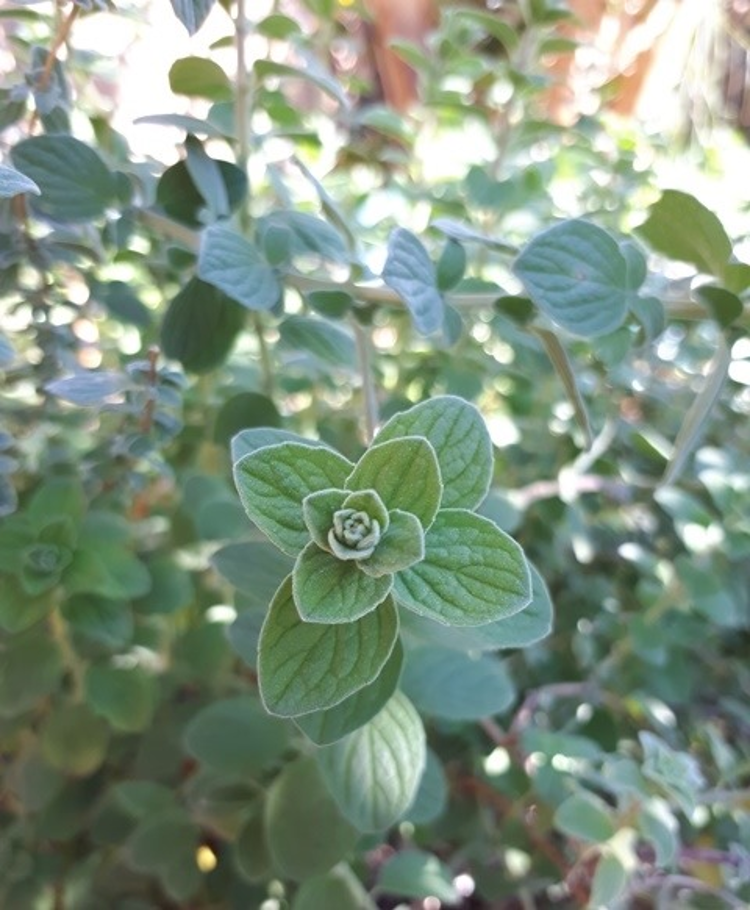
Oregano
Oregano (Origanum vulgare) is readily propagated vegetatively, and softwood stem cuttings root particularly well.
This is useful for more than convenience. Oregano raised from seed may vary considerably in flavour and growth habit. If an established plant has particularly good culinary flavour, propagating it from cuttings preserves those characteristics because every cutting is genetically identical to the parent.
Iowa State University Extension specifically states that oregano softwood cuttings root readily and also includes oregano among culinary herbs that can be rooted in water.
Take a healthy young stem approximately 5–10 cm (2–4 in) long from actively growing vegetation. Avoid old, bare woody stems and remove any flowers or flower buds. Strip the lower leaves, place the bare part of the cutting in water and keep the remaining leaves above the surface.
Change the water regularly. When roots are approximately 2.5 cm (1 in) long, transfer the cutting to a freely draining potting mix.
Older oregano plants may become increasingly woody and less productive through the centre. Propagating vigorous outer shoots is therefore not only a way to make additional plants but also a useful method for renewing a desirable old plant.
Rosemary
Rosemary (Salvia rosmarinus) becomes a genuinely woody shrub as it matures, making selection of suitable cutting material especially important.
University of Wisconsin–Madison Extension recommends taking 10–15 cm (4–6 in) tip cuttings from non-flowering shoots in late spring to early summer. University of California guidance similarly recommends soft new growth or non-flowering current-season shoots rather than thick old wood.
For conventional propagation, these cuttings are normally placed into a very well-aerated medium such as perlite. Rosemary can, however, also be rooted in water. The University of Alaska Fairbanks Cooperative Extension guide An Alaska Herb Garden specifically includes rosemary among the herbs whose stem cuttings root successfully in a cup of water.
Prepare the cutting by removing the foliage from the portion of stem that will be submerged while retaining the leaves on the upper section. Keep the container warm and well lit but out of intense direct sunlight, and maintain the water level while roots develop.
Rosemary is slower and less forgiving than soft herbs such as mint and basil, so it should not be expected to produce an extensive root system as rapidly. The important point is to begin with fresh, non-flowering tip growth rather than a thick section from the old woody structure of the shrub.
Once a useful set of roots has developed, transfer the cutting into a free-draining potting mix. Keep the mix evenly moist during the transition, then gradually move towards the drier growing conditions appropriate for established rosemary.
I have also rooted short woody rosemary cuttings in water successfully, and the resulting plants grew normally after being potted up. That shows that older material is not incapable of rooting; young tip growth is simply the more reliable material when there is a choice.

Lemon Verbena
Lemon verbena (Aloysia citrodora) is a woody perennial shrub native to South America. It is therefore not botanically or geographically a Mediterranean herb, even though its propagation requirements fit naturally with the other woody culinary herbs discussed here.
Illinois Extension states that tip cuttings root easily and notes that plants become progressively woody as they age. Older specimens may also decline in foliage quality, so taking cuttings is a useful way to replace an ageing plant with vigorous young plants.
For conventional cutting propagation, soft young tip growth is used during the active growing season. University of Florida propagation guidance places lemon verbena among herbs suitable for softwood tip cuttings approximately 7.5–15 cm (3–6 in) long with several nodes.
Lemon verbena can also be rooted directly in water. The University of Alaska Fairbanks Cooperative Extension guide includes it among the herbs that root successfully when their stem cuttings are placed in a cup of water.
Take a vigorous young shoot rather than a thick woody stem. Remove the lower leaves, keeping several nodes on the cutting, and place the bare lower portion in water without submerging the remaining foliage.
Keep the cutting warm and well lit while roots develop. Once a sufficient root system has formed, pot it into a freely draining mix and maintain even moisture during establishment.
Timing should be expressed by season rather than by a fixed calendar month because the article is read in both hemispheres. Extension recommendations from the Northern Hemisphere generally call for cuttings during active spring and summer growth; in the Southern Hemisphere the equivalent period occurs six months later.
Lemon verbena’s tendency to become woody with age makes regular propagation particularly useful. Instead of retaining an old plant indefinitely as its foliage becomes sparse or coarse, a gardener can use vigorous new shoots to establish replacement plants.
An Accidental Experiment with Blackcurrant Cuttings
Sometimes the easiest way to discover that a plant can root in water is by accident.
I once left around a dozen blackcurrant cuttings in a small bucket of water because I did not have time to put them into propagation medium. The cuttings were quite long and had not been specially prepared for rooting in water.
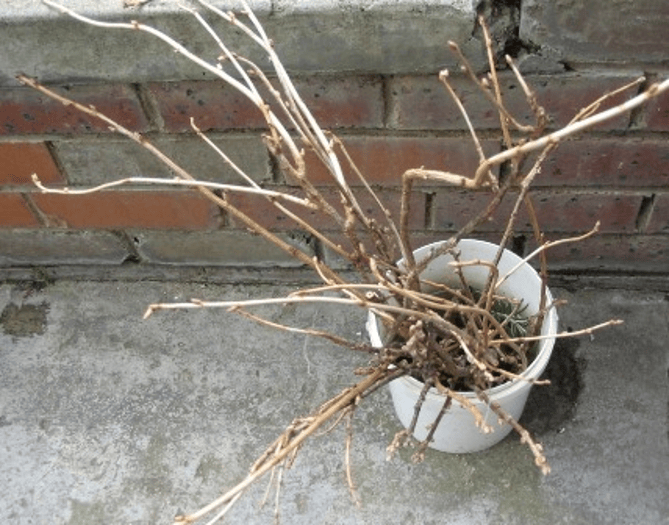
When I checked them later, healthy white roots had developed.
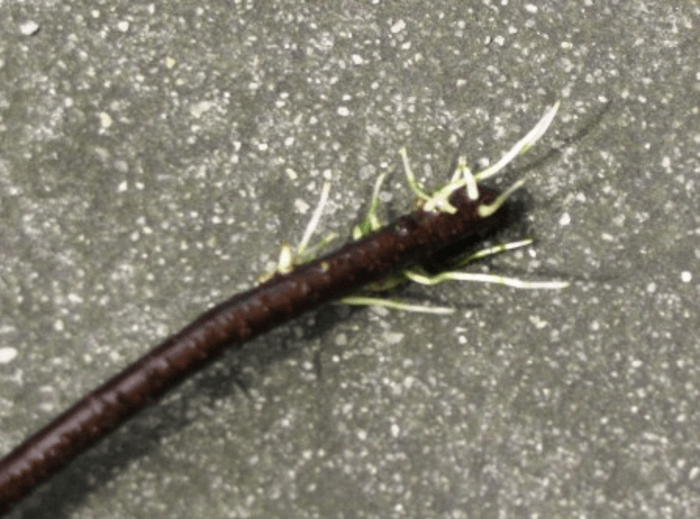
Currants (Ribes spp.) are more commonly propagated from softwood, ripewood or hardwood cuttings placed in a suitable propagation medium, but they are capable of producing roots in water. Research by the University of Alaska Fairbanks has also found that currant cuttings can root in jars of water, although propagation in potting medium gave better overall results.
This is a good example of why observation is useful in propagation. Plants do not always behave exactly as expected, and accidental successes can reveal useful techniques. At the same time, a successful experiment with one cutting does not necessarily establish the most reliable method for propagating that species.
A Companion Plant That Can Root in Water
Edible plants are not the only useful garden plants that can produce roots while standing in water.
We discovered this unexpectedly with perennial ageratum, also known as blue mistflower or hardy ageratum (Conoclinium coelestinum, formerly Eupatorium coelestinum). Cut flowering stems had been placed in a vase of water indoors and eventually began producing roots.
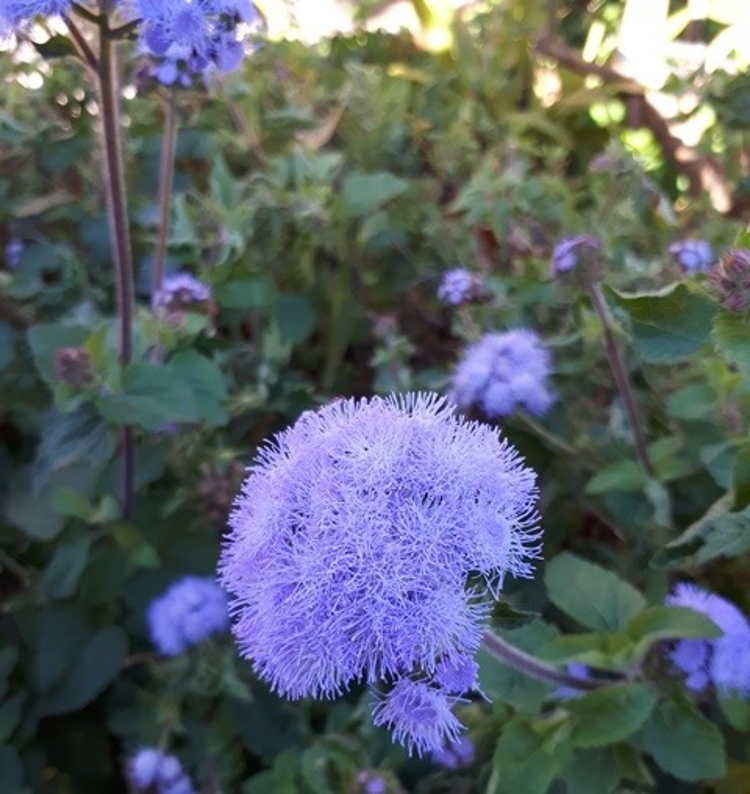
Perennial ageratum is not edible, but it is a useful multifunctional plant in a productive garden. Its nectar-rich flowers attract butterflies and other pollinating insects, while the plant spreads by rhizomes to form substantial flowering stands where growing conditions suit it. Because it can spread vigorously, it is best planted where its growth can be contained or where it has room to naturalise.
Perennial ageratum also has a documented history of use as a mosquito-repellent plant. Its aerial tissues contain coumarin, and analyses of its essential oil have identified volatile compounds including methyl chavicol, also known as estragole, bornyl acetate and camphene. Coumarin, methyl chavicol and bornyl acetate have independently demonstrated mosquito-deterrent or repellent activity in experimental studies.
Traditional use of Conoclinium coelestinum for mosquito control has involved burning or gently heating the foliage so its aromatic volatile compounds are released into the surrounding air.
This makes perennial ageratum particularly interesting in a permaculture garden because it performs several useful functions. It provides nectar for beneficial insects and pollinators, produces attractive flowers, spreads vegetatively as a perennial ground-covering plant where appropriate, contains biologically active aromatic compounds with mosquito-repellent properties, and is also capable of producing roots from cut stems left standing in water.
This is a good example of the permaculture design principle Each Element Performs Many Functions.
Moisture-Loving Plants That Root Very Easily in Water
Plants naturally adapted to wet soils, stream margins, shallow water or other permanently moist environments often produce roots exceptionally readily from submerged stems and nodes.
Watercress (Nasturtium officinale) is a good example. It naturally grows in saturated or flowing-water environments and readily develops roots from sections of stem. Fresh stems can therefore be used to establish new plants very easily.
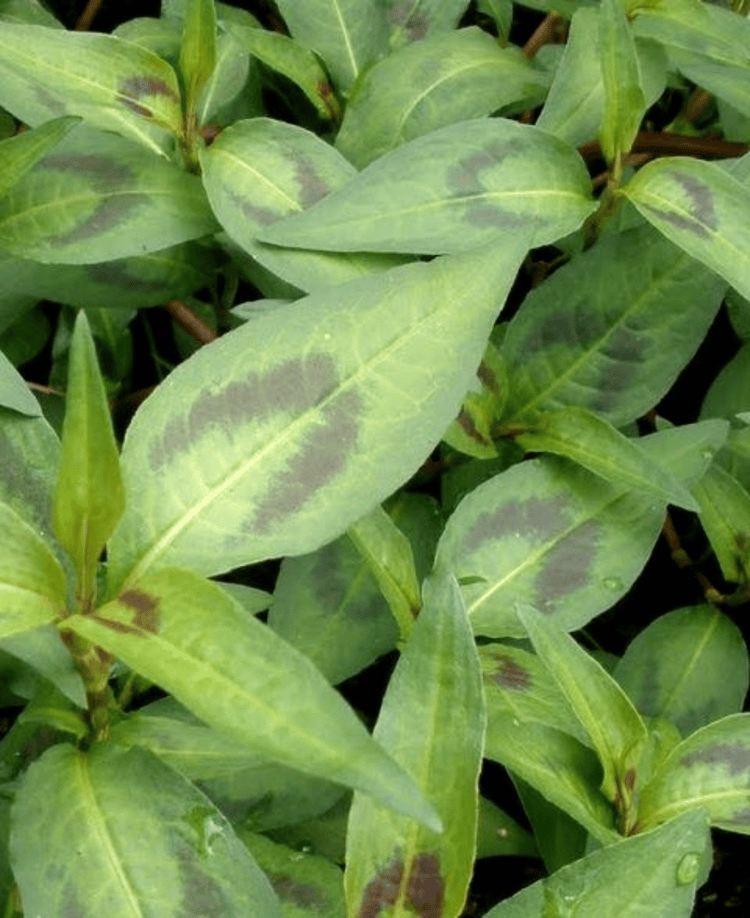
Vietnamese mint, or Vietnamese coriander (Persicaria odorata), behaves similarly. Fresh stems placed in water readily form roots from their nodes. In fact, fresh bunches purchased from a greengrocer or Asian supermarket can sometimes be used as propagation material if the stems are still healthy and contain intact nodes.
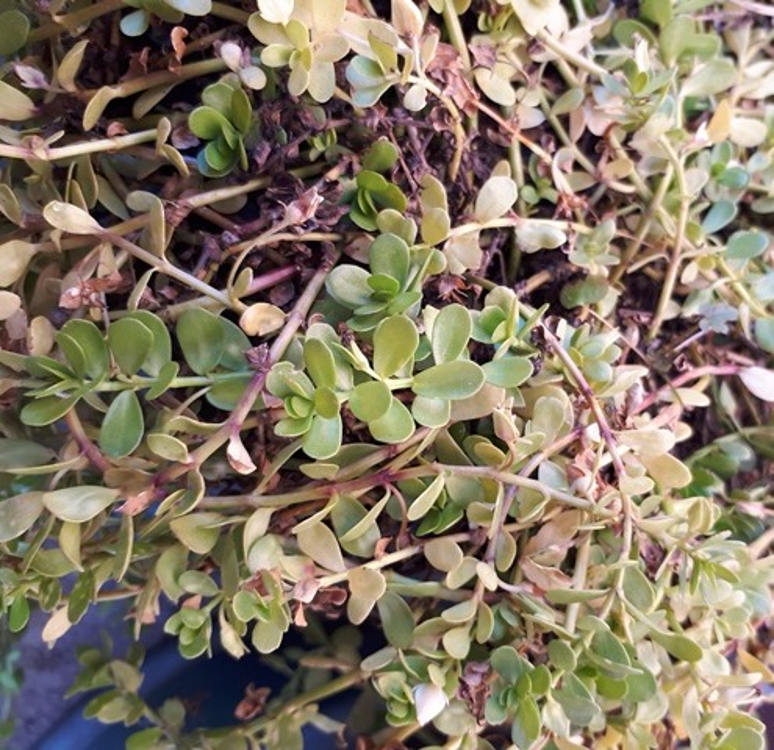
Brahmi (Bacopa monnieri) is a creeping wetland plant adapted to moist soil and shallow water. Its stems root readily at nodes, which makes it very easy to propagate vegetatively.
Pennywort or gotu kola (Centella asiatica) is another creeping plant of moist environments. As the stems spread, they naturally produce roots at their nodes, so sections containing healthy nodes can establish readily when kept moist.

Kangkong, or water spinach (Ipomoea aquatica), is a tropical and subtropical aquatic or semi-aquatic vegetable with hollow trailing stems. Nodes that contact water or saturated soil readily produce adventitious roots, so the plant can be propagated very easily from stem cuttings during warm weather.
Watercress, Vietnamese mint and kangkong are sometimes sold as fresh bunches in Asian grocers and produce markets. If the stems are fresh and contain intact nodes, they may be capable of rooting and producing new plants.
A single detached leaf cannot be used for propagation to produce a new complete shoot, it needs to be attached to part of a stem that includes a stem node and bud, which are necessary for the propagation.
Why Some Cuttings Rot Instead of Rooting
The most common failure in water propagation is stem rot. A rotting cutting usually develops a brown or black base that becomes soft, water-soaked or slimy. The water may become cloudy or develop an unpleasant smell.
Several problems can contribute to this. Leaves may have been left below the waterline and begun decomposing. The stem may have been damaged or diseased before it was placed in water. The container may have been allowed to become stagnant, or the plant may simply be poorly suited to rooting under continuously wet conditions.
If only the bottom of the stem has rotted and there is still enough healthy material above it, the damaged portion can usually be cut away. Make a fresh cut through firm, healthy tissue with a clean blade and place the remaining cutting into fresh water.
If the same type of cutting repeatedly rots, the useful lesson is usually not to keep replacing the water indefinitely. The plant is probably better propagated in a moist, aerated propagation mix.
Why a Healthy Cutting May Fail to Produce Roots
Not all failures involve rot. A cutting can remain green for weeks without producing roots.
This may happen because the cutting was taken from growth that was too mature, temperatures are too low, light levels are inadequate or the species simply roots slowly.
The physiological condition of the parent plant also matters. Healthy, actively growing plants generally provide better propagation material than stressed or dormant plants.
If a cutting remains healthy but does not produce roots after several weeks, there is little harm in giving it more time if the stem remains firm. For species known to root more reliably in propagation mix, however, transferring to a suitable medium may give a better result.
Rooting hormone is generally unnecessary for plants that readily root in water, such as basil, mint, tomato and many wetland herbs. Plants that require rooting hormone to root reliably are usually better propagated in a proper propagation medium, where hormone powder or gel can remain in contact with the cut surface.
Why Leaves Sometimes Wilt or Turn Yellow
If a cutting wilts soon after being placed in water, first check its growing conditions. Move it out of strong sunlight, heat and wind, and make sure only the lower part of the stem is submerged. A freshly taken cutting has no functioning roots, so it cannot replace water lost through its leaves as quickly as an established plant.
If the cutting has a large amount of foliage, remove some of the lower or excess leaves to reduce water loss. Do not strip off more healthy foliage than necessary, because the remaining leaves continue to photosynthesise and provide the sugars needed for root development.
Yellowing of one or two older leaves is not necessarily a problem while a cutting is developing roots. Before it has a functioning root system, the cutting has very limited ability to absorb mineral nutrients. It can therefore move mobile nutrients and stored resources out of older leaves and redirect them towards actively growing tissues, including developing roots and new shoots. As an older leaf loses nutrients and chlorophyll, it turns yellow and may eventually drop.
This is usually not a concern if only the oldest leaves are affected, the stem remains firm and healthy, and new roots are developing. Remove leaves that have completely yellowed or begun to decay so they do not fall into the water.
If several leaves are turning yellow, check the cutting more carefully. Make sure it is receiving bright indirect light rather than being kept in deep shade, and inspect the submerged stem for signs of deterioration. A healthy stem should remain firm. Darkening, softness or a slimy texture indicates that the stem is beginning to rot.
Also check how long the cutting has been left in water. If it has already developed a small but established root system, with several healthy roots and the longer roots around 2.5 cm (1 in) or more, it may simply be ready to be transferred into potting mix rather than left in water for longer.
In practice, the most useful signs are straightforward: wilting usually points to excessive water loss, while widespread yellowing together with a soft or darkening stem points to declining cutting health or rot.
The condition of the stem is usually the most useful guide. A firm green stem with developing roots is still functioning. A dark, soft or slimy stem indicates decay.
Keeping the Water and Container Clean
Cloudy water, surface films and algae are common in clear propagation containers.
Cloudiness usually indicates microbial growth or decomposing organic matter. Replace the water, wash the container and remove any dead plant material.
Algae are more likely to develop when a clear container receives strong light. Small amounts are generally not a major problem, but heavy algae growth can reduce water quality and makes it difficult to inspect the developing roots. Cleaning the container and moving it out of direct sunlight normally reduces the problem.
The water itself does not need to be sterile. Ordinary clean tap water is suitable for most plants. The important requirements are that the water is not contaminated and that it is replaced before it becomes stagnant or fouled by decaying plant tissue.
Water Propagation as a Useful Gardening Skill
Water propagation is one of the easiest ways to learn the basic principles of vegetative plant propagation because the entire rooting process can be observed.
A healthy cutting is taken from the parent plant. Its lower leaves are removed, and one or more nodes are placed in water. The cutting is kept under conditions that reduce water loss while allowing photosynthesis to continue. If the species is suited to the method, adventitious roots develop and the cutting becomes an independent plant.
Plants such as basil, mint, tomato, nasturtium, pineapple sage, sweet potato, Malabar spinach, longevity spinach, Cuban oregano and many moisture-loving herbs make particularly good subjects because they root readily. Rosemary, sage, thyme, oregano, lemon verbena and currants may also root in water, but they demonstrate an equally important lesson: a plant can be capable of rooting in water without water necessarily being the best propagation medium for it.
Useful flowering companion plants can sometimes respond in the same way. The perennial ageratum stems that unexpectedly rooted in a vase are a reminder that propagation opportunities are often discovered simply by observing what plants do.
Once the roots have developed, the final stage is to transfer the young plant into potting mix before it develops an unnecessarily large mass of water-grown roots.
The method is simple enough for a beginner, but it also teaches something fundamental about how plants grow. Stems are not merely structures that hold leaves and flowers above the ground. In many species, they retain the capacity to form entirely new root systems when conditions allow it.
Once this ability is recognised, material that might otherwise be discarded—a tomato side shoot, a sprig of mint, a nasturtium stem, a sweet potato vine or even a fresh bunch of Vietnamese mint—can become the starting point for another plant.
References
- Australian National Botanic Gardens. (n.d.). Propagation from cuttings. Australian Government. https://www.anbg.gov.au/PROPGATE/propagat.htm
- Cantrell, C. L., Jones, A. M. P., & Ali, A. (2016). Isolation and identification of mosquito (Aedes aegypti) biting-deterrent compounds from the Native American ethnobotanical remedy plant Hierochloë odorata (sweetgrass). Journal of Agricultural and Food Chemistry, 64(44), 8352–8358. https://doi.org/10.1021/acs.jafc.6b01668
- Dung, N. X., Cu, L. D., Khiên, P. V., Muselli, A., Casanova, J., Barthel, A., & Leclercq, P. A. (1998). Volatile constituents of the stem and leaf oils of Eupatorium coelestinum L. from Vietnam. Journal of Essential Oil Research, 10(5), 478–482. https://doi.org/10.1080/10412905.1998.9700952
- Enroth, C. (2020, May 15). How to grow popular herbs. University of Illinois Extension. https://extension.illinois.edu/blogs/good-growing/2020-05-15-how-grow-popular-herbs
- Gou, Y., Li, Z., Fan, R., Qiu, Z., Wang, L., Wang, C., & Wang, Y. (2020). Ethnobotanical survey of plants traditionally used against hematophagous invertebrates by ethnic groups in the mountainous area of Xishuangbanna, Southwest China. Plant Diversity, 42(6), 415–426. https://doi.org/10.1016/j.pld.2020.07.009
- Haag, B. (2024, March 1). Grow your houseplant collection through propagation! University of Illinois Extension. https://extension.illinois.edu/blogs/flowers-fruits-and-frass/2024-03-01-grow-your-houseplant-collection-through-propagation
- Hlozansky, L. (2023, May 2). Growing guide: Sweet potatoes. University of Georgia Cooperative Extension. https://site.extension.uga.edu/gmanr/2023/05/growing-guide-sweet-potatoes/
- Holloway, P., & Higham, L. (n.d.). Propagating currants and gooseberries by stem cuttings and layering. Georgeson Botanical Garden, University of Alaska Fairbanks. https://www.uaf.edu/afes/places/gbg/research/currant-propagation/index.php
- Kendrick, T., & Drost, D. (2020, April). How to grow watercress in your garden. Utah State University Extension. https://extension.usu.edu/yardandgarden/research/watercress-in-the-garden
- Le-Van, N., & Pham, T. V. C. (1979). Two new flavones from Eupatorium coelestinum. Phytochemistry, 18(11), 1859–1861. https://doi.org/10.1016/0031-9422(79)83070-8
- Mahr, S. (n.d.). Malabar spinach, Basella alba. Wisconsin Horticulture, University of Wisconsin–Madison Division of Extension. https://hort.extension.wisc.edu/articles/malabar-spinach-basella-alba/
- Mahr, S. (2026, May 18). Pineapple sage, Salvia elegans. Wisconsin Horticulture, University of Wisconsin–Madison Division of Extension. https://hort.extension.wisc.edu/articles/pineapple-sage-salvia-elegans/
- North Carolina State University Extension. (n.d.). Blue boneset—Conoclinium coelestinum. Extension Gardener Plant Toolbox. https://plants.ces.ncsu.edu/plants/conoclinium-coelestinum/common-name/blue-boneset/
- North Carolina State University Extension. (n.d.). Indian mint—Plectranthus amboinicus. Extension Gardener Plant Toolbox. https://plants.ces.ncsu.edu/plants/plectranthus-amboinicus/common-name/indian-mint/
- Outerbridge, D., & Vinson, A. (2022, June 6). Uncommon edible plants #3. UF/IFAS Extension. https://blogs.ifas.ufl.edu/leeco/2022/06/06/uncommon-edible-plants-3/
- Steil, A. (2026). Growing mint in the home garden. Iowa State University Extension and Outreach. https://yardandgarden.extension.iastate.edu/how-to/growing-mint-home-garden
- Steil, A., Jauron, R., & Monaghan, N. (2025). How to grow vegetables from kitchen scraps: Avocados, pineapples, green onions and more! Iowa State University Extension and Outreach. https://yardandgarden.extension.iastate.edu/how-to/how-grow-vegetables-kitchen-scraps-avocados-pineapples-green-onions-and-more
- UC Marin Master Gardeners. (n.d.). Nasturtium. University of California Agriculture and Natural Resources. https://ucanr.edu/site/uc-marin-master-gardeners/document/nasturtium
- University of Illinois Extension. (2020, October 2). Overwintering your favorite garden plants. https://extension.illinois.edu/blogs/flowers-fruits-and-frass/2020-10-02-overwintering-your-favorite-garden-plants
- Watson, F. M. (2013, June 24). Rooting tomato suckers can provide great mid-season replacement plants, extend harvest. University of Georgia College of Agricultural and Environmental Sciences. https://fieldreport.caes.uga.edu/news/rooting-tomato-suckers-can-provide-great-mid-season-replacement-plants-extend-harvest/
- Mahr, S. (2026, May). Sage, Salvia officinalis. University of Wisconsin–Madison Division of Extension. https://hort.extension.wisc.edu/articles/sage-salvia-officinalis/ Mahr, S. (2026, June).
- Rosemary, Salvia rosmarinus (= Rosmarinus officinalis). University of Wisconsin–Madison Division of Extension. https://hort.extension.wisc.edu/articles/rosemary-rosemarinus-officinalis/
- Steil, A. (2026, July). All about oregano and marjoram. Iowa State University Extension and Outreach. https://yardandgarden.extension.iastate.edu/how-to/all-about-oregano-and-marjoram
- Steil, A. (2026, July). All about thyme. Iowa State University Extension and Outreach. https://yardandgarden.extension.iastate.edu/how-to/all-about-thyme
- University of Alaska Fairbanks Cooperative Extension Service. (2014). An Alaska herb garden: Recipes and growing tips for enjoying your herb garden (FNH-00026). https://www.uaf.edu/news/archives/wordpress-images/2015/01/Herb-Book-11-3-14.pdf
- University of Illinois Extension. (n.d.). Lemon verbena. https://extension.illinois.edu/herbs/lemon-verbena