
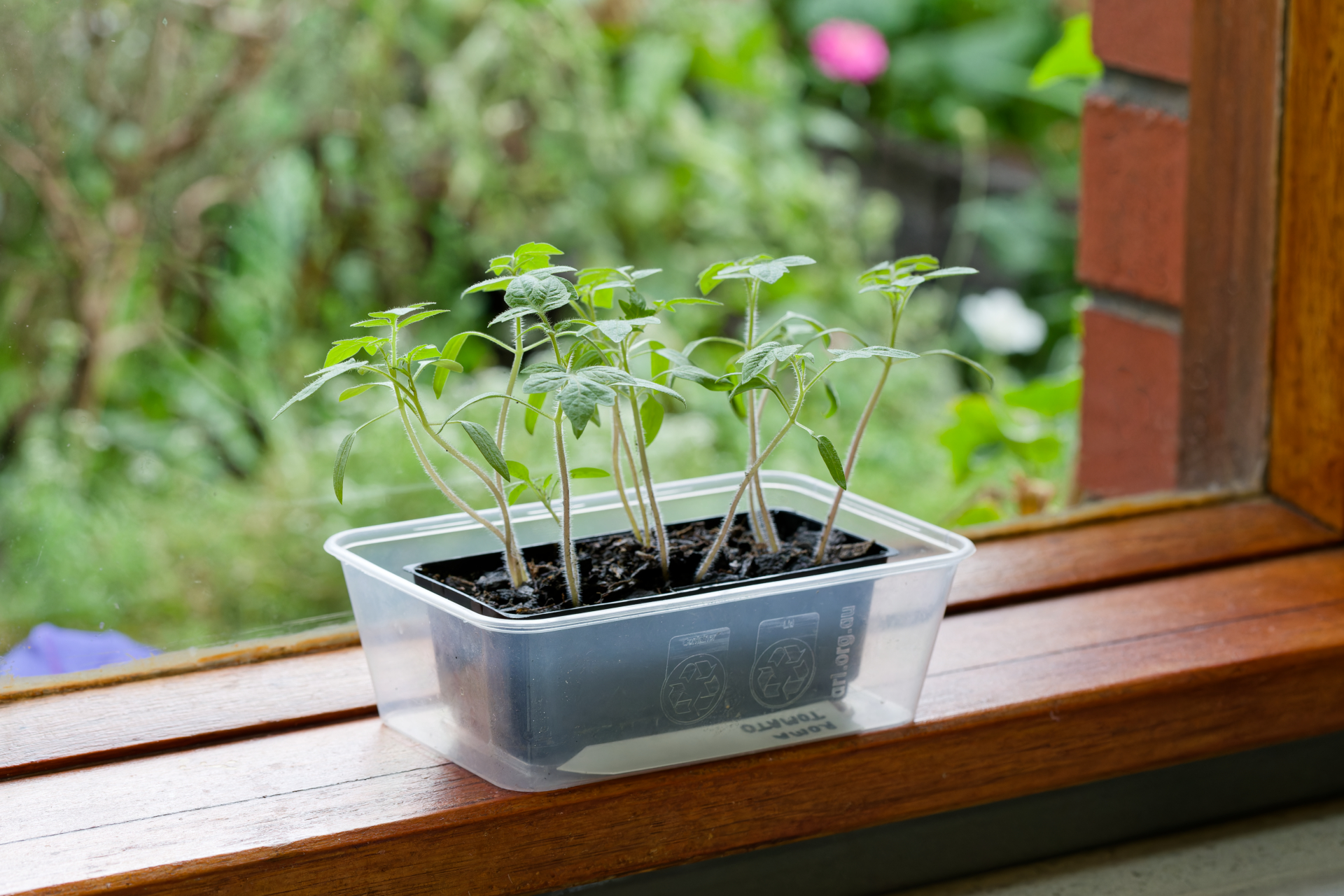

Want to sow seeds in pots or seedling trays? What do you need? Seed raising mix? Guess again!
Having worked in the garden nursery industry, I have met many gardeners who have had problems raising seedlings in seed-raising mix. Their seeds germinate successfully, but the seedlings only reach a small size before they STOP GROWING altogether, and the resultant seedlings remain very weak, thin and spindly instead of developing into vigorous plants ready for transplanting!
Many seed-raising mixes lack nutrients and are unsuitable for seedlings after germination. They are called seed-raising mixes because their primary purpose is to germinate seeds successfully, and they do well in that role.
In a seed-raising mix with little or no fertiliser, the seed has sufficient stored energy to germinate and begin growth, but these reserves are limited. As the seedling develops, it relies increasingly on mineral nutrients absorbed through its roots. If the growing medium doesn’t provide these nutrients, growth becomes restricted. A nutrient deficiency can lead to slow growth, pale leaves, and weak, thin stems.
This is where the term “seed raising mix” can be confusing. Some seed raising mixes do not contain added fertiliser or have very little fertility, while others include a starter nutrient charge to support early seedling growth. The name describes the purpose of the medium, not its nutrient content, so it is important to check what is actually in the product before using it.
What is Seed Raising Mix?

Seed raising mix is a specialised, fine-textured propagation medium designed for germinating seeds and establishing their first roots. It holds enough moisture to keep seeds hydrated, drains excess water, contains air spaces for oxygen, provides close contact between the seed and the moist growing medium, and is loose enough for delicate roots and shoots to grow through easily.
Commercial seed raising mixes are made from combinations of fine materials such as composted pine bark, peat, coconut coir, vermiculite, perlite, sand or fine mineral particles. Wetting agents are often added so the dry mix absorbs water evenly.
The main difference between seed raising mix and ordinary potting mix is texture. Potting mix is usually coarser because established plants have larger root systems and do not need such close contact with the growing medium. Seed raising mix is much finer, which is especially important for small seeds and newly emerging roots.
The mix also needs to hold moisture without becoming waterlogged. Seeds require both water and oxygen during germination. If the mix remains saturated, water fills the spaces that would normally contain air, reducing oxygen around the germinating seed and young roots. Constantly wet conditions also encourage damping-off diseases that can rot seeds or cause young seedlings to collapse.
The important point is that seed raising mix is designed first for germination, not necessarily for growing seedlings all the way to transplanting size.
Why Seedlings Can Stop Growing in Seed Raising Mix
A seed can germinate in a growing medium containing very little fertiliser because it carries its own food reserves.
Inside the seed is a living embryo together with stored reserves supplied by the parent plant. These reserves provide the energy and materials needed to start germination and produce the first root, shoot and seed leaves.
That is why seeds can germinate successfully in low-nutrient materials such as vermiculite, peat-based propagation mixes and other seed-starting media.
The seed’s stored reserves do not last indefinitely.
As the seedling grows, produces true leaves and develops a larger root system, it needs an increasing supply of mineral nutrients to produce new roots, stems and leaves. These nutrients must then come from the growing medium or from fertiliser.
This is where gardeners often run into trouble.
Seeds germinate perfectly well, the seedlings emerge and begin growing, and everything appears successful. Then growth slows. The seedlings remain small, pale and thin instead of developing into strong plants ready for transplanting.
The problem is often not the seed raising mix itself. The mix has already done its job by providing suitable conditions for germination. The problem is leaving developing seedlings in a low-fertility mix without supplying the nutrients they now require.
Some commercial seed raising mixes contain starter fertiliser and can support seedlings for longer. Others contain little or no fertiliser. Always check the label before sowing so you know what the mix contains.
How to Use Seed Raising Mix Correctly
There are several simple ways to use seed raising mix without starving the developing seedlings.
Method 1: Use Seed Raising Mix Over Potting Mix
This is one of the easiest ways to combine good germination with continued seedling growth.
- Fill most of the seedling tray, punnet, cell or pot with a good-quality potting mix containing nutrients.
- Add a layer of fine seed raising mix over the top.
- Sow the seeds into the seed raising mix at the correct depth for the species.
- Gently firm the surface so the seeds make good contact with the moist mix.
- Water carefully using a fine spray or gentle watering method that will not wash the seeds out of position.
- Keep the upper layer evenly moist while the seeds germinate.
The seed germinates in the fine-textured seed raising mix where moisture, air and seed-to-medium contact are ideal. As the seedling grows, its roots extend downward into the potting mix underneath and gain access to the nutrients needed for continued growth.

This method allows each growing medium to do the job it is best suited to doing: seed raising mix provides the ideal germination layer, while the potting mix provides nutrients and additional root space.
Method 2: Use Seed Raising Mix Throughout and Feed the Seedlings
Seed raising mix can also be used throughout the entire tray or container. If the mix contains little or no fertiliser, begin feeding the seedlings once they have emerged and are actively growing. Use a complete liquid fertiliser suitable for seedlings at a dilute rate, because young seedlings have small root systems and require less fertiliser than established plants. Continue feeding as the seedlings develop, increasing the amount as the plants grow and following the fertiliser manufacturer’s directions.
This method works well when seedlings are being grown in individual cells, punnets or small pots and will remain in the seed raising mix for several weeks before transplanting. It allows the seedlings to remain undisturbed while their root systems develop, with their nutrient requirements supplied through regular liquid feeding.
Method 3: Germinate in Seed Raising Mix, Then Pot Up
Another simple method is to use seed raising mix only for germination and early establishment. Sow the seeds into trays, punnets or small containers filled with seed raising mix, then transplant the seedlings once they have developed true leaves and are large enough to handle.
Move the seedlings into individual cells or pots filled with a nutrient-containing potting mix. The seed raising mix provides the fine, moist and well-aerated conditions needed for germination, while the potting mix provides the nutrients and additional root space required for continued growth. This method is particularly useful when many seeds are germinated together in a tray and the seedlings will later be separated and grown on individually.
Can Nutrients Be Added to Seed Raising Mix?
If you have a large bag of seed raising mix containing little or no fertiliser, part of it can be amended to make a more nutrient-containing growing medium for established seedlings. Fine worm castings or mature, finely screened compost can be mixed through the seed raising mix to supply nutrients and organic matter while retaining the fine, loose structure required for young roots.
Any material added should be fine enough to blend evenly through the mix. Large pieces of compost, bark or incompletely decomposed organic matter make the medium coarser and reduce the advantages of using a fine propagation mix. An amended mix of this kind is better suited to growing established seedlings than to germinating very small seeds, because germinating seeds do not require a nutrient-rich medium.
Seed Raising Mix and Potting Mix Have Different Jobs
Seed raising mix and potting mix are designed for different stages of plant growth. Seed raising mix provides the fine texture, moisture retention, drainage and aeration needed for reliable germination and early root development. Potting mix is designed to support established plants with larger root systems and normally provides a greater nutrient supply.
Problems occur when a low-fertility seed raising mix is expected to perform both jobs indefinitely. Seeds may germinate successfully because they initially rely on reserves stored within the seed, but the developing seedlings eventually need mineral nutrients from their growing medium or from added fertiliser.
The practical solution is simple. Use seed raising mix to provide the right conditions for germination, then make sure the developing seedlings have access to nutrients. This can be done by placing seed raising mix over nutrient-containing potting mix, feeding seedlings growing entirely in seed raising mix, or transplanting established seedlings into potting mix.
Used this way, seed raising mix does exactly what it is intended to do: provide reliable germination while allowing the developing seedlings to continue growing into strong plants ready for transplanting.


Thanks for this. I bought commercial seed raising mix, but the problem I’m having is keeping it moist, without it being saturated. I find the longer I keep the seedlings in small containers, the less the grow and more likely they (get a fungal disease?) and start to die off. Basically, the best success I have is to put them into the ground after germinating with a cloche to protect them from pests, but it seems like a lot of effort for minimal gain…I’m definitely doing something wrong.
When the seedlings have put out their first true leaves, it’s time to transplant them into a growing medium that will give them the nutrients they require. You can transplant them into a pot. See my article Starting Annual Vegetable Seedlings Indoors for more information on this technique.
I think that some of these products worked better before they were so ‘improved’. (Of course, back then, more seedlings were damping off.)
I like using seed raising mix and then transplanting into potting mix. I find that if I put potting mix below the seed mix then I create a potential damping off problem because I get rapid growth of seedlings too close together. If the plant stops growing or yellow/purples off then that is a signal that it is time to transplant into potting mix.