

Overview
- Name: Globe Artichoke
- Botanical Name: Cynara cardunculus var. scolymus
- Plant Family: Asteraceae
- Native to: Mediterranean region (Southern Europe and North Africa)
Description
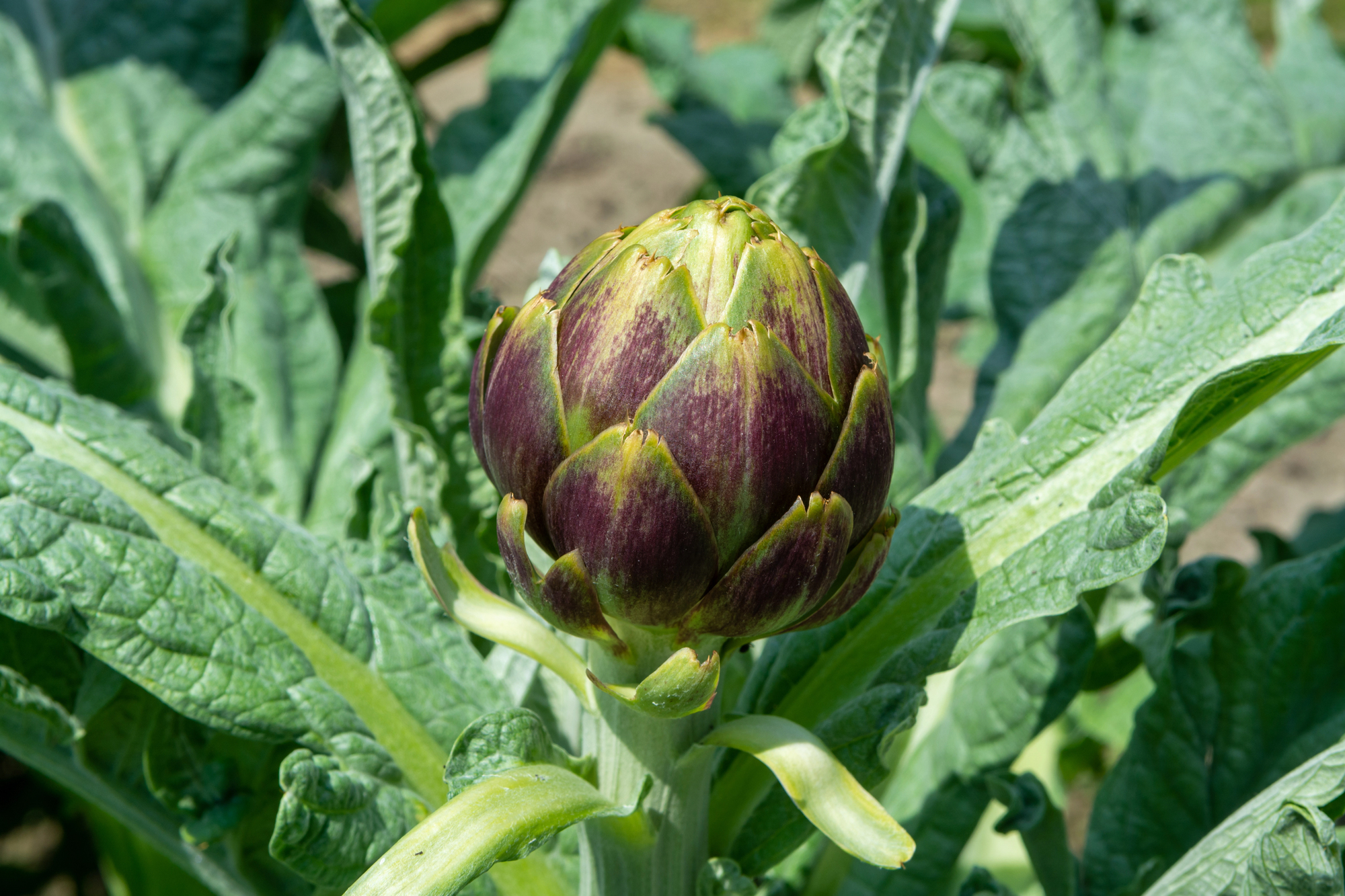
Globe artichokes are tall, perennial plants cultivated primarily for their large, edible flower buds. Each plant typically grows to a height of 1.2 to 1.5 meters (4 to 5 feet) and spreads to about 90 to 120 centimeters (3 to 4 feet) wide. The leaves are deeply lobed, gray-green in color, and can reach lengths of up to 75 centimeters (30 inches).
Thick, branched stems support multiple round flower buds characterized by overlapping, fleshy bracts that form the distinctive “globe” shape. If the buds are allowed to mature and open, they bloom into striking purple, thistle-like flowers.
Although seeds form within the spent flower heads, many gardeners prefer to propagate globe artichokes using vegetative methods such as offshoots or “offsets” and division of established crowns. In most temperate climates, globe artichokes behave as herbaceous perennials, dying back during winter and re-sprouting in spring.
Interesting Facts
- The globe artichoke (Cynara cardunculus var. scolymus) has a long history of cultivation dating back to the ancient Greeks and Romans, who valued it for both its medicinal properties and culinary uses. By the 16th century, artichokes had become a luxury vegetable in European courts, admired for their unique appearance and distinctive flavor. The name “artichoke” likely derives from the Italian word “articiocco” or its earlier forms, reflecting its Mediterranean origins.
- Artichokes are the immature flower buds harvested before they fully open. If left unharvested, the buds develop into large, vivid purple thistle-like flowers. While visually striking, the mature bloom causes the bracts and the fuzzy “choke” inside to become tough and inedible. Many gardeners purposely leave a few buds to bloom as ornamental plants or to support pollinators.
- In cooler climates where artichokes cannot reliably overwinter, gardeners often grow them as annuals by starting seeds indoors early and using a process called “forcing”. This method involves vernalizing young plants (exposing them to cold) to encourage flower bud formation in the first growing season. Without forcing, globe artichokes typically require a full year or more to develop harvestable heads.
- While globe artichokes are commonly treated as perennials with productive lifespans of about 3 to 5 years, some growers maintain plants for longer by dividing and replanting crowns every few seasons to sustain vigor and yield. Popular high-yielding cultivars such as ‘Green Globe’ remain standard, but newer varieties aim to improve cold tolerance, disease resistance, and head quality.
- Globe artichokes are highly nutritious vegetables, notable for their dense concentration of dietary fiber, antioxidants, and essential micronutrients. A medium-sized cooked artichoke provides approximately 6–7 grams of fiber—over 20% of the recommended daily intake—making it beneficial for digestive regularity and blood sugar management. Artichokes are particularly rich in inulin, a prebiotic fiber that supports healthy gut microbiota. They are also a good source of vitamin C and folaten. Additionally, artichokes provide meaningful amounts of magnesium, potassium, iron, and vitamin K.
- One of the most remarkable aspects of artichokes is their high antioxidant content. They rank among the highest of all vegetables in total antioxidant capacity, largely due to polyphenolic compounds such as chlorogenic acid, luteolin, and cynarin. These compounds help combat oxidative stress, supporting cellular health and potentially lowering the risk of chronic diseases.
Medicinal Properties
Beyond basic nutrition, globe artichokes have been used traditionally and studied scientifically for their medicinal potential—particularly in supporting liver function, digestion, and cardiovascular health. The key bioactive constituents include cynarin, silymarin, and various flavonoids and phenolic acids.
- Liver Support: Cynarin, concentrated in the leaves, has been shown to stimulate bile secretion, aiding in the emulsification and digestion of dietary fats. Clinical studies suggest that artichoke leaf extract (ALE) may reduce elevated liver enzymes such as ALT and AST, potentially indicating hepatoprotective effects. While early findings are promising, further large-scale trials are needed to confirm therapeutic efficacy and standardize dosing.
- Digestive Health: Artichoke extracts have been used to treat dyspepsia and functional gastrointestinal disorders. Cynarin and inulin both contribute to improved fat digestion, bowel regularity, and the growth of beneficial gut bacteria like Bifidobacteria. Several randomized trials report reductions in bloating, nausea, and abdominal discomfort with ALE use.
- Cardiovascular Benefits: Artichoke consumption, particularly in extract form, has been associated with modest reductions in total and LDL cholesterol, attributed to enhanced bile production and antioxidant action. Some studies also suggest improvements in triglyceride levels.
- Antioxidant Effects: Artichoke compounds scavenge free radicals and inhibit lipid peroxidation, offering protection against oxidative stress-related conditions.
Although clinical research is ongoing, current evidence supports the use of artichoke and its extracts as functional foods with therapeutic potential.
Basic Growing Information
Globe artichokes cool-season perennial crops that thrive in mild, temperate conditions where daytime temperatures range between 15–25°C (59–77°F), with an optimal growing temperature around 18–20°C (64–68°F). They require fertile soil, consistent moisture, and plenty of sunlight to develop robust crowns and sizeable buds. Artichokes are highly sensitive to frosts below about –5°C (23°F), which can damage crowns and reduce vigor.
In cooler climates or short-summer regions, starting artichokes indoors 8–10 weeks before the last frost date and transplanting them outdoors once the soil warms enhances the chance of a first-year harvest. Artichokes also prefer well-drained soil to avoid crown rot, and heavier soils may need amendments or raised beds.
- Sun Requirements: Full sun
- Water Requirements: Medium to high (regular watering needed for large, tender buds)
- Soil Types and Properties: Fertile, well-draining soil enriched with organic matter; loam or sandy loam is ideal
- Soil pH: 6.0–7.0
- Pot Size for Container Growing: 45–60 cm (18–24 in) diameter (for a single mature plant)
Planting
- Best Time to Plant:
- Climates with freezing winters: Plant outdoors in late spring, after the danger of hard frost has passed. Seeds can be started indoors in late winter to produce plants ready for a first-year harvest.
- Climates with milder winters: Plant in autumn or early spring, allowing the crown to establish before the onset of summer heat. This timing supports perennial growth and bud production in subsequent seasons.
Note: Check gardening calendars for the best planting times in your location
- Spacing: 90–120 cm (3–4 ft) between plants; 1.2–1.5 m (4–5 ft) between rows
- Seed Sowing Method: Sow seeds in trays or pots indoors and transplant seedlings once they have at least two true leaves. However, propagation via offshoots (offsets) or divisions of established crowns is more common and generally preferred due to faster establishment and reliability.
- Seed Sowing Depth: 1–2 cm (0.5–0.75 in) deep
- Time to Harvest: Harvest typically occurs 20 to 24 weeks after sowing if plants are vernalized (subjected to cold) and grown for a first-year crop. In most cases, globe artichokes are grown as perennials, and the main harvest occurs in the second year and subsequent years.
- Mature Height/Spread: 1.2–1.5 m (4–5 ft) tall, 90–120 cm (3–4 ft) wide
- Grown From: Globe artichokes can be grown from seeds or more commonly from offshoots/divisions of established plants for more consistent results.
Care and Maintenance
- Watering Tips: Maintain consistently moist soil, especially during active vegetative growth and bud development. Use drip irrigation or soaker hoses to avoid wetting the foliage, which helps reduce the risk of foliar fungal diseases. Apply organic mulch around the base to conserve soil moisture, suppress weeds, and moderate soil temperature—especially important during hot summer periods.
- Fertilization: Prior to planting, enrich the soil with well-rotted compost or a balanced organic fertilizer. Once plants are actively growing and producing foliage, side-dress with a nitrogen-rich fertilizer to support vigorous shoot and bud development. A light second feeding after the initial harvest can encourage continued bud production. Avoid excessive nitrogen late in the growing season, as it can promote soft growth that reduces winter hardiness.
- Pruning: If flower buds are left unharvested, they will mature into tall, ornamental blooms. To promote side shoot development and additional buds, cut spent flower stalks at the base after flowering. In late autumn, cut back the plant to approximately 30 cm (12 inches) above ground level, and apply a thick mulch layer (e.g., straw or leaf mold) to protect crowns from frost in colder regions. In spring, remove winter mulch and clear dead or damaged foliage to reduce disease risk and stimulate fresh growth.
- Support: Although artichoke stems are typically sturdy, large mature plants can become top-heavy, especially during bud formation or in windy areas. Provide support by loosely tying stalks to stakes to prevent lodging (folding over) or breakage. Trim or remove lower leaves that drag on the soil to improve airflow and reduce pest or disease pressure at the base of the plant.
Growing Difficulty
- Moderate Difficulty
Growing Tips
- If starting globe artichokes from seed, it is beneficial to vernalize seedlings by exposing them to cool temperatures of 8–10°C (46–50°F) for about 10 to 14 days, and in some cases up to 3–4 weeks. This simulated winter period helps trigger flowering and increases the likelihood of bud production in the first year, especially important in regions with shorter growing seasons. Without vernalization, seed-grown plants may not form buds until their second year.
- To maintain plant vigor over time, divide mature crowns every 3 to 4 years. In early spring, carefully dig up the plant and separate healthy offsets (“pups”) from the central crown using a sharp knife or spade. Each division should include viable shoots and an intact root system. Discard any woody or declining central sections. Replant divisions immediately at the same depth they were growing, and water well to encourage re-establishment.
- For best quality, harvest artichoke buds when they are tight, plump, and fully formed, with the bracts still firmly closed. Buds left too long become tough and fibrous, particularly the inner “choke.” Prompt harvesting not only ensures optimal eating quality but also encourages secondary bud formation on side shoots. During peak harvest periods, check plants frequently to avoid missing the ideal harvest window.
Companion Plants
- Good companion plants include: Peas and beans, which enrich soil nitrogen and grow upright without competing aggressively for light or root space. Low-growing herbs like coriander or thyme may be suitable as underplantings to help suppress weeds and attract beneficial insects, provided spacing and airflow are maintained.
- Avoid planting near: Sunflowers, potatoes, and other large or fast-growing root crops that can compete for nutrients and crowd the artichoke’s root zone. Avoid invasive groundcovers and species that limit airflow or shade the crown.
Common Pests and Diseases
- Pests:
- Aphids: These soft-bodied insects feed on plant sap and may spread viruses. Spray with a strong stream of water to knock them off the plant. Encourage beneficial insects such as lady beetles and lacewings to reduce populations naturally.
- Slugs and Snails: These pests feed on young leaves and developing buds, especially in cool, moist conditions. Handpick in the evening, use barriers (e.g., copper tape) or apply iron phosphate-based organic slug baits.
- Artichoke Plume Moth: Larvae burrow into leaf bases and flower buds. Remove and destroy damaged tissue. For severe infestations, consider using Bacillus thuringiensis (Bt), a microbial insecticide, especially on young plants and developing buds. Monitor adult moth activity in warm, dry conditions.
- Diseases:
- Botrytis (Grey Mold): Caused by Botrytis cinerea, it thrives in cool, damp conditions. Improve air circulation, avoid overhead watering, and promptly remove infected plant parts. Mulching can help reduce splash dispersal of spores.
- Powdery Mildew: This fungal disease appears as white powder on leaves during warm, dry days with cool nights. Avoid overhead irrigation, increase airflow, and treat early with fungicides labeled for edible crops if infection spreads.
- Crown Rot: Often caused by soilborne fungi in poorly drained conditions. To prevent it, ensure well-drained soil, plant crowns slightly above grade, and avoid water pooling around the crown, particularly in winter.
Harvesting
- Harvest Time: In most climates, globe artichokes begin producing main (terminal) buds in late spring to early summer during the second growing season, particularly if plants are grown as perennials. However, vernalized seedlings or divisions of mature plants may yield harvestable buds in the first year. Buds are ready to harvest when they are tight, plump, and reach 7–10 cm (3–4 inches) in diameter, with firm, tightly closed bracts. After harvesting the main bud, secondary buds on lateral shoots develop shortly, often extending the harvest season into midsummer or early fall.
- Harvesting Tips: Use a sharp knife or clean pruning shears to cut each bud with 3–5 cm (1–2 inches) of stem attached, which helps in handling and prolongs freshness. Monitor plants every few days during peak season, as buds can mature rapidly in warm weather. Prompt harvesting is essential—overripe buds will open, becoming fibrous and unpalatable as the bracts toughen and the inner choke develops. After cutting, immediately refrigerate or chill the buds to retain quality. Harvesting also stimulates the plant to produce additional buds, particularly from lateral shoots.
Propagation
- Produce New Plants From: Seeds, divisions (offsets), or root cuttings (crowns)
Artichokes can be propagated in three main ways, depending on climate, desired uniformity, and production speed.
1. Propagation by Seed (Sexual Propagation)
This method allows genetic variability and is most useful for home gardeners or when producing a large number of plants.
Steps:
- Start seeds indoors 8–12 weeks before the last expected frost. Use a high-quality seed-starting mix.
- Sow seeds 1–2 cm (0.5–0.75 in) deep, spacing them in trays or small pots. Maintain temperatures between 18–24°C (65–75°F) for germination.
- Once seedlings develop at least two true leaves, transplant into larger pots.
- To induce flowering in the first year, vernalize seedlings by placing them in a cool (8–10°C / 46–50°F) environment with 10–12 hours of light for 10–20 days.
- After vernalization, harden off seedlings before transplanting into the garden when the danger of frost has passed.
- Space plants 90–120 cm (3–4 ft) apart.
Note: Plants grown from seed may take longer to establish and vary in vigor and bud size.
2. Propagation by Division (Offsets or “Pups”) – Asexual Method
This is the preferred method for producing uniform plants and maintaining named varieties.
Steps:
- In early spring, select a healthy, established plant that is at least 1–2 years old.
- Use a spade or fork to dig up the crown carefully, exposing its base.
- Look for offsets or side shoots with their own roots. These typically form around the main crown.
- Use a sharp, clean knife to cut the offsets away, ensuring each has healthy roots and at least one shoot.
- Discard any woody, decayed, or overly mature central portions of the crown.
- Replant divisions immediately at the same depth as the original crown. Water thoroughly to establish.
- Mulch around the base and maintain even moisture while the divisions re-root.
Tip: Dividing every 3–4 years helps maintain plant vigor and productivity.
3. Propagation by Root/Crown Cuttings
Less commonly practiced but viable in controlled propagation systems.
Steps:
- In dormant periods (late autumn or early spring), dig up a healthy crown.
- Cut sections of the crown containing both bud eyes and root tissue.
- Plant these cuttings horizontally or vertically in a well-draining propagation medium.
- Keep the medium moist but not wet and maintain moderate temperatures (15–21°C / 59–70°F).
- Once new shoots emerge and rooting is established, transplant into pots or garden beds.
This method is sometimes used commercially or in greenhouse propagation.
Culinary Uses
Globe artichokes are a culinary delight, known for their meaty bracts and tender hearts. After trimming away sharp tips and tough outer leaves, artichokes are often boiled or steamed until the base of each leaf becomes soft enough to scrape off with one’s teeth—a classic method of consumption. The mild, nutty taste pairs well with melted butter, aioli, or vinaigrettes. For a richer approach, some cooks stuff artichokes with seasoned breadcrumbs and bake them, creating a savory presentation.
When selecting artichokes in the kitchen, smaller “baby artichokes” can be prepared whole because they contain less developed chokes. These are great for braising or marinating in oil and herbs. In many Mediterranean cuisines, artichokes are included in stews, risottos, and pasta dishes, taking advantage of their earthy flavor. Artichoke hearts—found by removing the inedible choke inside the bud—are considered a delicacy, especially once tenderized by cooking. They can be sliced into salads or pureed into spreads.
Pairing artichokes with bright herbs such as parsley, mint, or thyme enhances their natural sweetness, while lemon or other acidic elements prevent browning if the cut surfaces are exposed to air. Olive oil, white wine, and garlic also feature prominently in recipes that highlight artichokes. Ultimately, globe artichokes bring a refined texture and subtle flavor to any meal, whether served in simple steamed form, stuffed and baked as a hearty appetizer, or chopped into more elaborate entrees. This versatility, coupled with their visual appeal, solidifies artichokes as a staple of gourmet and home cooking alike.
In conclusion, globe artichokes require a moderate level of care but reward gardeners with striking foliage and delicious buds. By providing ample sun, fertile soil, and consistent moisture—along with protective measures against cold winters—these perennials can produce abundant harvests for years, enhancing both the ornamental and culinary aspects of your garden.
References
- Globe artichokes growing guide | Cornell Garden-Based Learning. (n.d.). https://gardening.cals.cornell.edu/garden-guidance/foodgarden/vegetable-growing-guides/globe-artichokes-growing-guide/
- Globe Artichoke – Cynara cardunculus | North Carolina Extension Gardener Plant Toolbox. (n.d.). https://plants.ces.ncsu.edu/plants/cynara-cardunculus/common-name/globe-artichoke/
- Explore Cornell – Home Gardening – Vegetable Growing Guides – Growing Guide. (n.d.). http://www.gardening.cornell.edu/homegardening/scenec09b.html
- Vallotton, A., Waldenmaier, C., & Latimer, J. (2015). Artichokes in the home garden (Publication No. 426-413). Virginia Cooperative Extension. https://vtechworks.lib.vt.edu/server/api/core/bitstreams/bbdb933c-3d6e-49f0-94fc-28c141601776/content
- Maynard, D. (n.d.). Artichoke production in the home garden. University of California, Division of Agriculture and Natural Resources, Vegetable Research and Information Center. https://vric.ucdavis.edu/pdf/ARTICHOKE/artichoke_HomeGarden.pdf


Thank You Angelo. This is a great article.
Artichoke seems like a relative of Silybum marianum (Milk Thistle) as both of them are rich in slymarin content. If you peel the skin of their stems the cores of both plants taste very similar, perhaps due to slymarin or other chemical commonalities.
https://en.wikipedia.org/wiki/Silybum_marianum
Both plants are great remedy for hepatic steatosis (fatty liver) if consumed possibly raw or after minimal cooking.
All tyhe best,
Akin
P.S. An article on propagation of Bougainvillea Spectabilis would be gratly appreciated. 🙂
Hi Akin, thanks for your comment. 🙂
Edible artichokes (Cynara cardunculus var. scolymus) and milk thistles (Silybum marianum) are closely related, but they are different species within the same plant family, the Asteraceae (the daisy family).
Here’s how they relate botanically:
Family: Asteraceae (daisy family)
Tribe: Cardueae (thistle tribe)
Genus:
Cynara — includes globe artichoke and cardoon
Silybum — includes milk thistle (Silybum marianum)
They are botanical cousins — both thistles in the same family and tribe — but belong to different genera (genus) and have distinct uses: artichoke for food, milk thistle for medicine.
The milk thistle (Silybum marianum) is impressive medicinally, best known for producing silymarin, a complex of flavonolignans with hepatoprotective (liver-supporting) effects. I checked and unfortunately globe artcichokes don’t contain these compounds, they’re unique to the genus Silybum — they are not present in Cynara species. Silymarin is concentrated in milk thistle seeds.
Surprisingly, globe artcickokes contain cynarin (1,3-dicaffeoylquinic acid) — which promotes bile flow and supports liver function, but chemically unrelated to silymarin. They also contain chlorogenic acid, luteolin, and other flavonoids — with antioxidant and digestive benefits. These compounds give artichoke extracts mild cholagogue (bile-stimulating) and hypolipidemic (cholesterol-lowering) effects, which is why artichoke is sometimes used in herbal medicine for liver and gallbladder support — but via different mechanisms from milk thistle.
Both are great plants!
I’ll write up an article on Bougainvillea Spectabilis propagation soon, the flowers are stunning!
Thank you Angela. No, wonder camels love milk thistle despite its thorns 🙂
Looking forward to your article on Bougainvillea.
Cheers.