
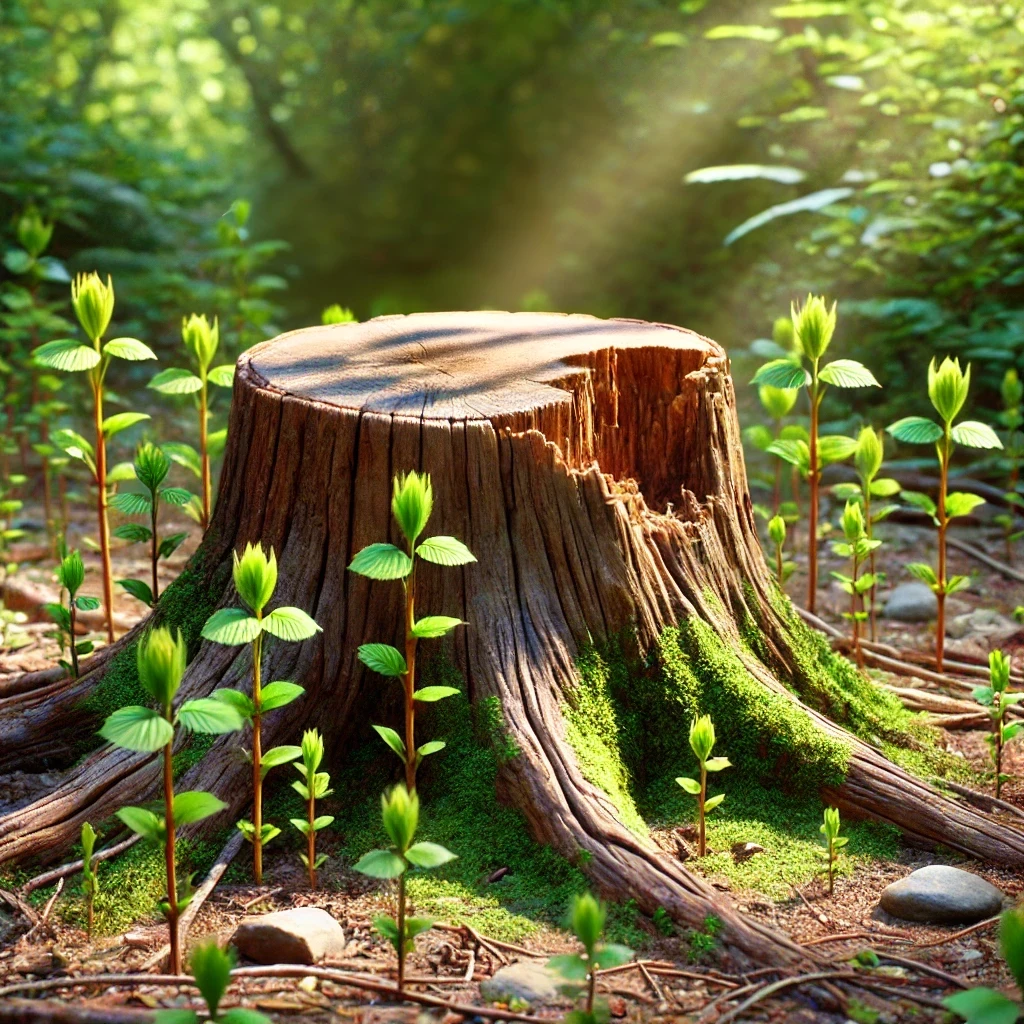

Trees are remarkable organisms that play crucial ecological roles in our ecosystems. Not only do they provide oxygen, sequester carbon, and offer habitats for countless species, but some trees also possess an extraordinary ability to regenerate after being cut down. This regenerative ability is due to a process known as “root suckering” or “sprouting.”
Understanding the botany behind this process and identifying species that exhibit this trait can be invaluable for forestry management, urban planning, and conservation efforts, especially in locations where these trees are native species.
Root suckering occurs when trees produce new shoots from their root systems, allowing them to regenerate even if the above-ground portion has been removed. This ability is typically found in species with vigorous root systems that store sufficient energy and nutrients to support new growth. Such resilience not only showcases the adaptability of these trees but also highlights their potential for rapid recovery in disturbed environments.
Below, we explore ten tree species known for their remarkable ability to regrow from their roots, providing insights into their botanical characteristics and ecological significance.
1. Poplar (Populus spp.)
Poplar trees are a diverse group of fast-growing species known for their ability to regenerate through root suckering. This trait is particularly advantageous in environments subject to frequent disturbances, such as riverbanks and floodplains. Poplars possess extensive root systems that can produce numerous suckers, leading to the formation of dense stands of young trees.
Botanically, poplars belong to the Salicaceae family and are closely related to willows. They are characterized by their simple, alternate leaves and catkin-like flowers. Poplars are dioecious, meaning individual trees are either male or female. This separation of sexes promotes genetic diversity, as cross-pollination is required for seed production.
Poplar roots are known for their ability to store significant amounts of carbohydrates, which can be mobilized to support the growth of new shoots. This energy reserve enables the tree to quickly produce root suckers following a disturbance. Poplars are also capable of photosynthesis through their bark, providing an additional source of energy for regeneration.
Ecologically, poplars play a vital role in stabilizing soil, reducing erosion, and improving water quality. Their rapid growth and ability to colonize disturbed areas make them valuable for reforestation and land reclamation projects.
Furthermore, poplars provide habitat and food for various wildlife species, contributing to biodiversity in their ecosystems. These trees offer shelter to a range of birds such as woodpeckers, owls, and songbirds. Additionally, they support mammals such as deer, beavers, and squirrels.
Poplars serve as a vital food source for numerous species, enhancing the ecological balance within their habitats. The leaves and bark are consumed by insects like caterpillars and beetles, which in turn attract birds and bats. Herbivores such as moose and rabbits feed on the leaves, bark, and twigs. The flowers and seeds provide nourishment for various bird species, as well as small mammals. Additionally, the tree’s nectar attracts bees and butterflies, contributing to the overall biodiversity in the ecosystem.
2. Aspen (Populus tremuloides)
Aspen trees, particularly the quaking aspen, are renowned for their extensive clonal colonies formed through root suckering. One of the most famous examples is the Pando clone in Utah, which is considered one of the largest and oldest living organisms on Earth. Aspens thrive in a variety of environments, including boreal forests and mountainous regions.
Aspens are easily recognized by their smooth, white bark and round leaves with finely serrated edges. The leaves tremble or “quake” in the wind due to their flattened petioles, giving the tree its common name. Aspens are also dioecious, with separate male and female trees.
The root system of aspen trees is expansive and interconnected, often extending over large areas. This network allows for the rapid spread of root suckers, which can develop into genetically identical trees. Aspens have a high photosynthetic capacity, supported by their light-colored bark, which can perform photosynthesis even during winter months.
Aspens contribute significantly to their ecosystems by providing habitat and food for various species, including mammals, birds, and insects. Their leaves and bark are consumed by herbivores such as deer, elk, and moose, while the twigs are a food source for rabbits and beavers. The cavities in aspen trees offer nesting sites for birds like woodpeckers, bluebirds, and chickadees.
Additionally, the leaves support a variety of insects, including caterpillars and aphids, which attract insectivorous birds and bats. Aspens also provide shelter for small mammals like squirrels and chipmunks, and their flowers and seeds are a food source for finches and other small birds. The tree’s bark and branches are home to various fungi and lichens, further supporting a diverse range of species within their ecosystems.
Aspens also play a role in nutrient cycling, as their fallen leaves decompose quickly, enriching the soil with organic matter.
3. Willow (Salix spp.)
Willows are a diverse group of trees and shrubs known for their exceptional ability to regenerate from cuttings, stumps, and roots. Found primarily in moist environments, willows are commonly seen along riverbanks, wetlands, and lakeshores. Their ability to regrow from roots makes them valuable for erosion control and habitat restoration projects.
Willows belong to the Salicaceae family and exhibit a variety of forms, from small shrubs to large trees. They are characterized by their narrow, lance-shaped leaves and catkin-like flowers. Willows are dioecious, with separate male and female trees, similar to poplars and aspens.
The root systems of willows are particularly vigorous, capable of producing new shoots even in challenging conditions. Willows can also grow from detached twigs or branches that come into contact with moist soil. This remarkable regenerative ability allows willows to quickly colonize disturbed areas and stabilize soils.
Ecologically, willows are essential for maintaining healthy riparian (river bank) zones. Their extensive root systems help prevent soil erosion and improve water quality by filtering pollutants.
Willows provide critical habitat for wildlife, offering food and shelter for numerous species. Their leaves and bark are consumed by herbivores such as deer, elk, and beavers, while their twigs serve as a food source for rabbits and moose. The dense foliage of willow trees provides nesting sites and cover for birds like warblers, sparrows, and red-winged blackbirds. The trees’ catkins (flower clusters) produce nectar and pollen, which attract bees, butterflies, and other pollinators. Willows also support a variety of insects, including caterpillars, beetles, and aphids, which in turn provide food for insectivorous birds and bats.
The roots of willow trees stabilize soil along waterways, creating a habitat for amphibians like frogs and salamanders. Additionally, the trees’ branches and leaves create sheltered areas for small mammals such as voles, mice, and squirrels, contributing to the overall biodiversity and health of their ecosystems.
They are also used in traditional medicine and crafts, highlighting their cultural significance.
4. Maple (Acer spp.)
Maple trees, particularly the Silver Maple (Acer saccharinum), are known for their ability to produce root suckers and regenerate after being cut down. These deciduous trees are widely distributed across North America and are valued for their ornamental beauty and ecological contributions.
Silver Maples are easily identified by their deeply lobed leaves, which turn vibrant shades of yellow and red in the fall. They produce clusters of small flowers in early spring, followed by winged samaras that disperse by wind. Silver Maples thrive in moist, well-drained soils and are often found near rivers and streams.
The root system of Silver Maples is extensive and capable of producing numerous suckers. These suckers can develop into new trees, allowing the species to spread and regenerate after disturbances. Silver Maples also exhibit rapid growth, making them effective in quickly restoring vegetative cover in damaged areas.
Ecologically, Silver Maples play a vital role in riparian (river bank) habitats, stabilizing soil and providing shade for aquatic ecosystems. Their leaves decompose rapidly, contributing to nutrient cycling and soil fertility.
Silver Maples are also important for wildlife, offering food and habitat for various birds, mammals, and insects. Their leaves and seeds provide nourishment for herbivores such as deer, rabbits, and squirrels. The dense canopy and branches offer nesting sites and shelter for birds like robins, orioles, and woodpeckers.
Silver Maple flowers produce nectar and pollen, attracting bees, butterflies, and other pollinators. The bark and leaves support a wide variety of insects, including caterpillars, beetles, and aphids, which in turn provide food for insectivorous birds and bats. Additionally, the trees’ seeds, known as samaras, are a valuable food source for small mammals like chipmunks and birds such as finches and grosbeaks. The fallen leaves contribute to the forest floor, creating a rich habitat for decomposers like fungi and earthworms, further enhancing the ecosystem’s biodiversity.
5. Elm (Ulmus spp.)
Elm trees are resilient species known for their ability to regenerate from root suckers. Despite facing significant challenges from diseases like Dutch elm disease, elms continue to thrive and contribute to urban and natural landscapes. Their regenerative ability is particularly beneficial for maintaining populations in the face of environmental stressors.
Elms are characterized by their broad, serrated leaves and distinctive, vase-shaped growth habit. They produce small, inconspicuous flowers in early spring, followed by round samaras. Elms are adaptable to a wide range of soil conditions and are commonly found in both urban and rural settings.
The root systems of elms are vigorous and robust, capable of producing suckers that can develop into new trees. This regenerative trait allows elms to recover from damage and continue growing even after significant disturbances. Elms are also known for their tolerance to various soil types and moisture levels, making them versatile in different environments.
Ecologically, elms provide critical habitat and food for numerous species. Their dense canopies offer shade and nesting sites for birds such as orioles, woodpeckers, and robins. The foliage and branches create a safe haven for nesting and roosting. The leaves and bark are consumed by various insects like caterpillars, beetles, and aphids, which attract insectivorous birds and bats. Herbivores such as deer, rabbits, and beavers also feed on the leaves, twigs, and bark of elms.
Additionally, the seeds of elm trees are a valuable food source for small mammals like squirrels and chipmunks, as well as birds such as finches and sparrows. The fallen leaves contribute to the forest floor, enriching the soil and providing habitat for decomposers like fungi, earthworms, and other microorganisms, further supporting the ecosystem’s health and biodiversity.
Elms also play a role in stabilizing soil and improving air quality in urban areas.
6. Sumac (Rhus spp.)
Sumac trees are notable for their ability to produce root suckers and form dense thickets. These trees and shrubs are commonly found in open fields, roadsides, and disturbed areas. Sumacs are valued for their vibrant fall foliage and ability to thrive in challenging environments.
Sumacs belong to the Anacardiaceae family and are characterized by their compound leaves and clusters of small, red berries. They produce panicles of tiny flowers that attract various pollinators. Sumacs are highly adaptable and can grow in poor, rocky soils.
The root systems of sumacs are extensive and capable of producing numerous suckers. This trait allows sumacs to quickly colonize disturbed areas and stabilize soil. Sumacs are also known for their allelopathic properties, which can inhibit the growth of competing vegetation, further enhancing their ability to spread.
Ecologically, sumacs provide important habitat and food for wildlife. Their bright red berries are a valuable food source for birds such as robins, bluebirds, and thrushes, as well as small mammals like squirrels, rabbits, and raccoons. The dense thickets formed by sumac shrubs offer excellent shelter and nesting sites for birds, providing protection from predators and harsh weather. These thickets also serve as cover for small mammals, ensuring a safe habitat.
Sumacs play a crucial role in soil health by adding organic matter through leaf litter and root decay, which enriches the soil and supports a diverse community of decomposers like fungi, bacteria, and earthworms. Additionally, sumacs help prevent soil erosion with their extensive root systems, stabilizing the soil and promoting a healthy, balanced ecosystem.
7. Black Locust (Robinia pseudoacacia)
Black Locust trees are well-known for their ability to produce root suckers and regenerate after being cut down. These trees are native to North America and are commonly found in a variety of environments, including forests, fields, and urban areas. Black Locusts are valued for their hard, durable wood and ecological contributions.
Black Locusts belong to the Fabaceae family and are characterized by their compound leaves and fragrant, white flowers. They produce clusters of pea-like flowers in late spring, followed by flat, brown seed pods. Black Locusts have a unique ability to fix nitrogen in the soil, enhancing soil fertility.
The root systems of Black Locusts are extensive and capable of producing numerous suckers. This regenerative trait allows Black Locusts to quickly colonize disturbed areas and outcompete other vegetation. Black Locusts are also known for their rapid growth and ability to thrive in poor, rocky soils.
Ecologically, Black Locusts play a crucial role in improving soil health and providing habitat for wildlife. Their nitrogen-fixing ability enriches the soil, benefiting other plants in the ecosystem by increasing nutrient availability. The fragrant flowers of Black Locusts attract a variety of pollinators, including bees, butterflies, and other insects, which are essential for the pollination of many plant species. The trees also provide food and shelter for various species. Birds such as woodpeckers, robins, and starlings find nesting sites in the branches, while the seeds and young shoots are consumed by small mammals like rabbits and squirrels.
Additionally, the dense foliage offers shade and protection for ground-dwelling creatures, contributing to a diverse and balanced ecosystem. The fallen leaves and other organic matter from Black Locusts decompose and add essential nutrients back into the soil, further enhancing soil health and supporting a wide range of plant and animal life.
8. Sassafras (Sassafras albidum)
Sassafras trees are recognized for their ability to produce root suckers and regenerate after being cut down. These deciduous trees are native to eastern North America and are commonly found in forests, fields, and along roadsides. Sassafras trees are valued for their aromatic leaves and roots, which have been used for culinary and medicinal purposes.
Sassafras trees belong to the Lauraceae family and are characterized by their distinctive, mitten-shaped leaves and yellow-green flowers. They produce clusters of small flowers in early spring, followed by dark blue berries. Sassafras trees are adaptable to a variety of soil conditions and can grow in both sunny and shaded areas.
The root systems of Sassafras trees are extensive and capable of producing numerous suckers. This regenerative trait allows Sassafras trees to quickly colonize disturbed areas and form dense thickets. Sassafras trees are also known for their allelopathic properties, which can inhibit the growth of competing vegetation, enhancing their capacity to grow and regenerate.
Ecologically, Sassafras trees provide important habitat and food for wildlife. Their leaves are consumed by herbivores such as deer and rabbits, while their berries serve as a food source for birds like robins, thrushes, and bluebirds, as well as small mammals like squirrels and raccoons. The dense thickets formed by Sassafras trees offer excellent shelter and nesting sites for various bird species, providing protection from predators and the elements.
Additionally, these thickets create a safe haven for small mammals, ensuring a secure habitat. Sassafras trees contribute to soil health by adding organic matter through leaf litter and root decay, which enriches the soil and supports a diverse community of decomposers, including fungi, bacteria, and earthworms.
The trees’ extensive root systems help prevent soil erosion, stabilizing the soil and promoting a healthy, balanced ecosystem. Furthermore, the aromatic leaves and roots of Sassafras trees have been known to repel certain pests, indirectly benefiting other plants and animals in their vicinity.
9. Beech (Fagus spp.)
Beech trees are known for their ability to produce root suckers and regenerate after being cut down. These deciduous trees are native to temperate regions of North America, Europe, and Asia. Beech trees are valued for their smooth, gray bark and dense, spreading canopies.
Beech trees belong to the Fagaceae family and are characterized by their simple, alternate leaves and small, triangular nuts. They produce clusters of small, inconspicuous flowers in spring, followed by edible nuts known as beechnuts. Beech trees thrive in well-drained soils and are commonly found in mature forests.
The root systems of Beech trees are extensive and capable of producing numerous suckers. This regenerative trait allows Beech trees to quickly recover from disturbances and continue growing. Beech trees are also known for their shade tolerance, making them effective in maintaining forest understories.
Ecologically, Beech trees play a crucial role in providing habitat and food for wildlife. Their dense canopies offer ample shade and nesting sites for birds such as woodpeckers, nuthatches, and owls, offering protection and ideal breeding grounds. The nuts, known as beechnuts, are a valuable food source for various mammals including squirrels, deer, and bears, as well as birds like jays and turkeys. These nuts provide essential nutrients, especially in the autumn and winter months when other food sources are scarce.
Beech trees also contribute to soil health by adding organic matter through their abundant leaf litter and root decay, which enriches the soil and supports a diverse community of decomposers, including fungi, bacteria, and earthworms. The fallen leaves form a thick mulch that retains moisture and prevents soil erosion, promoting a stable and fertile environment for other plants and microorganisms. Additionally, the smooth bark of Beech trees offers a unique habitat for mosses, lichens, and insects, further enhancing biodiversity within their ecosystems.
10. Eucalyptus (Eucalyptus spp.)
Eucalyptus trees are renowned for their ability to regenerate from root suckers and coppicing after being cut down. Native to Australia, these evergreen trees are widely cultivated in tropical and subtropical regions worldwide. Eucalyptus trees are valued for their fast growth, aromatic leaves, and high-quality timber.
Eucalyptus trees belong to the Myrtaceae family and are characterized by their lance-shaped leaves and clusters of small, white or yellow flowers. They produce woody capsules that release tiny seeds. Highly adaptable, Eucalyptus trees can grow in various soil conditions, including poor, dry soils.
One of the key features that enable Eucalyptus trees to regenerate so effectively is the presence of lignotubers. These are woody, swollen root structures that store carbohydrates and dormant buds. Lignotubers allow Eucalyptus trees to resprout even after severe damage, such as being cut down or burned to the ground in bushfires. This adaptation is an evolutionary response to the fire-prone environments of Australia, ensuring that the trees can survive and quickly regrow after fires.
The root systems of Eucalyptus trees are extensive and capable of producing numerous suckers. This regenerative trait, combined with lignotubers, allows Eucalyptus trees to rapidly colonize disturbed areas and outcompete other vegetation. Eucalyptus trees also exhibit allelopathic properties, which can inhibit the growth of competing vegetation, further enhancing their ability to dominate their habitats.
Ecologically, Eucalyptus trees play a crucial role in providing habitat and food for wildlife. Their leaves are a primary food source for herbivores such as koalas and some species of possums, while their flowers produce nectar that attracts a wide range of pollinators, including bees, butterflies, and birds like honeyeaters and lorikeets. The dense canopies of Eucalyptus trees offer shelter and nesting sites for various bird species, providing protection from predators and the elements. Additionally, the bark and foliage provide habitat for insects and other small organisms, supporting a complex food web.
One of the remarkable features of Eucalyptus trees is their ability to regenerate after fires, a trait that is particularly important for maintaining biodiversity in fire-prone ecosystems. This resilience ensures that Eucalyptus forests can recover and continue to provide habitat and resources for wildlife even after fire events, supporting species that depend on these environments for survival.
Eucalyptus trees also contribute to soil health by adding organic matter through leaf litter and root decay. The fallen leaves and other organic material decompose, enriching the soil with essential nutrients and fostering a diverse community of decomposers like fungi, bacteria, and earthworms. The deep root systems of Eucalyptus trees help stabilize the soil, prevent erosion, and enhance water infiltration, promoting a healthy and sustainable ecosystem.
In conclusion, the ability of certain tree species to regenerate from root suckers highlights the resilience and adaptability of nature. These trees play vital roles in their ecosystems, contributing to soil health, providing habitat for wildlife, and stabilizing disturbed environments by preventing erosion, enhancing soil structure, and promoting ecological recovery after disturbances.

Excellent article. Thank you.
You’re welcome! 🙂