

This post is part-contributed and may contain affiliate links
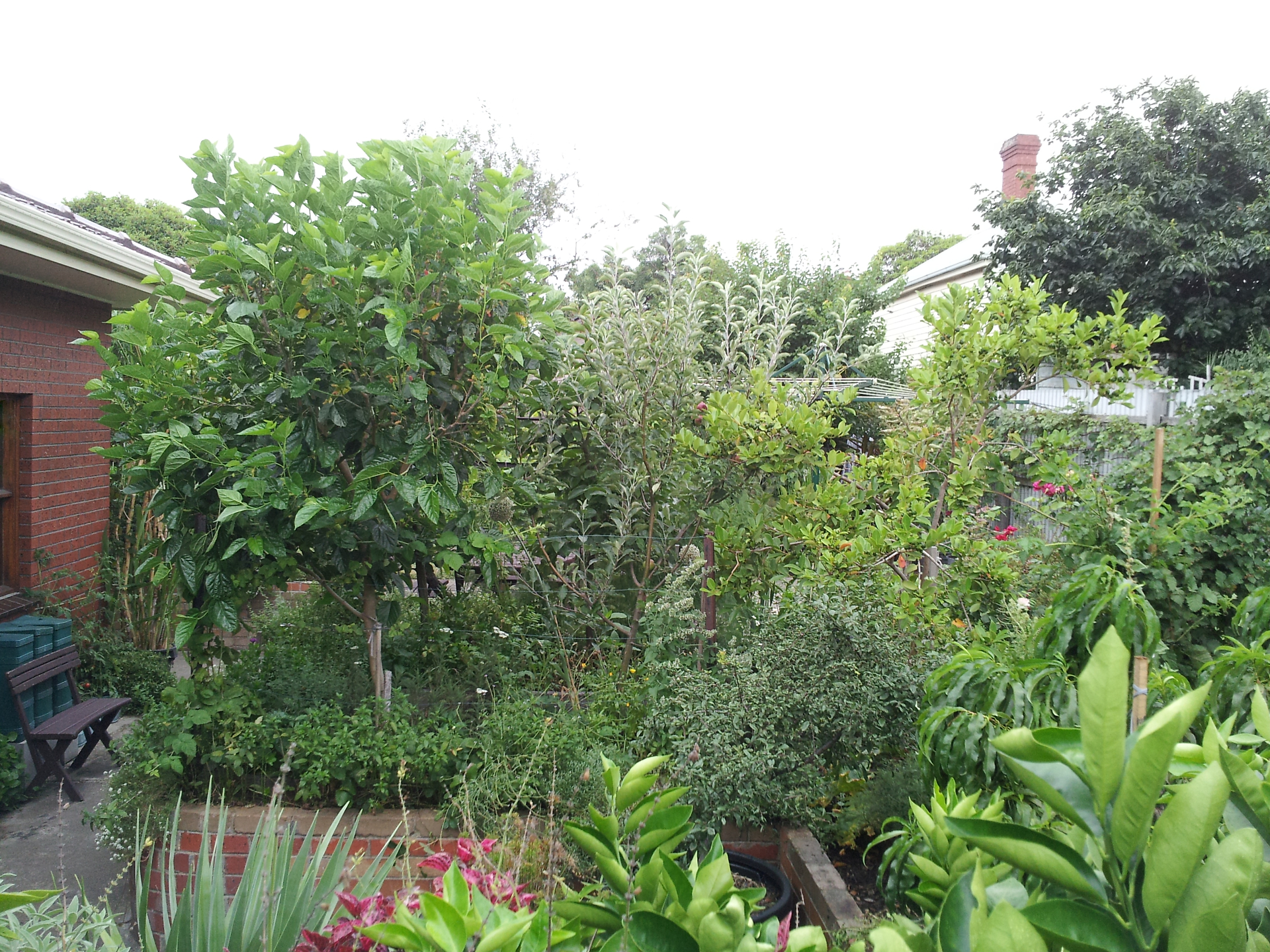
A backyard can produce much more than a conventional lawn or a few isolated garden beds. With careful planning, you can combine fruit trees, shrubs, herbs, vegetables, groundcovers, and climbing plants into a productive growing system that uses horizontal and vertical space efficiently.
This is the basic idea behind a food forest, also known as a forest garden. Rather than replicating the individual species found in a natural forest, a food forest incorporates some of its structural and ecological characteristics. Plants of different heights and growth habits are arranged in layers, the soil is kept covered, perennial plants provide much of the permanent structure, and plant diversity is used to make better use of available light, water, nutrients and growing space.
A well-designed food forest can produce fruit, nuts, berries, herbs, perennial vegetables and other useful plants from a relatively small area. Once established, permanent groundcovers and organic mulches can reduce weed growth and soil moisture loss, while a diversity of flowering plants can provide food and habitat for pollinators and beneficial insects.
The important point is that a food forest is not simply an orchard with a few herbs planted beneath the trees. It is an intentionally designed, multi-layered growing system in which plants are selected and positioned according to their mature size, growth habit and ecological requirements.
What Is a Food Forest?
A food forest is a multi-layered perennial growing system in which trees and shrubs are combined with smaller plants that occupy the spaces above, below and between them. It replicates the structure of a natural forest system but substitutes plant species with those useful to the gardener. What we are designing is not a garden but a living ecosystem, where different plants grow in ways that support one another. By replicating nature’s design, we can harness natural ecological processes to maintain the system for us.
In permaculture design, food forests are often described as having seven vegetation layers. This is a useful way to understand how plants can occupy different parts of the same growing space, rather than a rigid requirement that every food forest must include every layer.
A small backyard, for example, may have no room for very large canopy trees, whereas a larger property may support several tree layers. The objective is not to literally reproduce a forest, but to use vertical space efficiently while avoiding excessive competition for sunlight, water and nutrients.
Perennial plants usually form the backbone of the system because they remain in place for many years. You can still incorporate annual vegetables and herbs, especially while young trees and shrubs are establishing and sunlight still reaches the ground.
Planning the Food Forest Before Planting
The most important decisions are made before any plants go into the ground.
Begin by mapping the site. Observe where sunlight falls throughout the day, which areas are shaded by buildings or established trees, how water flows across the site after heavy rain, where strong winds enter the garden, and whether any areas remain unusually wet or dry.
Existing vegetation should also be considered. Mature trees can have extensive root systems that extend well beyond their canopies, taking up water and soil nutrients, while vigorous grasses and perennial weeds may compete strongly with newly planted trees and shrubs.
Paths, fences, sheds, irrigation, access for harvesting, and room for future pruning should all be incorporated into the design. If parts of the garden are not easily accessible or nearby, they will not be visited often.
Sunlight is particularly important because many productive fruit and nut trees require high light levels for good flowering and fruit production, and typically need at least 6 hours of direct sun (full sun) a day. Smaller plants can tolerate varying degrees of shade, but they should not be placed beneath taller vegetation simply because they belong to a lower food-forest layer. Each species still needs an appropriate amount of light.
Most importantly, design for each plant’s mature size rather than its size at purchase. Closely planted young trees may initially leave large gaps between them, but as their canopies expand, they can eventually compete for light, water and root space.
Allowing appropriate spacing from the start helps maintain good light penetration, airflow and access as the food forest develops.
Understanding the Seven Food Forest Layers
The seven-layer food forest model provides a practical way to organise plants by growth habit and their position in the garden.
- The canopy layer contains the tallest trees in the system. These may include full-sized fruit or nut trees where space allows.
- The understory, or lower tree layer, consists of smaller trees growing beneath or between the larger trees. Dwarf and semi-dwarf fruit trees are particularly useful in compact gardens, although they still require adequate light and should not be planted in heavy shade.
- The shrub layer occupies the space beneath the trees and can include berry bushes and other productive shrubs.
- The herbaceous layer comprises non-woody plants such as culinary herbs, perennial vegetables and flowering plants. Many of these plants provide food while also supplying nectar or pollen for beneficial insects.
- The groundcover layer comprises low-growing plants that spread across otherwise exposed soil. Strawberries, creeping herbs and other suitable groundcovers can serve as living mulch, helping protect the soil surface and suppress some weed growth.
- The root or rhizosphere layer includes plants grown primarily for their roots, bulbs, corms or tubers. These should be positioned so that harvesting will not repeatedly damage the roots of established trees and shrubs.
- The vertical layer comprises climbing plants and vines such as grapes, kiwifruit, passionfruit and climbing beans. Vigorous perennial vines generally benefit from dedicated supports or trellises to prevent them from overwhelming young trees.
These layers do not function in isolation. Tree canopies affect how much light reaches lower plants, roots compete for water and nutrients, and vigorous groundcovers or climbers can suppress less competitive plants. Successful design therefore depends on understanding how plants will interact as they mature.
Selecting the Right Plants
Select plants based on site conditions rather than a list of desirable species. Identify which areas receive full sun, part sun or shade in both summer and winter. Map any dry and damp areas of the garden. Then determine which plants or trees will grow there.
Consider temperature, rainfall, humidity, soil type, soil drainage, sunlight, and available growing space. Also select fruit trees based on mature size, rootstock, pollination requirements, and harvest season.
Different cultivars (cultivated varieties) of the same fruit can have quite different growing requirements. Some require a specific amount of winter chilling, while others perform better in warmer conditions. Some fruit trees are self-fertile, while others require a compatible pollinating cultivar nearby, so space for two trees may be needed instead of one.
Local knowledge can therefore be useful when purchasing long-lived plants. Searching for a “nursery near me” and discussing suitable species and cultivars with knowledgeable nursery staff can help identify plants adapted to local growing conditions.
It is equally important to grow foods that will actually be harvested and used. Filling limited garden space with unusual edible species simply because they appear on food-forest plant lists provides little benefit.
A productive food forest should reflect the needs of the people using it.
Choose Plants That Perform More Than One Function
Some plants can contribute to the food forest in various ways.
Leguminous plants have root nodules that house nitrogen-fixing bacteria, which can introduce biologically fixed nitrogen into the plant-soil system. Depending on the climate and available space, these may include clovers, peas, beans, lupins and various perennial legumes. These plants primarily incorporate the nitrogen they fix into their own tissues rather than continuously releasing it into the surrounding soil. It becomes available to other plants through the decomposition of fallen leaves, dead roots, pruned material, and other organic residues.
Flowering plants can provide nectar and pollen for bees, hoverflies, parasitoid wasps and other beneficial organisms. Providing a sequence of flowering species throughout the growing season is generally more effective than relying on a single flowering plant.
Plants that produce substantial quantities of foliage can also provide organic material for chop-and-drop mulching. Comfrey is often used for this purpose because it produces large leaves repeatedly during its active growth. Comfrey is sometimes described as a “dynamic accumulator” that concentrates unusually large amounts of minerals from deep soil layers because of its deep taproot, making it useful for biomass production, soil coverage, and recycling the nutrients stored in its leaves.
Plant diversity can increase habitat complexity and deliver ecological benefits, but diversity alone does not guarantee a healthy garden. Plants still require suitable light, water, soil conditions, spacing and management.
Preparing the Soil
Healthy soil is fundamental to a long-lived food forest, but establishing one does not require cultivating the whole site.
Before planting, check drainage and identify serious compaction problems. Soil testing can also reveal significant pH or nutrient limitations, which are easier to correct before permanent trees become established.
When creating a food forest over a lawn, sheet mulching can suppress existing vegetation while reducing the need for extensive digging.
Lay plain cardboard over the soil surface, overlapping the edges, then thoroughly wet it before adding organic materials on top. Remove plastic tape, labels, and staples beforehand. Persistent rhizomatous or stoloniferous weeds may require separate control because vigorous underground stems can sometimes grow around or through the sheet mulch. Do not apply cardboard in unnecessarily thick layers. While it can suppress vegetation effectively, excessive layering can temporarily restrict the movement of water and gases between the atmosphere and the soil.
You can then spread organic mulch, such as coarse wood chips, over the surface. A mulch layer about 5–8 cm (2–3 inches) deep is suitable for many newly planted woody plants.
Keep mulch clear of trunks and stems rather than piling it against them. Continuous contact between moist organic material and the bark can create conditions favourable to decay and disease.
Mulch reduces evaporation from the soil surface, moderates soil temperature, suppresses germinating weeds, and gradually contributes organic matter as it decomposes.
Plant Trees Correctly
Trees and large shrubs form the permanent structure of the food forest, so planting them correctly is important.
Dig the planting hole about two to three times the width of the root ball, with gently sloping sides, but no deeper than necessary to position the tree correctly. For bare-root trees, make the hole wide enough for the roots to spread naturally without bending or circling.
Locate the root flare, where the trunk widens and the major structural roots emerge, and position it at or slightly above the surrounding soil level. The root crown or root collar, the transition zone between the trunk and root system, should not be buried. Planting too deeply reduces oxygen around the upper roots and keeps the base of the trunk excessively moist, increasing the risk of root and crown rot and other long-term problems.
Backfill primarily with the soil removed from the planting hole, adding no more than 25% compost, rather than creating a pocket filled with rich compost or potting mix. Roots need to expand into the surrounding soil as the tree establishes.
If the root ball contains circling, spiraling or tightly bound roots, correct them before planting, where practical, to prevent the root ball from being strangled.
Water thoroughly after planting to settle the soil around the roots, then mulch the surrounding area, keeping the mulch away from the trunk to prevent crown rot.
Plan Irrigation From the Beginning
Food forests are sometimes described as systems that eventually require little or no irrigation, but water requirements depend on climate, rainfall, soil, species and planting density.
Young trees and shrubs require consistent moisture while their root systems establish. Even established plants may need supplementary irrigation during prolonged dry periods.
Dense planting can also intensify competition for available soil moisture. A mature food forest may shade the soil and reduce evaporation, but the greater amount of vegetation also uses water through transpiration.
Irrigation should therefore be part of the initial design rather than something added only when plants show signs of water stress.
Drip irrigation and similar targeted systems can deliver water close to plant root zones while keeping paths and unused areas relatively dry. Installing irrigation before groundcovers, shrubs and vines fill the garden is considerably easier than retrofitting it later.
Mulching complements irrigation by reducing evaporation from exposed soil, but it does not replace the need to supply adequate water.
Establishment Takes Time
A newly planted food forest is not yet a functioning, mature forest garden.
During the first few years, considerable unused light and growing space usually remain while trees and shrubs establish. Annual vegetables, herbs, flowers and short-lived plants can be grown in these gaps and gradually reduced or moved as the tree canopy expands.
Early maintenance commonly includes watering, controlling vigorous weeds, replenishing mulch, training young trees, pruning as needed, managing climbers and replacing plants that prove unsuitable for their location.
It is also important to monitor the food forest continuously. A plant that seemed well positioned when young may eventually shade neighbouring plants, compete excessively for space, or grow much larger than expected. Some adjustment is therefore normal as the garden develops.
As perennial vegetation covers more of the soil surface, weed pressure may decrease, leaving less bare soil exposed to drying and erosion. Permanent plants also reduce the need for repeated sowing, transplanting, and soil disturbance associated with annual vegetable production.
This can make an established food forest relatively low-maintenance, but it does not make it maintenance-free.
Fruit trees may still require pruning, irrigation, nutrient management, thinning, or protection from pests and diseases. Vines may require training, groundcovers may need controlling, and productive plants still need harvesting.
The aim is not to eliminate human management. It is to design the garden so that natural processes do more of the work.
Building a Productive Backyard Ecosystem
A successful food forest develops gradually rather than appearing fully formed after planting.
Trees provide the long-term structure. Shrubs, herbs and perennial vegetables occupy the spaces beneath and between the trees. Groundcovers protect exposed soil, climbing plants use vertical space, and temporary crops can fill sunny gaps while the permanent vegetation establishes.
The result is neither a conventional orchard nor a simple vegetable garden planted beneath trees. It is an intentionally designed perennial polyculture in which the arrangement and interactions of plants are as important as the individual species selected.
Begin with careful observation and planning. Establish the trees and other major structural plants first, protect and improve the soil, provide reliable water, and gradually introduce the remaining layers as the system develops.
With suitable plant selection, appropriate spacing and ongoing management, even a small backyard can be transformed into a diverse and highly productive food-growing landscape.
References
- Feibel, S., Chamberlain, J. L., Favor, K., Moore, A., & MacFarland, K. (2024). Forest farming: An agroforestry practice. USDA Forest Service, National Agroforestry Center. https://research.fs.usda.gov/treesearch/68186
- Pumariño, L., Sileshi, G. W., Gripenberg, S., Kaartinen, R., Barrios, E., Muchane, M. N., Midega, C., & Jonsson, M. (2015). Effects of agroforestry on pest, disease and weed control: A meta-analysis. Basic and Applied Ecology, 16(7), 573-582. https://www.sciencedirect.com/science/article/pii/S1439179115001073
- Rauter, S., & Sherp, L. (2025). Sheet mulching and lasagna composting with cardboard. Oregon State University Extension Service. https://extension.oregonstate.edu/es/node/93971/printable/print
- University of Minnesota Extension. Watering newly planted trees and shrubs. https://extension.umn.edu/garden-and-home/yard-and-garden/gardening-in-minnesota/watering-newly-planted-trees-and-shrubs
- University of Minnesota Extension. Watering established trees and shrubs. https://extension.umn.edu/garden-and-home/yard-and-garden/gardening-in-minnesota/watering-established-trees-and-shrubs
- Agriculture Victoria. (2026). Dry season management — young fruit trees. https://agriculture.vic.gov.au/crops-and-horticulture/fruit-and-nuts/orchard-management/dry-season-management-young-fruit-trees


Be the first to reply