
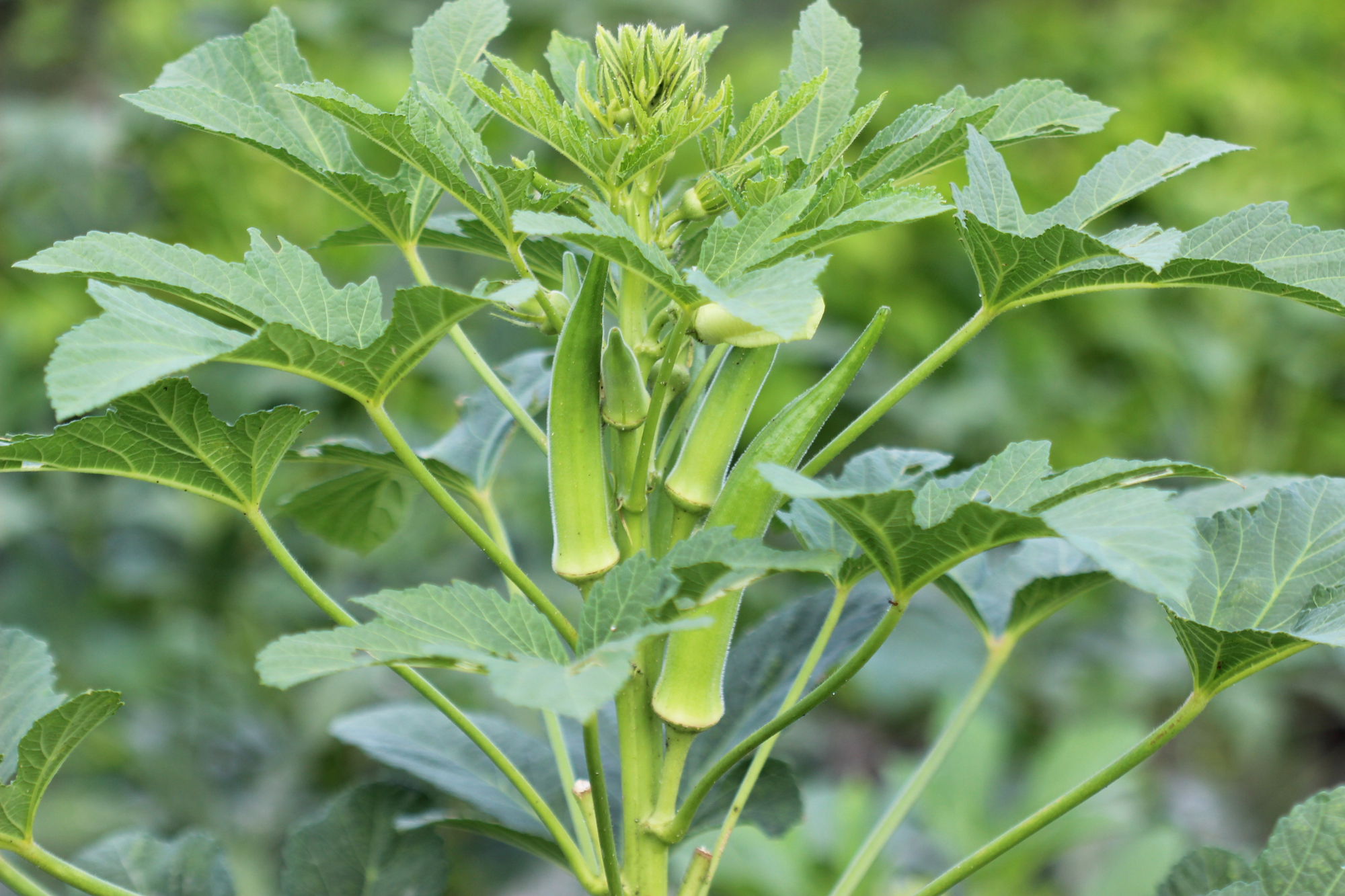

Overview
- Name: Okra
- Botanical Name: Abelmoschus esculentus
- Plant Family: Malvaceae
- Native to: Northeastern Africa, particularly the Ethiopian–Sudanese region; widely domesticated and cultivated across Africa, the Middle East, South Asia, and tropical to subtropical regions worldwide
Description
Okra (Abelmoschus esculentus) is a warm-season, frost-sensitive annual vegetable from the Malvaceae (mallow) family grown primarily for its immature seed pods, which are harvested while tender and used as a culinary vegetable. Although botanically a perennial in frost-free tropical climates, it is cultivated as an annual in temperate regions due to its sensitivity to cold. Okra exhibits an upright, vigorous growth habit and typically reaches heights of 0.9–2.1 m (3–7 ft), depending on cultivar, growing conditions, and length of the season.
The plant develops a strong central stem that is erect, coarse, and often sparsely to moderately branched. Stems are typically green to reddish and covered with fine hairs, a characteristic shared with many members of the Malvaceae family. Leaves are large, palmately lobed, and arranged alternately along the stem. Each leaf measures approximately 15–30 cm (6–12 in) across, with 3–7 lobes and a rough, slightly hairy surface. Leaf color ranges from medium to dark green, and long petioles attach the leaves to the main stem.

Okra produces large, showy, hibiscus-like flowers borne singly in the leaf axils. Flowers are typically pale yellow to creamy white with a prominent dark red or purple center and measure 5–8 cm (2–3 in) across. The plant is self-pollinating but readily visited by insects, particularly bees. After pollination, flowers quickly give way to elongated, angular seed pods.
The edible fruit is a ridged, tapering capsule ranging from 5–15 cm (2–6 in) long at harvest stage. Pods mature rapidly and become fibrous if left on the plant too long. Each pod contains numerous round seeds arranged in rows. Okra develops a deep taproot with lateral roots, contributing to its drought tolerance once established but making it sensitive to transplanting disturbance.

Interesting Facts
- Okra belongs to the Malvaceae (mallow) family, which also includes marshmallow, cotton, hibiscus, and cacao. This relationship is evident in okra’s large, hibiscus-like flowers and its fibrous stems. The family connection also explains okra’s mucilaginous compounds, which are structurally similar to polysaccharides found in other mallows.
- The characteristic “slimy” texture of okra pods comes from soluble polysaccharides known as mucilage. These compounds increase viscosity when heated in water and have traditionally been used to thicken soups and stews, most notably in dishes such as gumbo, where okra serves both a culinary and functional role.
- Okra is one of the most heat-tolerant vegetable crops commonly grown in home gardens. Growth and pod production increase as temperatures rise, with optimal development occurring when daytime temperatures exceed 27 °C (80 °F), a trait that distinguishes it from many other summer vegetables that suffer heat stress.
- Although commonly treated as a vegetable, okra fruit is botanically classified as a capsule containing numerous seeds. If pods are left on the plant to fully mature and dry, the seeds can be harvested and used for planting, or roasted as a traditional coffee substitute in some regions.
- Okra has a long history of cultivation in Africa and was spread globally through trade routes and the transatlantic slave trade. It became a foundational crop in Southern United States agriculture, valued for its reliability in hot climates and its ability to produce continuously throughout the growing season.
Basic Growing Information
Okra is a warm-season vegetable that requires consistently high temperatures to grow and produce pods successfully. It performs best when daytime temperatures range from 24–35 °C (75–95 °F), with optimal growth occurring once soil temperatures exceed 18–21 °C (65–70 °F). Okra is extremely sensitive to cold soils, frost, and cool weather; temperatures below 15 °C (59 °F) can slow growth, delay flowering, and significantly reduce yields. Because of this sensitivity, okra should only be planted outdoors after all danger of frost has passed and the soil has thoroughly warmed. In cooler regions with short summers, seeds can be started indoors 3–4 weeks before the final frost and transplanted carefully, as okra does not tolerate root disturbance well. Okra thrives in full sun and fertile, well-drained soils, and it requires consistent moisture to maintain steady pod production, though it is more drought-tolerant than many other vegetable crops once established.
- Sun Requirements: Full sun
- Water Requirements: Medium
- Soil Types and Properties: Fertile, well-draining loam or sandy loam rich in organic matter; tolerates heavier soils if drainage is adequate
- Soil pH: 6.0–7.5
- Pot Size for Container Growing: Minimum 30–40 cm (12–16 in) deep and wide per plant
Planting
- Best Time to Plant:
- Climates with freezing winters: Late spring to early summer, once soil temperatures are consistently above 18–21 °C (65–70 °F)
- Climates with milder winters: Mid to late spring, or early summer in warm regions.
Note: Check gardening calendars for the best planting times in your location
- Spacing: 30–45 cm (12–18 in) between plants; 75–90 cm (30–36 in) between rows
- Seed Sowing Method: Sow seeds directly into the ground or start in seed trays for transplanting.
- Seed Sowing Depth: 2.5 cm (1 inch) deep
- Time to Harvest: 8–10 weeks from seed planting
- Mature Height/Spread: Approximately 90–180 cm (3–6 ft) tall with a spread of 45–90 cm (18–36 in)
- Grown From: Seeds
Care and Maintenance
- Watering Tips: Okra requires regular, even watering to maintain steady growth and continuous pod production. Provide deep watering once or twice per week, depending on rainfall and soil type, ensuring moisture penetrates the root zone. Avoid frequent shallow watering, which encourages weak root systems. While okra tolerates short dry periods, drought stress can reduce flowering and pod quality.
- Fertilization: Okra benefits from moderately fertile soil and does not require excessive fertilization. Incorporate well-aged compost or a balanced fertilizer before planting. Once plants begin flowering, a light side-dressing of a nitrogen-containing fertilizer may be applied if growth is weak. Excess nitrogen should be avoided, as it promotes leafy growth at the expense of pod production.
- Pruning: Pruning is generally not required for okra, but selective removal of lower, aging leaves can improve air circulation and reduce disease pressure in dense plantings. In long growing seasons, cutting plants back by one-third to one-half in midseason can encourage renewed growth and extended harvest, provided adequate moisture and nutrients are available.
- Support: Most okra varieties have sturdy, upright stems and do not require support. However, tall cultivars grown in fertile soils or windy locations may benefit from light staking to prevent lodging (bending or falling over of plants, usually due to the weight of the stems or the influence of environmental factors like wind, rain, or soil saturation). Stakes or cages should be installed early to avoid disturbing roots later in the growing season.
Growing Difficulty
- Easy to Grow (in correct climate)
Okra is considered easy to grow in warm climates with adequate sunlight and heat, though it performs poorly in cool or short-season regions.
Growing Tips
- Warm Soil Is Essential: Plant okra only after soil temperatures are consistently warm, as cool soil delays germination and weakens seedlings. Using black plastic mulch or planting in raised beds can help increase soil temperature and improve early-season growth, particularly in marginal climates.
- Harvest Frequently: Pods grow rapidly and become tough if left on the plant too long. Harvest every 1–2 days once production begins to maintain tenderness and stimulate continued flowering. Regular harvesting prevents plants from diverting energy into seed development, which can slow further pod production.
- Manage Plant Height in Long Seasons: In regions with long summers, cutting plants back midseason can rejuvenate growth and extend productivity. This practice encourages new shoots and flowering, allowing continued harvest into late summer or early autumn when conditions remain warm.
Companion Plants
- Good companion plants include: Okra grows well alongside crops that benefit from its upright growth habit and minimal competition for light. Commonly recommended companions include peppers, eggplant, basil, cucumbers, melons, and beans. These plants share similar heat and sunlight requirements, and okra’s tall stems can provide partial shelter from wind and intense sun for lower-growing vegetables. Flowers such as calendulas are also beneficial, as they attract pollinators and marigolds may help suppress certain soil pests.
- Avoid planting near: Okra should be kept separate from crops that prefer cooler conditions or that are sensitive to heat and competition. It is generally not recommended to plant okra near cool-season vegetables such as lettuce, spinach, peas, or brassicas, as their differing temperature and moisture requirements can lead to poor performance for one or both crops. Dense plantings of aggressive vines should also be avoided to prevent shading and reduced air circulation.
Common Pests and Diseases
- Pests:
- Aphids (e.g., Aphis gossypii) – Aphids feed by sucking sap from leaves and stems, causing curling, yellowing, and stunted growth. They also excrete honeydew, which encourages sooty mold and can facilitate the spread of plant viruses.
Management: Use strong water sprays to dislodge aphids, avoid excess nitrogen fertilization, and encourage beneficial insects such as lady beetles and lacewings. In heavier infestations, insecticidal soap or horticultural oil can be applied. - Flea Beetles – These small, jumping beetles chew numerous small holes in young okra leaves, which can severely stress seedlings and slow early growth. Damage is most serious during establishment.
Management: Protect young plants with floating row covers, maintain vigorous growth through proper watering and fertility, and remove crop residues that may harbor overwintering adults. - Stink Bugs – Stink bugs feed on developing pods, causing deformation, internal damage, and reduced market quality. Feeding injuries may also predispose pods to secondary infections.
Management: Monitor plants regularly, handpick insects in small gardens, remove nearby weeds that serve as alternate hosts, and maintain clean garden borders to reduce pressure. - Spider Mites – Spider mites thrive in hot, dry conditions and feed on the undersides of leaves, causing stippling, bronzing, and eventual leaf drop if infestations are severe.
Management: Reduce plant stress, increase humidity around plants when possible, wash leaf undersides with water, and avoid unnecessary insecticide use that can disrupt natural predators. - Root-Knot Nematodes (Meloidogyne spp.) – These microscopic pests attack roots, causing characteristic galls that impair water and nutrient uptake, leading to stunting and reduced yields.
Management: Rotate with non-host crops, incorporate organic matter to improve soil health, and avoid repeatedly planting okra in infested soils.
- Aphids (e.g., Aphis gossypii) – Aphids feed by sucking sap from leaves and stems, causing curling, yellowing, and stunted growth. They also excrete honeydew, which encourages sooty mold and can facilitate the spread of plant viruses.
- Diseases:
- Powdery Mildew – A fungal disease that appears as white, powdery growth on leaf surfaces, reducing photosynthesis and plant vigor, especially late in the season.
Management: Ensure full sun exposure, provide good air circulation, avoid overhead watering, and remove infected plant material at the end of the season. - Leaf Spot Diseases (e.g., Cercospora and Alternaria species) – These diseases cause dark, irregular spots on leaves, which may lead to premature defoliation under warm, humid conditions.
Management: Practice crop rotation, remove infected debris, water at soil level to keep foliage dry, and space plants adequately for airflow. - Damping-Off (seedlings) – A disease complex caused by soil-borne fungi that results in seedling collapse shortly after emergence, particularly in cool or waterlogged soils.
Management: Plant into warm, well-drained soil, avoid overwatering, and use clean planting areas or containers. - Fusarium and Verticillium Wilts – Soil-borne fungal diseases that cause yellowing, wilting, and eventual plant death, often affecting one side of the plant first.
Management: Use long crop rotations, improve soil drainage, and remove affected plants promptly, as chemical control is ineffective once symptoms appear.
- Powdery Mildew – A fungal disease that appears as white, powdery growth on leaf surfaces, reducing photosynthesis and plant vigor, especially late in the season.
Overall, okra is considered relatively tolerant of pests and diseases compared with many other warm-season vegetables, and most problems can be effectively managed through good cultural practices, crop rotation, and regular monitoring rather than intensive chemical control.
Harvesting
- Harvest Time: Okra pods are ready for harvest approximately 6–8 weeks after planting, once plants begin flowering and pods develop rapidly. Harvest pods when they are young and tender, typically 5–10 cm (2–4 in) long, depending on variety. Pods grow very quickly in warm weather and can become tough and fibrous within a few days if left unpicked, so frequent harvesting is essential.
- Harvesting Tips: Harvest okra every 1–2 days during peak production to maintain tenderness and encourage continued flowering and pod set. Use a sharp knife or pruning shears to cut pods cleanly from the stem, as stems can be tough and woody. Wear gloves or long sleeves if needed, as some varieties have irritating hairs on stems and pods. Avoid damaging developing buds and side branches during harvest.
- Storage: Fresh okra is best used soon after harvest for optimal texture and flavor. Store unwashed pods in breathable bags or containers in the refrigerator at around 7–10 °C (45–50 °F), where they will keep for up to 3–5 days. Excess moisture promotes decay, so avoid sealing pods tightly. Okra can also be blanched briefly and frozen for longer-term storage.
Propagation
- Produce New Plants From: Seeds
Okra is propagated almost exclusively from seed. Seeds are typically sown directly into the garden once soil temperatures are consistently warm, as okra does not transplant well due to its sensitive taproot. Transplants can be used with care if grown in biodegradable pots to minimize root disturbance, but direct seeding remains the most reliable method for healthy, productive plants.
Culinary Uses
Okra is a versatile vegetable valued in many cuisines around the world for both its flavor and functional cooking properties. The young, tender pods are the primary edible portion and can be prepared in a wide range of ways. When cooked, okra releases natural mucilage, a soluble fiber that thickens liquids, making it especially prized in soups and stews.
In Southern United States cooking, okra is commonly sliced and fried, either battered or breaded, or added to dishes such as gumbo, where it serves as a natural thickening agent alongside tomatoes or roux. In Mediterranean, Middle Eastern, and North African cuisines, okra is often stewed slowly with tomatoes, onions, garlic, and spices, sometimes combined with lamb or beef. In Indian cooking, okra (bhindi) is frequently sautéed or stir-fried with spices to produce dry dishes where careful cooking minimizes slipperiness.
Okra is also widely used in West African cuisine, where it forms the base of thick soups eaten with starchy staples. In East and Southeast Asia, young pods are lightly steamed, stir-fried, grilled, or eaten raw in salads, particularly when very small and tender. Pickled okra is another popular preparation, preserving pods in vinegar with spices for extended storage and a crisp texture.
Beyond the pods, okra seeds have historically been roasted and used as a coffee substitute in some regions, though this is now uncommon. Nutritionally, okra is valued for its fiber, vitamin C, vitamin K, folate, and antioxidants, making it both a functional and health-supportive food when harvested at the correct stage.
In conclusion, okra is a rewarding crop for home gardeners who can provide warmth, sun, and regular harvesting. Its rapid growth, high productivity, and broad culinary usefulness make it an excellent choice for warm-season gardens. With attentive picking and proper care, okra plants can produce abundantly over an extended season, supplying fresh, nutritious pods for many traditional and modern dishes.
References
- Growing okra in a home garden. (n.d.). University of Maryland Extension. https://extension.umd.edu/resource/growing-okra-home-garden/
- Growing okra in the home garden. (n.d.). Yard and Garden. https://yardandgarden.extension.iastate.edu/how-to/growing-okra-home-garden
- How to grow Okra – MSU extension. (n.d.). MSU Extension. https://www.canr.msu.edu/resources/how_to_grow_okra
- Smith, P. (2025, December 3). How to Grow Okra in South Carolina | Home & Garden Information Center. Home & Garden Information Center. https://hgic.clemson.edu/factsheet/how-to-grow-okra-in-south-carolina-including-planting-dates-watering-fertilizing-ratooning-pest-management-and-harvesting-tips-for-healthy-pod-production/
- Utah State University. (2023, December 14). Okra in the garden. USU. https://extension.usu.edu/yardandgarden/research/okra-in-the-garden
- Okra (Home Gardening Series) – FSA6013. University of Arkansas, https://www.uaex.uada.edu/publications/PDF/FSA-6013.pdf
- How to Grow Okra – Texas A&M AgriLife Extension Service. https://agrilifeextension.tamu.edu/wp-content/uploads/2023/08/how-to-grow-okra.pdf

Very informative = thanks especially for the info on what not to plant nearby.