
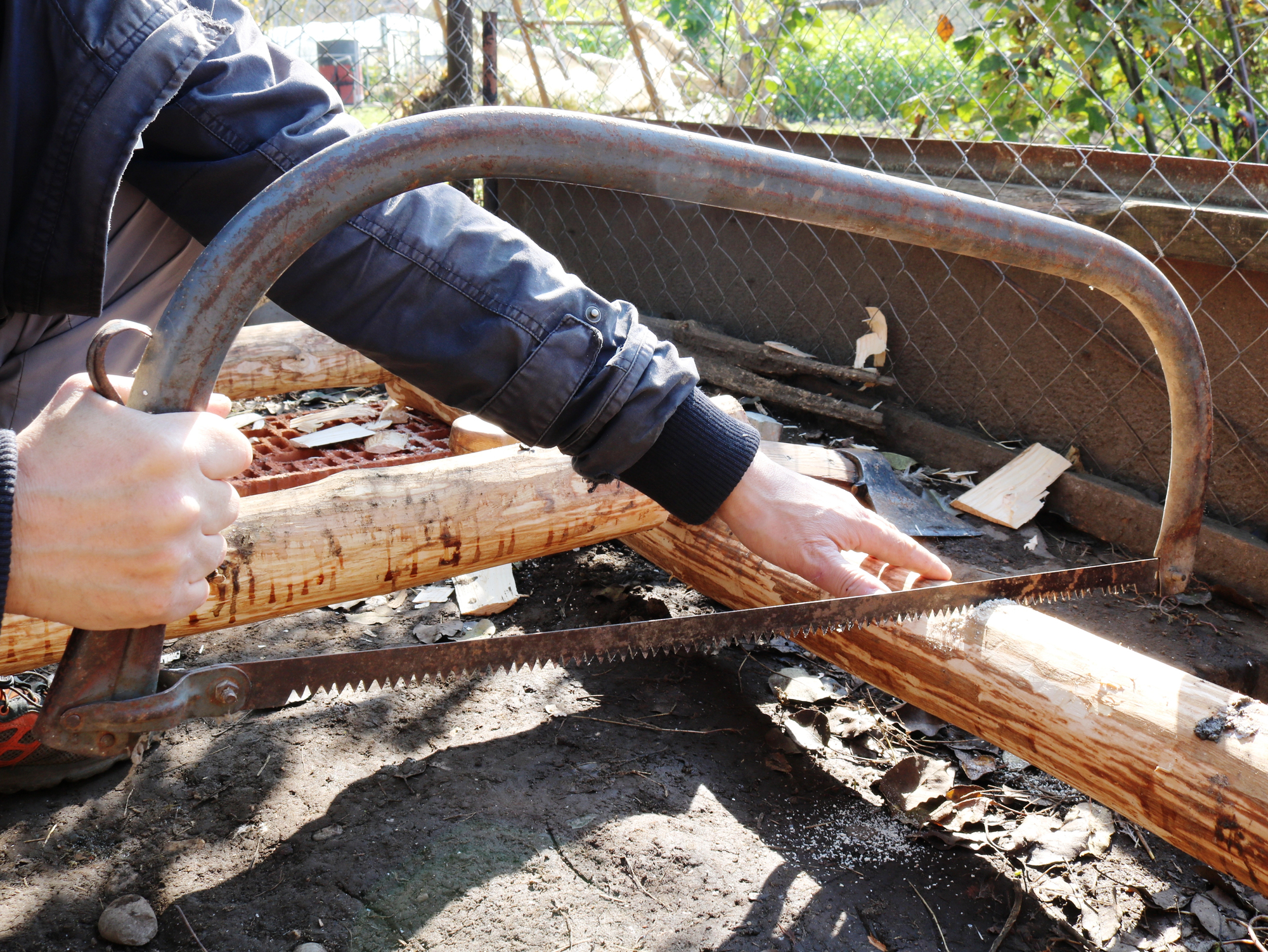

Bow saws are versatile, efficient hand tools designed for cutting branches, logs, and small trees. They are widely used in gardening, arboriculture, and outdoor maintenance because they can cut both fresh (green) and seasoned (dry) wood quickly with relatively little effort. This guide explains how bow saws work, the different types and blades available, how to select the right size, correct cutting technique, and—importantly—what modern bow saw blades can and cannot be maintained.
1. Anatomy of Bow Saws
Understanding the anatomy of a bow saw helps explain why it cuts so efficiently and how to use it correctly.

Frame: The frame is typically C‑ or bow‑shaped and made from steel or aluminium tubing. Its primary function is to hold the blade under high tension. A rigid frame is essential, as blade tension directly affects cutting accuracy and efficiency. The open frame design also allows clearance when cutting thicker branches.
Blade : The blade is long, narrow, and mounted under tension between the ends of the frame. Most modern bow saw blades are made from high‑carbon steel and are designed to be replaceable, not permanently attached. Replacement is a key feature of modern bow saws, as many contemporary blades are hardened for long life but are not intended to be resharpened.
Teeth: Bow saw teeth are large and widely spaced compared with carpentry saws. This spacing creates large gullets that rapidly clear sawdust, making bow saws effective on both green and dry wood. Most bow saw blades cut on both the push and pull strokes, improving efficiency and reducing user fatigue.
Handle: The handle is integrated into the frame and provides control and leverage. Handles may be bare metal, plastic, or rubber‑coated. Comfort matters, as bow saws are typically used with long, repetitive strokes.
Tensioning Mechanism: Most bow saws include a wing nut, lever, or cam system to tension the blade. Proper tension is critical: a slack blade will wander and bind, while a properly tensioned blade cuts straight and smoothly.
2. Types of Bow Saws and Their Uses
Although the basic design is consistent, bow saws are made in several forms for different situations.
Standard Bow Saws: These are the most common garden and forestry bow saws, usually fitted with 530–760 mm (21–30 in) blades. They are well suited to cutting large branches, logs, and even small trees, whether green or dry.
Folding Bow Saws: Folding models are designed for portability. The blade folds into or alongside the frame for safe transport. These are popular with campers, bushwalkers, and for light pruning work, but they are generally less rigid than full‑size bow saws.
General‑Purpose / Medium Bow Saws: These sit between folding and full‑size models, offering a balance of cutting capacity and maneuverability for garden maintenance and light firewood cutting.
Because blades are interchangeable, the same saw frame can often be adapted for different jobs simply by fitting a blade designed for green or dry wood.
3. Greenwood and Drywood Bow Saw Blades
Modern bow saw performance depends largely on blade tooth geometry rather than the frame itself.
Greenwood Bow Saw Blades: Greenwood blades are designed for cutting freshly cut, living wood with high moisture and sap content. Their teeth are typically more widely spaced, with generous gullets that prevent wet sawdust and sap from clogging the cut. Tooth profiles are often slightly less aggressive, favoring a slicing action through soft, fibrous tissue rather than tearing. These blades are well suited to pruning, coppicing, and processing freshly felled branches.
Drywood Bow Saw Blades: Drywood blades are optimized for seasoned timber, which is denser, harder, and more brittle. The teeth usually have a more aggressive profile, sharper points, and a stronger rake angle, allowing them to bite into hard fibers efficiently. The tooth set is often slightly wider, creating a broader kerf that reduces binding in dry wood. These blades are best for firewood, dead branches, and stored logs.
4. Selecting the Right Bow Saw
Choosing the right bow saw involves matching blade type and size to the work being done.
Blade Type: Use greenwood blades for fresh pruning and drywood blades for seasoned timber. While either blade will cut wood, matching the blade to the material improves speed, control, and blade life.
Frame Size and Blade Length: Larger frames accept longer blades and allow thicker material to be cut more efficiently, while smaller frames are easier to maneuver in confined spaces.
General Rule of Thumb for Blade Length: A practical, widely used guideline is to select a blade length at least two to three times the diameter of the branch being cut. Longer blades engage more teeth, allow longer strokes, and clear sawdust more effectively.
Typical practice:
- Up to 5 cm (≈2 in) diameter: 300–350 mm blade
- 5–10 cm (≈2–4 in): 450–530 mm blade
- 10–15 cm (≈4–6 in): 600–760 mm blade
- Over 15 cm (6+ in): efficiency drops; a larger saw or different tool may be preferable
To provide a more detailed technical explanation, a widely accepted practical guideline when selecting a bow saw is to choose a blade that is at least two to three times the diameter of the branch being cut. This proportion allows the saw to work as it is mechanically intended, rather than forcing a short blade through material that is too thick for efficient cutting.
Using a blade of sufficient length ensures that multiple teeth remain engaged in the cut throughout each stroke. This spreads the cutting load across many teeth, reducing individual tooth wear, lowering user fatigue, and decreasing the likelihood of the blade snagging or stalling. When the blade is too short for the branch diameter, too few teeth do the work at once, which increases resistance and makes the cut slower and more tiring.
Blade length also directly affects stroke efficiency. Bow saws are designed for long, rhythmic push–pull strokes, and a blade that extends well beyond the thickness of the wood allows the full stroke length to be used effectively. This helps maintain a consistent cutting speed and avoids the “choked” feeling that occurs when the blade runs out of travel partway through a stroke. Short blades force abbreviated strokes, wasting energy and significantly slowing progress.
Sawdust clearance and kerf stability further explain why longer blades perform better. In green wood, sawdust is moist and fibrous, and a longer blade provides greater overall gullet volume and more opportunity for debris to exit the cut, reducing friction and binding. In dry wood, longer blades still help keep the kerf open and stable, minimising heat build-up and reducing the risk of glazing or premature dulling of the teeth.
These are conventional guidelines based on tool mechanics rather than formal standards.
5. Proper Technique for Using Bow Saws
Effective bow saw use relies on controlled, rhythmic cutting rather than force.
- Align the blade carefully before starting the cut.
- Use long, smooth strokes, allowing the saw to cut on both push and pull movements.
- Apply steady pressure without forcing the blade.
- Secure the branch or log firmly to prevent movement.
- Keep the blade properly tensioned throughout use.
For larger branches, starting with a shallow guiding cut can help prevent binding and splintering.
6. Sharpening and Maintenance: What Is Actually Possible
A sharp blade not only makes cleaner cuts but also reduces the effort required and minimizes damage to the material being cut. To this end, the common sense advice is to maintain a sharp blade. This is an area where older advice and modern practice differ significantly.
6.1. Modern Induction-Hardened Blades: Understanding Their Durability and Limitations
Many modern bow saw blades sold today are induction-hardened at the teeth, offering exceptional hardness and durability. Induction hardening is a process where the teeth of the blade are heated using an electromagnetic field and then rapidly cooled, resulting in a very hard edge that retains its sharpness for a long time. However, this process also makes the teeth too hard to be resharpened with conventional tools. Attempting to file hardened saw teeth is ineffective and may damage files.
As a result:
- Modern hardened bow saw blades are not practically resharpenable.
- Once the teeth become dull, the entire blade is designed to be replaced rather than sharpened.
Difference in Hardness and Durability
- Hardness: Induction-hardened blades are significantly harder than standard blades, with a Rockwell hardness rating often exceeding HRC 60. This hardness allows the blade to stay sharp much longer than non-hardened blades, making them ideal for heavy or prolonged use.
- Durability: While induction-hardened blades maintain their sharpness for an extended period, they are also more brittle and less flexible than non-hardened blades. This brittleness means they can be more prone to breaking under extreme stress or misuse.
Replacement Instead of Resharpening
Because induction-hardened blades cannot be resharpened, it is important to monitor their condition and replace them once they become dull. This ensures that the saw continues to perform efficiently and safely. Replacement blades are widely available for most modern bow saws, and swapping out the blade is usually a straightforward process.
6.2 Traditional Bow Saw Blades
Older, non‑hardened bow saw blades can be resharpened using a triangular saw file, and their teeth can be reset if necessary. This was common practice when blades were softer and intended for repeated maintenance.
Sharp teeth are essential for clean, efficient cuts that reduce the effort required and extend the life of the blade. A dull blade requires more force to cut, increasing the risk of accidents and causing ragged cuts that can damage the wood.
How to Sharpen Traditional Non-hardened Bow Saw Blades
- Clean the Blade:
- Before sharpening, clean the blade thoroughly with a wire brush or cloth to remove any dirt, sap, or rust. If necessary, use a mild detergent or rubbing alcohol to clean the blade. Dry the blade completely before proceeding.
- Inspect the Teeth:
- Examine the teeth for wear or damage. Look for any teeth that are bent, chipped, or dull. Straighten any bent teeth with pliers before sharpening.
- Choosing the Right Sharpening Tool:
- Use a triangular file, also known as a saw file, that matches the size of the saw’s teeth. A fine-to-medium grit file is ideal for maintaining the edge of bow saw teeth.
- Determine the Correct Sharpening Angle:
- For most bow saws, the correct sharpening angle is typically 15 to 20 degrees. This angle provides a sharp edge that is both precise and durable. Each tooth should be sharpened individually to maintain the proper angle and ensure the saw cuts smoothly.
- Sharpen the Teeth:
- Hold the file at the correct angle and stroke it across the edge of each tooth. File each tooth evenly, applying consistent pressure to ensure that all the teeth are sharpened uniformly. Work from one end of the blade to the other, sharpening every tooth on one side before turning the saw over and repeating the process on the other side.
- Set the Teeth (if necessary):
- If the teeth have become misaligned, use a saw set tool to adjust them back to the correct angle. The teeth should be set at an even angle to prevent the saw from binding during use.
- Test the Sharpness:
- Test the sharpness of the saw by cutting through a piece of wood. The blade should cut smoothly and cleanly without much effort.
- Lubrication:
- Apply a thin coat of oil to the blade after sharpening to prevent rust. Store your bow saw in a dry place, ideally with a blade cover to protect the teeth.
6.3 Routine Saw Blade Maintenance
Maintenance for modern bow saws focuses on:
- Keeping the blade clean and free of sap and debris
- Lightly oiling the blade to prevent rust
- Maintaining correct blade tension
- Replacing the blade when cutting efficiency declines
7. Safety Considerations
Bow saws are simple tools but can cause serious injury if misused.
- Wear eye protection and sturdy gloves.
- Keep hands clear of the cutting line.
- Maintain a stable stance and avoid overreaching.
- Store saws with blade covers and out of reach of children.
In conclusion, bow saws are essential tools for anyone involved in heavy-duty gardening, landscaping, or outdoor maintenance. By understanding the different types of bow saws, how to select the right one, and the proper techniques for using and maintaining them, you can greatly enhance your efficiency and safety in the garden. Regular sharpening or blade replacement will ensure that your bow saw remains a reliable tool in your gardening endeavors for years to come. Whether you are cutting large branches, clearing dense brush, or preparing firewood, mastering the use of bow saws is an invaluable skill for any gardener or outdoorsman.

Be the first to reply