

This post is part-contributed and may contain affiliate links
What happens to a live plant on a 1,800 km freight trip, and what to do in the first 48 hours after it arrives
By Isaac Olson, Nursery Near Me
What the Trip Does to a Plant
A plant leaving a nursery has been living a soft life. It was watered every day, often twice; it sat in filtered light under shade cloth or in an open bay with a steady breeze; and it was fed on a schedule. Then it gets picked up.
Small plants are packed upright into cartons, usually with the pot bagged so the mix stays put and the foliage sleeved to prevent crushing. Larger plants ride on trolleys or pallets inside a curtain-sided or Pantech truck. Either way, for the next two to six days the plant is in the dark or close to it, with no water and no air movement. The temperature inside the vehicle rises and falls with the road. A load leaving Melbourne in September can go from single digits overnight on the Hume Highway to 30 degrees Celsius (86 degrees Fahrenheit) on a loading dock in Toowoomba.
Three things happen. First, the plant keeps transpiring, so the mix dries from the top down and the plant starts drawing on its reserves. Second, without light, growth slows and the newest leaves can pale slightly. Third, the plant is jostled. Cartons are stacked, trolleys are strapped, and a plant that was standing perfectly upright can spend a day on a lean. None of that is fatal. A healthy plant in a well-packed carton has enough reserves for a week. What comes out the other end is a thirsty, slightly pale, slightly stressed plant that needs a couple of quiet days.
Some plants handle this better than others. Woody shrubs and trees with firm leaves, such as lilly pilly, callistemon, viburnum and most Australian natives, barely notice. Soft, fast-growing plants and those with large, thin leaves are more sensitive. Grasses and strappy plants are almost indestructible in transit. Plants in flower often drop their flowers. Fruit trees with soft new growth may lose a few leaves. Herbs and seedlings are the most vulnerable and should be unpacked first.
The First Hour: Open Everything
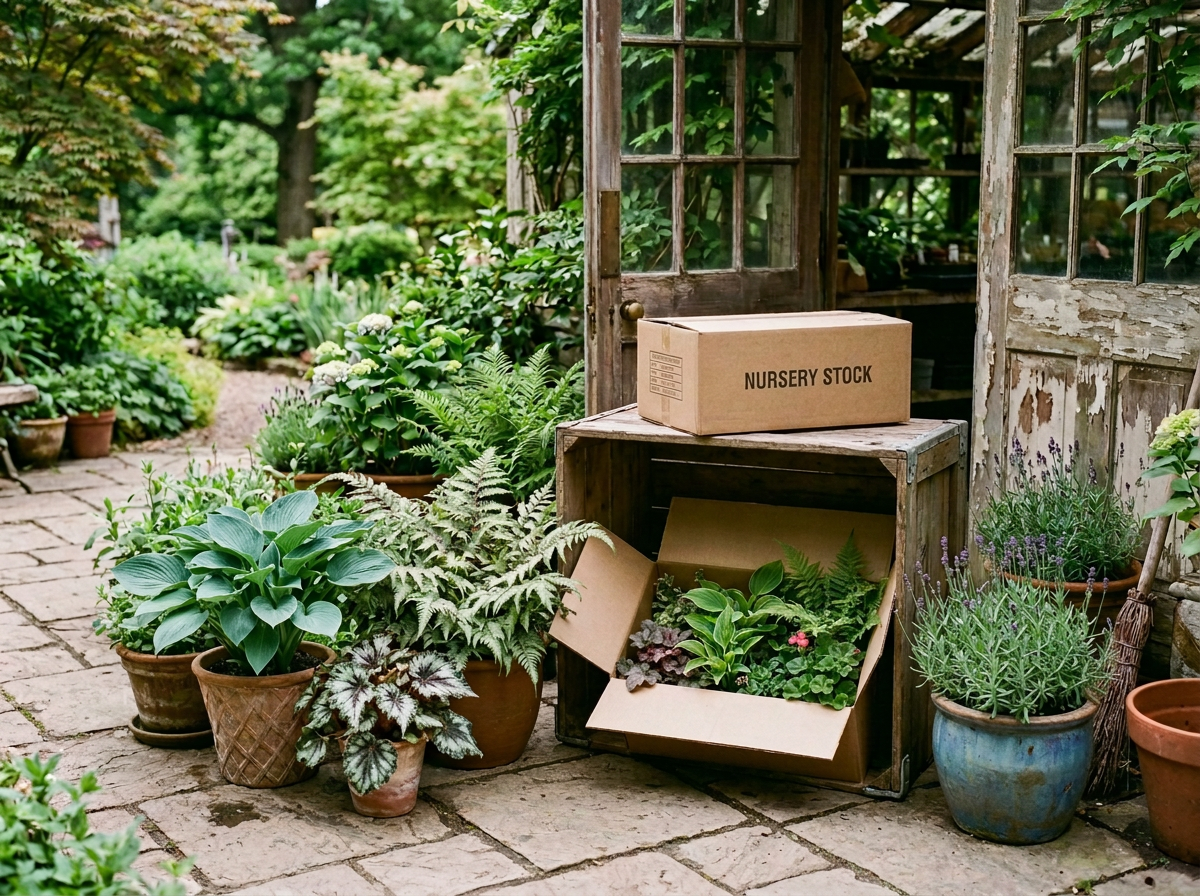
Open the carton the day it arrives, not the next morning. If it arrived while you were out and sat on the porch in the sun, that hour matters. Cut the tape, lift the plants out, and remove every piece of packing: the sleeve around the foliage, the bag around the pot, any tape holding the stem to a stake, and any paper stuffed around the pot. Packing that is good for the truck is bad for the plant once it is out of the truck. A sleeve left on for two days in warm weather will cook the foliage inside it.
Stand the plants upright in a shaded, wind-free spot. Under a tree, on the south (shady) side of the house, or under a pergola is ideal. Do not put them in full sun yet, no matter how sunny their final position will be. They have been in the dark for days, and their leaves are not ready for it.
Have a quick look at each plant. Some bent stems, a few yellow lower leaves, dropped flowers, and a bit of scuffing on the bark are normal and will come to nothing. A pot that has dried out with the mix pulling away from the sides, a stem snapped through, or a plant that has come out of its pot and lost most of its root ball are not normal, and this is the moment to photograph it. Any reputable supplier will want photos of the plant and the packaging taken on the day, not a week later.
The First Day: Water Properly, Once
The single most important thing in the first 48 hours is a single deep watering. Not a splash from the watering can, and not a daily drenching either.
Take each plant to a tap or hose and water the mix slowly until water runs freely from the drainage holes. Wait a minute, then do it again. If the mix has dried hard and the water runs straight through or down the gap at the edge of the pot without soaking in, sit the pot in a bucket of water for twenty to thirty minutes until the bubbles stop rising, then let it drain. That rewets the root ball properly. Potting mix that has dried out becomes water-repellent, and a plant can be watered every day from the top and still be dry in the middle.
After that, water only when the top few centimetres of the mix are dry. In the shade and mild weather, that may not be for two or three days. Overwatering a stressed plant in the shade is the second most common way people lose a new arrival.
Do not fertilise. The plant has been fed at the nursery and often already contains slow-release fertiliser in the mix. Feeding a stressed plant encourages growth when it should be recovering. Leave fertiliser for at least two weeks after planting. A seaweed tonic at the label rate is fine and does no harm, but it is not essential.
Days Two to Seven: Hardening Off
Hardening off is simply the process of gradually reintroducing plants to sun and wind. After a day or two in full shade, move the plants to a spot that gets morning sun and afternoon shade. After another two or three days, move the sun lovers into their final light conditions. Shade plants stay in shade. By day five to seven, most plants are standing tall again and can be planted.
The quickest way to tell that a plant has recovered is to look for new growth. The tips firm up and the leaves regain their gloss. If a plant is still limp after a deep watering and two days of shade, slide it out of the pot and inspect the roots. White or cream-coloured roots are healthy. Brown, soft or smelly roots mean it has sat in water at some stage and needs to dry out before anything else.
Planting
Plant in the cool of the day, either morning or late afternoon, in a hole twice the width of the pot and no deeper than the root ball. Water the hole before planting, tease out any roots circling the bottom of the pot, backfill with the soil you dug out rather than bagged mix, and water in deeply. Add a mulch layer about 50mm (2 inches) thick over the soil surface, keeping it clear of the stem. Then water deeply two or three times a week in warm weather for the first month, and less often in winter, rather than a little every day.
If the plants cannot be planted straight away, that is fine. Most will sit happily in their pots for a few weeks in a shaded spot, as long as they are watered. A tray of tubestock can wait a month. What you should not do is leave them in the carton, in the sun, or on a windy verandah.
Two Things That Surprise People
The first point is that a plant arriving with dry mix and a few yellow leaves is usually in better condition than one arriving soggy. Dry mix recovers with one good watering. Wet mix sealed in a carton for four days can start root rot that does not show up for a fortnight.
The second point is that advanced plants in large pots often recover faster than small ones, not slower. They have larger reserves. A 200mm (8 inch) pot holds enough moisture for the whole trip, whereas a tube can dry out in two days, which is why you should always unpack and water tubestock first.
Get the first two days right, and the trip itself is a footnote. Plants have been sent around the country since the first nursery catalogues went out by post, and a lilly pilly does not know whether it travelled 20 kilometres or 1,800. It only knows whether someone opened the box and gave it a drink.
About the Author
Isaac Olson is a director of Nursery Near Me, an online nursery based in Brisbane that sources from wholesale growers across Australia and delivers to most of the country. Their plant care guides for Australian climate zones are available on the Nursery Near Me blog.

Be the first to reply