
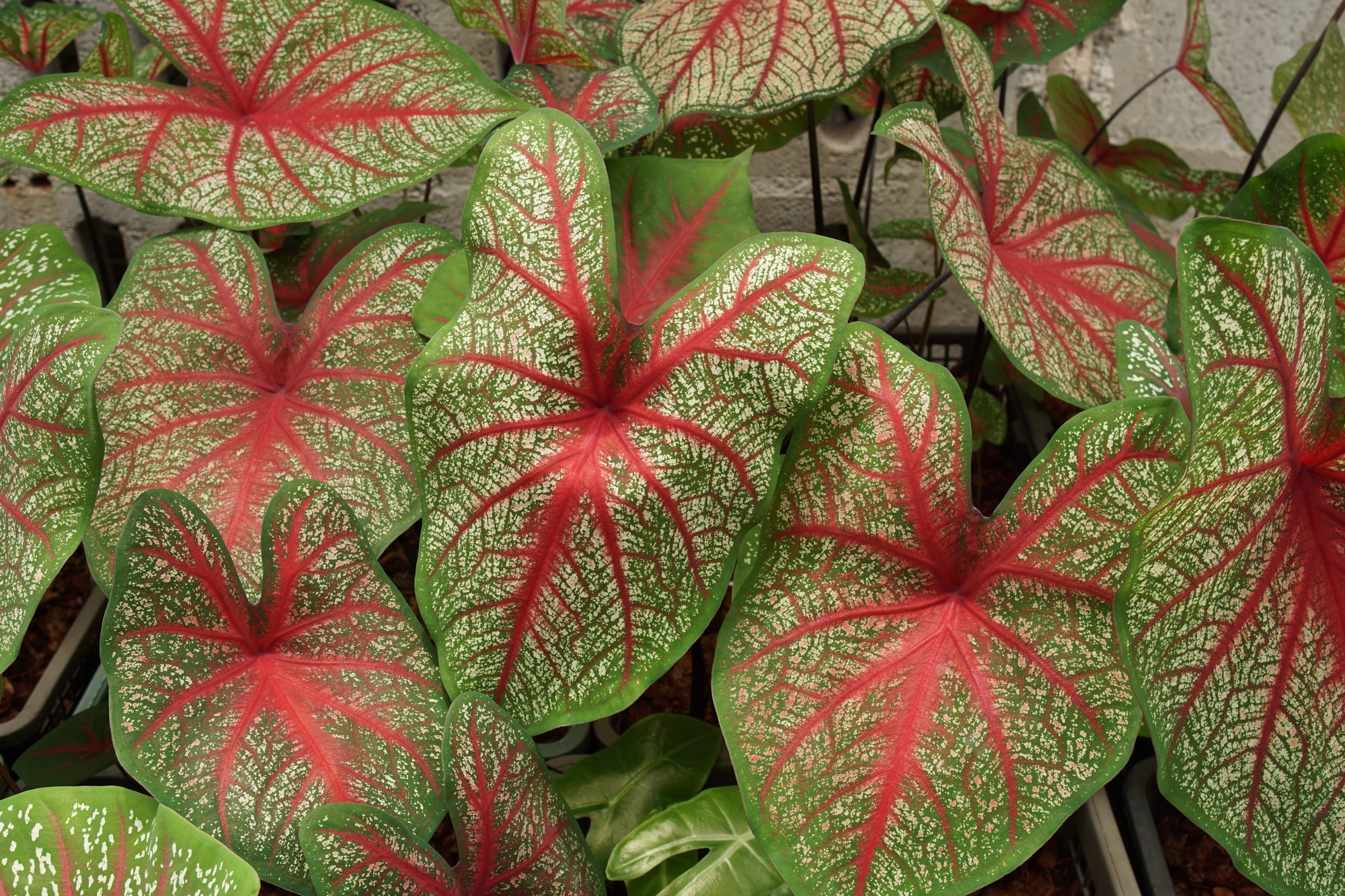

Caladiums are valued for their vibrant, multicolored foliage that brings bold patterns and tropical charm to indoor spaces. Known for their large, heart- or arrow-shaped leaves in striking combinations of red, pink, white, and green, Caladiums offer ornamental appeal unmatched by most foliage plants. Though they are seasonal growers with a defined dormancy period, their brilliant display and relatively simple care make them a rewarding addition to bright interiors. This guide covers everything you need to know to grow and care for Caladiums indoors.
Plant Profile: Caladium (Caladium spp.)
Scientific Name: Caladium spp.
Common Names: Angel Wings, Elephant Ear, Heart of Jesus
Origin: Caladiums are native to the tropical rainforests and riverbanks of Central and South America, particularly Brazil. They grow in warm, humid, and shaded understory habitats where they thrive in filtered light and moisture-retentive soils. Cultivated varieties have been bred extensively for ornamental use in both gardens and indoor containers.
Description: Caladiums are tuberous tropical perennials best known for their showy, paper-thin leaves which come in a dazzling range of colors and patterns. Leaf shapes vary from heart-like to arrowhead, and common colorations include bright pinks, reds, greens, and whites in intricate veining or mottled designs. Plants typically grow 30–60 cm tall and wide, depending on the cultivar and growing conditions. Caladiums do not produce notable flowers indoors; their dramatic foliage is the main attraction. They grow actively during the warmer months and naturally die back to tubers in cooler seasons.
Benefits: Caladiums add vivid color and dramatic texture to indoor plant displays, making them excellent choices for brightening interior spaces. Their compact size and spectacular foliage make them well-suited to tabletops, plant stands, and window ledges. While not air-purifiers in the traditional sense, they offer strong decorative value during their growing season and can be regrown year after year with proper care.

Basic Care Guidelines
Watering Needs: Caladiums like evenly moist soil during the active growing season but are sensitive to overwatering. Water thoroughly when the top 2–3 cm (1 inch) of soil begins to dry, allowing excess moisture to drain away. Do not let the plant sit in standing water. As the growing season ends and the plant begins to enter dormancy, gradually reduce watering and stop altogether once the foliage has fully died back.
Soil and Potting: Use a rich, well-draining potting mix that retains moisture without becoming soggy. A peat-based mix with added perlite or pine bark works well. Ensure pots have drainage holes to prevent tuber rot. Caladiums are usually grown from tubers, which can be planted shallowly in the soil in early spring. Repotting and dividing are best done in late winter to early spring, just before new growth begins.
Light Requirements and Lux Levels: Caladiums thrive in bright, indirect light and tolerate dappled sunlight. Too much direct sun can scorch their thin leaves, while insufficient light results in muted colors and leggy growth.
- Low Light: 50 to 250 lux. Inadequate—plants will weaken, with poor coloration.
- Medium Light: 250 to 1000 lux. Acceptable, especially for green-leaved types.
- High Light: 1000 to 2000 lux. Ideal for vibrant color development and compact growth—provided the light is indirect or filtered.
Use a lux meter to measure light intensity assess your interior lighting and adjust placement for best results.
Temperature and Humidity: Caladiums require warm temperatures to thrive, ideally between 20–29°C (68–85°F). They are highly sensitive to cold and should not be exposed to temperatures below 15°C (59°F). High humidity (above 60%) promotes lush foliage and vibrant color. Use a pebble tray or humidifier in dry indoor environments, particularly during active growth.
Fertilization and Pruning: Feed every 2–4 weeks during the growing season with a balanced, water-soluble fertilizer diluted to half strength. Avoid over-fertilization, which can damage tubers. Stop feeding entirely during dormancy. Prune by removing yellowing or fading leaves at the base to maintain appearance and encourage healthy growth.
Dormancy Period of Caladiums
Caladiums have a well-defined dormancy period, typically beginning in late autumn as temperatures drop and daylight hours shorten. As the plant enters dormancy, leaves will yellow and die back completely, leaving only the underground tubers.
To manage dormancy:
- Gradually reduce watering as foliage declines.
- Once all leaves have died back, stop watering and allow the soil to dry completely.
- Store the pot with tubers in a cool, dry place at 15–18°C (59–65°F). Alternatively, unpot and store the dried tubers in dry peat or paper in a ventilated container.
- Do not expose tubers to freezing temperatures or excessive moisture during storage.
In spring, resume growth by replanting or watering stored tubers once temperatures rise consistently above 20°C (68°F). Dormancy is essential for tuber health and ensures vigorous regrowth each season.
Propagating Caladiums
Caladiums are propagated from tubers, which can be divided when dormant. Each tuber segment should have at least one viable growth point (or “eye”).
Method: Propagating by Tuber Division
Step 1: After the plant enters dormancy and the soil is dry, remove tubers from the pot.
Step 2: Gently brush off excess soil and inspect the tubers. Use a clean, sharp knife to divide large tubers, ensuring each section has at least one growth eye.
Step 3: Allow the cut surfaces to dry for a day to prevent rot.
Step 4: Store divisions in a dry, warm place until spring or plant them directly into fresh soil when temperatures are suitable.
Step 5: Water sparingly at first, increasing as growth resumes.
Propagation is straightforward and allows you to multiply your collection or refresh tired clumps.
Pest Management and Troubleshooting
Caladiums are generally trouble-free but may suffer from spider mites, mealybugs, or aphids—especially in dry indoor environments. Check leaf undersides regularly and treat infestations promptly with insecticidal soap or neem oil.
Common issues include:
- Drooping or collapsing leaves: Often due to low temperatures or overwatering.
- Pale or faded colors: Caused by insufficient light or lack of nutrients.
- Rotting tubers: Typically the result of poor drainage or storing tubers in damp conditions.
Good air circulation, proper watering practices, and seasonal care help prevent most problems.
Decorating with Caladiums
Caladiums bring vivid, seasonal color to interior spaces. Their bold leaves complement both traditional and modern decor, especially in brightly lit rooms or grouped with green-foliage plants for contrast. Use compact varieties on shelves or desks, and larger types in decorative containers on the floor or near bright windows. Since Caladiums are seasonal, many growers rotate them in and out of their houseplant display—growing them during warm months and storing the tubers when dormant. They pair well with other tropical foliage like ferns, begonias, or philodendrons for a lush, layered effect.
In summary, Caladiums are stunning foliage plants that light up interiors with vivid patterns and brilliant color. While they follow a seasonal growth cycle that includes dormancy, their easy tuber storage and rewarding regrowth make them an ideal choice for houseplant enthusiasts seeking dramatic seasonal beauty. With the right combination of warmth, humidity, and light, Caladiums deliver a dazzling display year after year.


Be the first to reply