

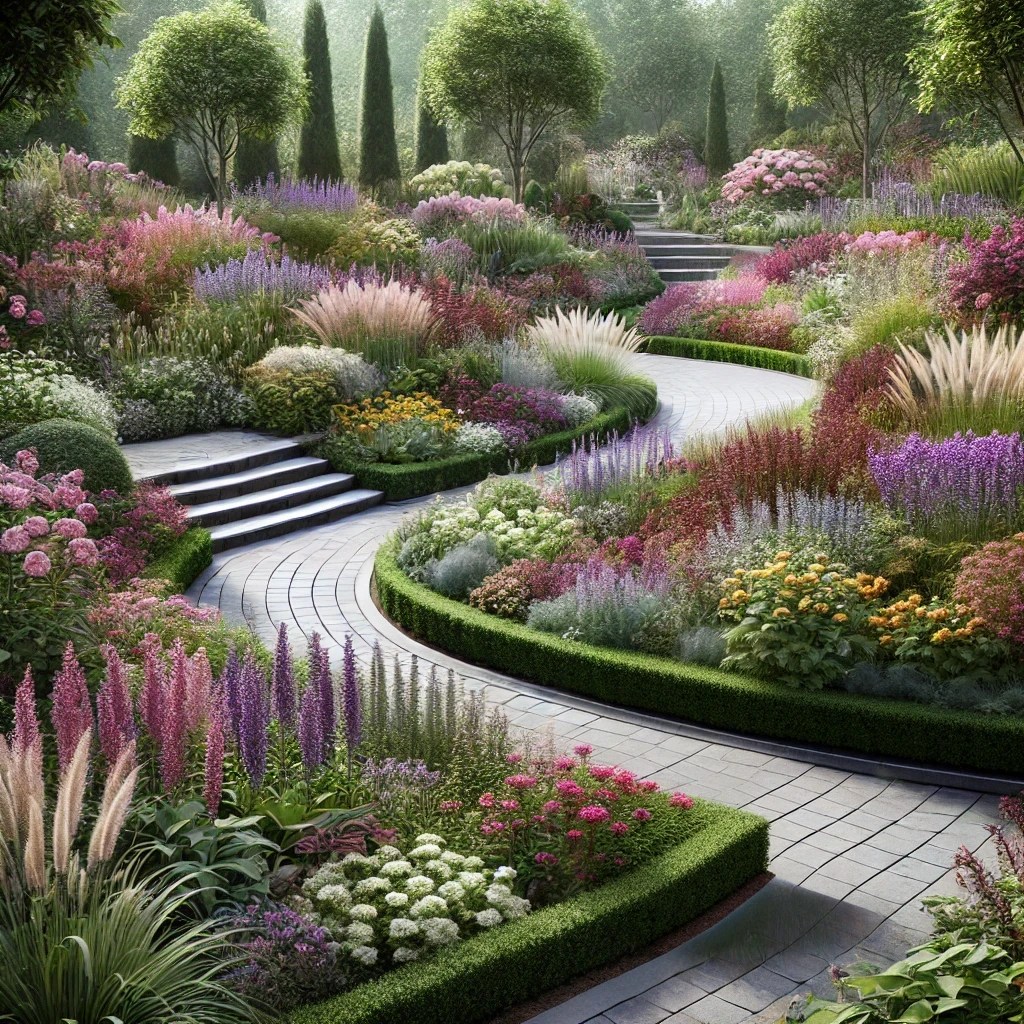
Aesthetic garden design is about creating visually harmonious and engaging outdoor spaces by carefully balancing elements such as color, texture, form, and scale. A successful garden draws the eye, evokes emotion, and creates a sense of flow and order. This approach to design focuses on the artistic side of gardening, where the arrangement of plants, structures, and materials works together to create a cohesive and pleasing visual experience.
This article outlines ten core principles of aesthetic garden design—unity, balance, proportion, rhythm, color, texture, form, line, focal points, and depth—that serve as a foundation for creating visually compelling gardens. Each principle is explained with practical examples to help you understand how to apply them effectively in your own garden.
The second part of the article explores the distinction between aesthetic and functional garden design, highlighting how aesthetic design emphasizes visual harmony and artistic expression, while functional design prioritizes ecological balance and sustainability. Understanding how these two approaches differ—and how they can complement each other—can help you create a garden that is both beautiful and resilient.
This is a very long, detailed and comprehensive article, which may be easier to navigate using the table of contents below, or the page number links for each section at the bottom of the page:
Table of Contents
- Key Principles for Creating Unity and Harmony
- 1. Repetition of Elements
- 2. Consistency in Materials
- 3. Unifying Plant Types
- 4. Transition and Flow
- Types of Balance in Garden Design
- 1. Symmetrical Balance
- 2. Asymmetrical Balance
- 3. Radial Balance
- 4. Visual Weight and Scale
- 5. Balancing Hardscape and Softscape
- Key Principles for Achieving Proportion and Scale
- 1. Plant Height and Mass
- 2. Path and Bed Width
- 3. Layering Heights
- 4. Scale of Decorative and Structural Elements
- Key Principles for Creating Rhythm and Repetition
- 1. Repetition of Plant Forms
- 2. Color Echoing
- 3. Path and Border Patterns
- 4. Structural Repetition
- 5. Texture and Material Repetition
- Key Principles for Using Color Effectively
- 1. Analogous Colors
- 2. Complementary Colors
- 3. Monochromatic Color Schemes
- 4. Seasonal Color Changes
- 5. Foliage Color and Texture
- 6. Transition and Flow
- Fine vs. Coarse Texture
- Combining Textures for Visual Interest
- Material Texture
- Light and Shadow
- Seasonal Texture Changes
- Using Texture to Create Mood
- Practical Examples
- Key Types of Plant Forms
- 1. Upright and Vertical Forms
- 2. Rounded and Mounded Forms
- 3. Weeping Forms
- 4. Horizontal and Spreading Forms
- 5. Architectural and Structural Forms
- 6. Irregular and Naturalistic Forms
- Combining Plant Forms for a Cohesive Look
- Form in Hardscaping and Garden Structures
- Types of Lines in Garden Design
- 1. Straight Lines
- 2. Curved Lines
- 3. Diagonal Lines
- 4. Zig-Zag or Broken Lines
- 5. Implied Lines
- Combining Line Types for a Balanced Design
- Types of Focal Points
- 1. Specimen Trees and Shrubs
- 2. Statues and Sculptures
- 3. Water Features
- 4. Architectural Structures
- 5. Contrasting Colors and Textures
- 6. Lighting as a Focal Point
- Creating Balance with Multiple Focal Points
- Key Techniques for Creating Perspective and Depth
- 1. Layering Plants
- 2. Framing
- 3. Vanishing Points
- 4. Overlapping Plants and Objects
- 5. Changes in Elevation
- 1. Start with a Strong Structural Framework
- 2. Establish a Cohesive Color Palette
- 3. Balance and Proportion Across the Space
- 4. Incorporate Rhythm and Repetition
- 5. Layer Texture and Height
- 6. Adapt to Your Site and Growing Conditions
The Differences Between Aesthetic and Functional (Ecological) Garden Design
- 1. Goal and Purpose
- 2. Plant Selection
- 3. Design Structure and Form
- 4. Maintenance and Resource Use
- 5. Environmental Impact
- 6. Human Experience and Interaction
- 7. Integration of Aesthetic and Functional Design
The following sections describe the ten aesthetic design principles. Each ones begins with a brief summary of the principle and short list of descriptive points. This is followed by a more detailed explanation along with practical examples.


Your links to the sections don’t work, providing 404’s. I think the URL being created by the blog post is breaking the link.
Thanks James for letting me know, I’ve fixed all the links in the table of contents, they’re all working now!