

Overview
- Name: Rockmelon (also known as Cantaloupe)
- Botanical Name: Cucumis melo
- Plant Family: Cucurbitaceae
- Native to: Northern Africa, Southwest Asia
Description
Rockmelon, cantaloupe, muskmelon, honeydew, and other melons are all members of the species Cucumis melo, a warm‑season annual trailing vine in the Cucurbitaceae (gourd) family, cultivated primarily for their sweet, edible fruit. Plants emerge each season from seed, rapidly producing sprawling, branching, glabrous (hairless) to slightly hairy stems that can extend 1.5–3 m (5–10 ft) across the ground or along supports when space permits. Leaves are simple, alternate, broadly ovate to lobed, and covered with fine hairs (pubescent), which give the surface a slightly rough texture. Leaves have long petioles (leaf stems) and often have shallow lobes or serrations. Tendrils emerge from the leaf axils (base of leaf stems) and assist in climbing or spreading over the soil surface.
Rockmelon (Cucumis melo) is a monoecious species, meaning separate male and female flowers are produced on the same plant, but each flower is unisexual. Individual flowers are therefore either male or female, never both. During early flowering, male flowers are produced first and in greater numbers. These male flowers continue to be produced throughout much of the flowering period. Female flowers appear later, usually after the vine has developed sufficient leaf area and energy reserves to support fruit development. This pattern of earlier and more abundant male flowering is characteristic of cucurbits and is influenced by temperature, day length, and plant vigor.
Male flowers have longer slender peduncles (flower stalks), making them more conspicuous to pollinators such as bees and contain stamens that produce pollen. Female flowers are borne on shorter peduncles and are distinguished by a swollen inferior ovary at the base of the flower, which develops into the fruit after successful pollination. Both male and female flowers are bright yellow, five-petaled, and similar in overall shape, differing primarily in the presence or absence of the ovary.
Pollination is entirely dependent on insect activity, particularly bees. Each female flower is receptive to pollination for only a single day. Pollen must be transferred from a male flower to the stigma of a female flower during this brief window for fruit set to occur. The number of successful pollen grains deposited on the stigma directly affects seed number, which in turn influences fruit size, shape, and uniformity. Flowers receiving inadequate pollen may abort or develop small, misshapen fruits. Cool, rainy, or windy weather can limit pollinator activity, while low temperatures can inhibit pollen development and release. Male flowers persist after pollen release and then naturally senesce, while successfully pollinated female flowers begin rapid ovary enlargement into developing fruit.

The fruit of Cucumis melo is technically a pepo, a type of berry with a hard rind and fleshy interior. There is extraordinary variation among cultivar groups:
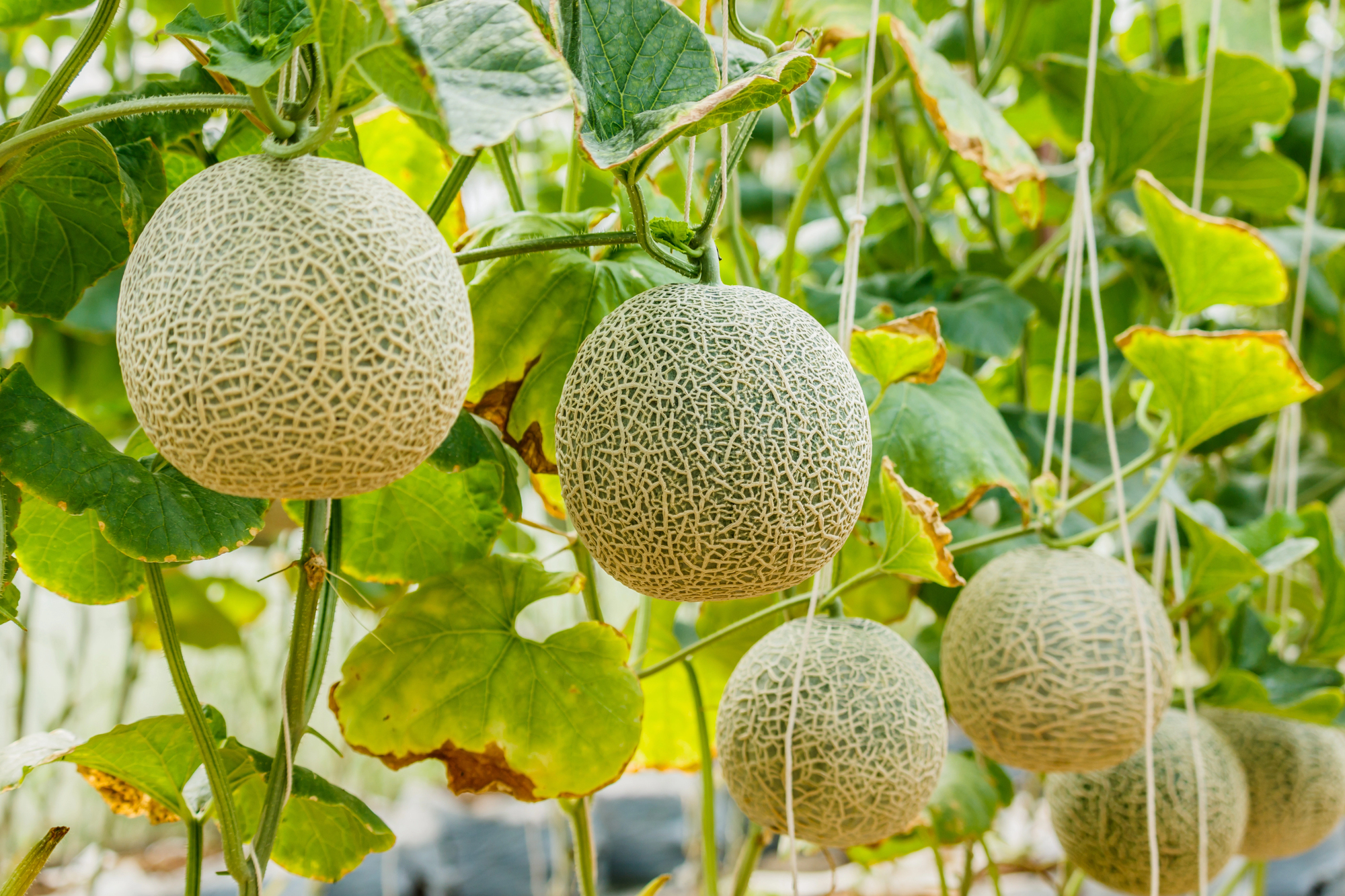
- Netted muskmelons (often called cantaloupes in the U.S.): These melons have a reticulated, corky “netted” rind and sweet, aromatic orange flesh. The name “muskmelon” refers to the characteristic musky aroma of ripe fruit.
- True cantaloupes (C. melo var. cantaloupensis): Historically grown in Europe with distinctly warty or scaly rinds; these are less common in North America.
- Honeydew and other inodorus types: These “winter melons” have smooth rind that may be pale green, cream, or yellow and usually green, white, or pale orange flesh with a milder, very sweet flavor. They do not typically exhibit a strong musky aroma.
- Other groups: Varied melon types such as casaba, Crenshaw, Galia, and other heirloom or hybrid melons exhibit different rind textures (smooth to sutured), flesh colors (white, green, orange), and flavors—from delicate floral sweetness to rich, spicy notes—while all still belong to the same species.
Fruit size also varies widely: typical garden cantaloupes and muskmelons weigh about 0.5–2.2 kg (1–5 lb), though some heirlooms or specialty melons may be smaller or larger. Inside each fruit is a central seed cavity filled with numerous flat, tan to cream‑coloured seeds embedded in a slightly mucilaginous matrix. Ripe fruits may be harvested when they develop a strong sweet aroma, change color according to type, and “slip” from the vine at the stem junction in reticulatus (reticulated) types, or change rind color in inodorus types.
Melons (Cucumis melo) develop a well-branched root system consisting of a main root axis and numerous lateral roots that spread outward just below the soil surface, with some deeper penetration possible in loose, well-drained soils. These lateral (sideways) roots are especially effective at exploring the upper soil layers for water and nutrients, which supports rapid vine and fruit growth. The overall root system is extensive and adapted to warm soil conditions. Melons are sensitive to cold soils and frost, which can prevent germination and halt growth, but this sensitivity is due to the warm-season nature of the crop rather than any inferred unusually shallow root system.
Interesting Facts
- Rockmelon (Cucumis melo) is one of the most genetically diverse vegetable crops in cultivation. The species includes many horticultural groups—such as cantaloupes, muskmelons, honeydews, casabas, and winter melons—that differ dramatically in fruit size, rind texture, aroma, sweetness, and storage life, despite all belonging to the same species. *
- The characteristic aroma of many cantaloupes and muskmelons is produced by volatile ester compounds that develop late in ripening. These aromatic compounds are largely absent in honeydew and winter melons, which explains why those types have a milder scent and rely more on sweetness and texture than fragrance to signal ripeness.
- Fruit sweetness in rockmelons is strongly linked to seed development. Each fertilised ovule contributes hormonal signals that stimulate sugar accumulation and flesh expansion. Poor pollination results in fewer seeds, reduced sugar levels, and misshapen fruit, which is why strong bee activity is directly associated with higher-quality melons.
- Unlike watermelons (Citrullus lanatus), rockmelons do not continue to ripen after harvest. Sugar accumulation largely stops once the fruit is removed from the vine, making harvest timing critical. This non-climacteric behaviour (fruits that do not continue to ripen significantly after being harvested) is why vine-ripened cantaloupes consistently have superior flavour compared with early-harvested fruit.
- Rockmelons have been cultivated for thousands of years, with archaeological and historical evidence indicating early domestication in regions spanning Central Asia, Persia, and the eastern Mediterranean. From there, distinct melon types spread along trade routes, eventually giving rise to the diverse cultivars grown worldwide today.
Basic Growing Information
Rockmelons (including cantaloupes, muskmelons, honeydews, and related Cucumis melo types) are warm-season annual crops that require consistently warm temperatures, warm soil, and high sunlight levels to grow vigorously and produce quality fruit. Optimal air temperatures for growth range from 22–32 °C (72–90 °F), with ideal daytime temperatures around 25–30 °C (77–86 °F). Growth slows significantly below 18 °C (64 °F), and plants are highly sensitive to frost at all stages.
Soil temperature is especially critical. Seeds germinate best when soil temperatures are at least 18–21 °C (65–70 °F), with faster and more uniform emergence occurring above 21 °C (70 °F). Cold soils delay emergence, increase the risk of seed rot, and can permanently weaken seedlings. For this reason, rockmelons are typically planted after the last frost once soils have thoroughly warmed, or started indoors in cooler climates to ensure strong early growth.
Rockmelons require full sun and long, warm days to support rapid vine growth, flowering, pollination, and sugar accumulation in the fruit. Insufficient sunlight or prolonged cool weather delays flowering and reduces fruit size, sweetness, and overall yield. Because of their vigorous vine growth and high transpiration rates, they also require consistent moisture, particularly during flowering and fruit expansion, though waterlogged soils must be avoided.
Well-drained, fertile soils rich in organic matter are essential. Rockmelons perform best in loamy or sandy loam soils that warm quickly in spring and allow excess water to drain freely. Heavy clay soils can be used if amended with organic matter and managed carefully to prevent compaction and poor drainage, which predispose plants to root diseases.
- Sun Requirements: Full sun
- Water Requirements: Medium to high (consistent moisture, especially during flowering and fruit development)
- Soil Types and Properties: Fertile, well-drained soils; loam or sandy loam preferred; high organic matter; avoid poorly drained or compacted soils
- Soil pH: 6.0–6.8
- Pot Size for Container Growing: Minimum 40–50 cm (16–20 in) diameter per plant, with excellent drainage
Planting
- Best Time to Plant:
- Climates with freezing winters: Late spring to early summer, after all danger of frost has passed and soil temperatures consistently exceed 18–21 °C (65–70 °F)
- Climates with milder winters: Mid to late spring, once soils have warmed sufficiently
Note: Check gardening calendars for the best planting times in your location
- Spacing: Plants spaced 60–90 cm (24–36 in) apart; rows spaced 1.5–2 m (5–6.5 ft) apart to allow for vine spread and air circulation
- Seed Sowing Method: Sow seeds directly into the ground once soils are warm, or sow into seed trays and transplant outdoors after hardening off
- Seed Sowing Depth: 2.5 cm (1 inch) deep
- Time to Harvest: Approximately 10–14 weeks from seed planting, depending on cultivar and growing conditions
- Mature Height/Spread: Vine length typically 1.5–3 m (5–10 ft) or more; low-growing, sprawling habit rather than upright height
- Grown From: Seeds
Care and Maintenance
- Watering Tips: Rockmelons require consistent, even soil moisture throughout their growth cycle, particularly during flowering and fruit enlargement. Deep watering 1–2 times per week is generally preferable to frequent shallow irrigation, encouraging a healthy root system. Water should be applied at the soil level rather than overhead to reduce foliar disease. Irregular watering can lead to poor fruit development, reduced sweetness, and fruit cracking.
- Fertilization: Rockmelons are moderately heavy feeders and respond well to fertile soils enriched with organic matter. A balanced fertiliser (for example, one supplying nitrogen, phosphorus, and potassium in roughly equal proportions) is typically applied at planting, followed by side-dressing or supplemental feeding once vines begin to run and again at early flowering. Excessive nitrogen should be avoided, as it promotes excessive vine growth at the expense of flowering and fruit quality.
- Pruning: Routine pruning is generally not required for rockmelons grown in open ground. However, selective removal of excessive lateral (side) shoots may be used in small gardens to improve air circulation and direct energy toward fruit development. In trellised or container-grown plants, light pruning can help manage vine length and prevent overcrowding, but excessive pruning can reduce yield.
- Support: Rockmelons are naturally sprawling vines and do not require support when grown on the ground. However, trellising can be used to save space, improve air circulation, and reduce fruit contact with soil. When grown vertically, strong trellises or frames are essential, and developing fruits should be supported with slings to prevent vine breakage due to fruit weight.
Growing Difficulty
- Moderate Difficulty
Rockmelons are considered moderately difficult to grow because they require warm temperatures, consistent soil moisture, adequate fertility, and reliable pollination to produce high-quality fruit. While vigorous once established, they are sensitive to cold soils, poor drainage, water stress, and inadequate pollinator activity, all of which can significantly reduce yield and fruit quality.
Growing Tips
- Ensure warm soil before planting – Rockmelons should only be planted once soil temperatures are consistently warm, ideally above 18 °C (65 °F). Cold soils slow root growth, reduce nutrient uptake, and can lead to weak, stunted plants. Using raised beds can help warm the soil earlier in the season and improve early vine establishment.
- Encourage strong pollinator activity – Successful fruit set depends heavily on bee visitation. Avoid applying insecticides during flowering, especially during daylight hours when bees are active. Planting flowering companion plants nearby and ensuring diverse garden habitat can improve pollinator presence, leading to better seed set, larger fruit, and fewer misshapen melons.
- Maintain consistent watering during fruit development – Fluctuations between drought stress and heavy watering can reduce fruit quality, cause cracking, and limit sugar accumulation. Water deeply and evenly, particularly during flowering and fruit enlargement. As fruit approaches maturity, slightly reducing water can help concentrate sugars without stressing the plant.
- Manage fertility to balance vine growth and fruiting – Excess nitrogen promotes vigorous vine growth but can delay flowering and reduce fruit quality. Focus on balanced nutrition, ensuring adequate potassium, which supports flowering, fruit development, and sweetness. Incorporating compost before planting and applying fertiliser in modest, well-timed doses supports steady, productive growth.
Companion Plants
- Good companion plants include: Corn, which is a beneficial companion because it can act as a partial windbreak and provides light vertical structure without excessive competition. Legumes such as bush beans and peas improve soil nitrogen availability through biological nitrogen fixation. Radishes and nasturtiums can help distract cucumber beetles, while marigolds may suppress some soil-dwelling pests. Flowering herbs such as dill and coriander attract pollinators essential for fruit set.
- Avoid planting near: Potatoes should be avoided because they compete heavily for nutrients and are susceptible to similar soil-borne diseases. Cucurbits should not be planted repeatedly in the same location or close to previous melon, squash, or cucumber plantings, as this increases disease pressure from pathogens that persist in soil, including root rot diseases such as Fusarium and Pythium species.
Common Pests and Diseases
- Pests:
- Striped and spotted cucumber beetles (Acalymma vittatum, Diabrotica undecimpunctata) – These are the most damaging pests of rockmelon. Adults feed on leaves and flowers and transmit bacterial wilt. Control relies on floating row covers before flowering, removing weedy cucurbit hosts (including wild Cucumis and Cucurbita species), rotating crops, and using targeted insecticides only when thresholds are exceeded.
- Aphids (Aphis gossypii) – Aphids feed on sap, distort new growth, and transmit viruses. Control focuses on encouraging natural predators such as lady beetles, maintaining plant vigor, and using insecticidal soap or horticultural oils when populations are high.
- Spider mites (Tetranychus urticae) – Common during hot, dry weather, spider mites cause stippling and leaf bronzing. Prevention includes avoiding drought stress, increasing humidity around plants, and using strong water sprays or miticides if infestations become severe.
- Squash vine borer (Melittia cucurbitae) – Less common in melons than squash but still possible. Larvae tunnel into stems, causing sudden vine collapse. Crop rotation, removal of infested vines, and monitoring for adult moths help limit damage.
- Diseases:
- Powdery mildew – The most common disease affecting rockmelons, appearing as white fungal growth on leaves. It reduces photosynthesis and fruit quality. Resistant varieties, good air circulation, and fungicides such as potassium bicarbonate applied preventively are the primary controls.
- Downy mildew – Causes angular yellow lesions on leaves and spreads rapidly in humid conditions. Management includes resistant cultivars, avoiding overhead irrigation, and applying fungicides when disease pressure is high.
- Fusarium wilt (Fusarium oxysporum f. sp. melonis) – A soil-borne disease causing wilting and plant death. Control relies on crop rotation, resistant cultivars, and avoiding planting in infested soils.
- Bacterial wilt (Erwinia tracheiphila) – Transmitted by cucumber beetles, this disease causes rapid vine collapse. Prevention focuses on beetle management and exclusion rather than curative treatment.
Harvesting
- Harvest Time: Rockmelons (Cucumis melo) are typically ready for harvest approximately 80–100 days after sowing, depending on the cultivar and local climate. Fruit ripening is indicated by a change in rind color from green to beige or tan, the development of a characteristic netted texture, and a sweet, musky aroma near the blossom end. Optimal sugar content (Brix level) is reached when the fruit detaches easily from the vine at the stem, known as “slipping.” Fruit left on the vine too long can become overripe and lose texture and flavor.
- Harvesting Tips: Use a sharp knife or hand pruners to cut the fruit from the vine at the peduncle (stem), leaving a small portion of stem attached. Avoid pulling or twisting the fruit to prevent vine damage. Handle each melon gently to prevent bruising, as damaged fruit is more susceptible to rot and postharvest spoilage. Harvest in the cooler part of the day to minimize heat stress, and inspect each fruit carefully for firmness, aroma, and uniform rind color to ensure peak quality. Harvesting regularly encourages continued fruit production on the remaining vines.
Propagation
- Produce New Plants From: Seeds
Rockmelons are propagated exclusively from seeds. Seeds are sown directly in warm soil or started indoors 3–4 weeks before the last frost in cooler climates. Each seed produces a single plant. Propagation via stem cuttings or division is not used commercially or in home gardens, as melons do not readily root from vegetative material. Seeds should be selected from fully mature, disease-free fruit for best germination rates. For transplants, seedlings should be hardened off for 5–7 days before planting outdoors to reduce transplant shock.
Culinary Uses
Rockmelons (Cucumis melo) are prized worldwide for their sweet, aromatic flesh, making them a versatile fruit in both fresh and cooked applications. The most common use is fresh consumption, either sliced, cubed, or balled, often served in fruit salads, breakfast bowls, or as a refreshing snack. Their naturally high sugar content and fragrant aroma make them ideal for pairing with cheeses, cured meats, or prosciutto in Mediterranean-style dishes. Rockmelons can also be blended into smoothies, juices, or sorbets, providing natural sweetness without added sugar, and their flesh can be used in chilled soups, such as cold melon and cucumber soups.
Certain varieties, including cantaloupe and muskmelon types, are often used in desserts, such as fruit tarts, sorbets, and ice creams. Rockmelons also lend themselves to preservation methods, including drying slices for snacks, fermenting into jams or preserves, or freezing for later use in beverages and desserts. Some recipes incorporate melon in savory dishes, such as salsas or salads with herbs and citrus, highlighting the fruit’s mild sweetness and moisture content. The rind is generally inedible due to toughness and bitterness but can be pickled in certain cuisines.
In culinary practice, ripe fruit should be handled gently to prevent bruising, and only fully matured melons achieve peak sweetness. For consistent quality, fruit is harvested at the proper stage of ripeness, indicated by color, aroma, and detachment from the vine. Rockmelon’s versatility and sweet flavor profile make it a staple in summer menus and a popular fruit worldwide.
In conclusion, rockmelon is a highly versatile and flavorful fruit, valued for its sweet, aromatic flesh and adaptability in both sweet and savory dishes. Proper harvest, handling, and selection of ripe fruit maximize its culinary potential, making it a rewarding crop for home gardeners and commercial producers alike. Its refreshing taste, nutritional value, and global culinary appeal ensure rockmelon remains a favorite in kitchens and markets worldwide.
References
- Cantaloupe | Diseases and Pests, Description, Uses, Propagation. (n.d.). https://plantvillage.psu.edu/topics/cantaloupe/infos
- Cantaloupe Production – Oklahoma State University. (2017, February 1). https://extension.okstate.edu/fact-sheets/cantaloupe-production.html
- Cultural Tips for Growing Cantaloupe / Home and Landscape / UC Statewide IPM Program (UC IPM). (n.d.). https://ipm.ucanr.edu/home-and-landscape/cultural-tips-for-growing-cantaloupe/#gsc.tab=0
- Growing cantaloupe, muskmelon, and other melons in the home garden. (n.d.). Yard and Garden. https://yardandgarden.extension.iastate.edu/how-to/growing-cantaloupe-muskmelon-and-other-melons-home-garden
- Growing melons in the home garden. (n.d.). UMN Extension. https://extension.umn.edu/fruit/growing-melons-home-garden
- Miller, G. (2025, February 5). Cantaloupe & Honeydew Melons | Home & Garden Information Center. Home & Garden Information Center. https://hgic.clemson.edu/factsheet/cantaloupe-honeydew-melons/
- Rockmelon – Cucumis melo | North Carolina Extension Gardener Plant Toolbox. (n.d.). https://plants.ces.ncsu.edu/plants/cucumis-melo/common-name/rockmelon/
- Sánchez, E., PhD. (n.d.). Cantaloupe (Muskmelon) production. https://extension.psu.edu/cantaloupe-muskmelon-production
- How to Grow Cantaloupe (Muskmelon) in Your Garden. Utah State University Extension (May 2020) https://extension.usu.edu/yardandgarden/research/cantaloupe-in-the-garden.pdf
Be the first to reply