

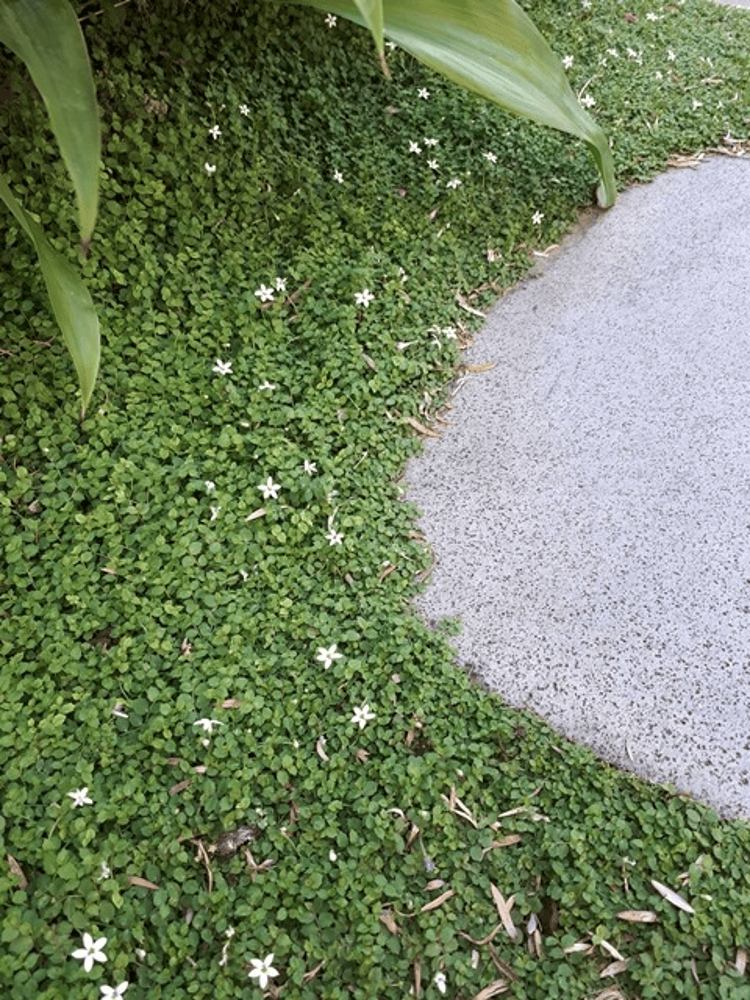
Don’t want a conventional grass lawn? There are many low-growing plants that can be used instead, particularly in parts of a garden that receive little foot traffic, such as between pavers and stepping stones, under trees, or where turfgrass struggles due to shade, dryness, or excess moisture.
One of the major advantages of low-growing groundcovers is their ability to spread across the soil, forming a dense living mat. Once the foliage closes over the surface, it shades the ground and occupies much of the space where weed seedlings would otherwise establish. This does not make the planting completely weed-free, particularly while it is still establishing, but dense groundcover can greatly reduce weed growth. Groundcovers can also protect the soil surface, soften hard landscaping, provide flowers for pollinating insects, and add foliage colour, texture and fragrance that a uniform grass lawn cannot provide.

There is, however, an important distinction between a lawn alternative and a lawn substitute. Many creeping groundcovers can visually replace a lawn without performing the same physical function. A plant that forms a beautiful carpet may tolerate occasional foot traffic but still be damaged if children play on it, dogs repeatedly run over it, or people walk along the same route several times each day.
Other plants occupy a middle ground. Chamomile can be grown as a low, aromatic lawn where traffic is light. White clover can be part of a mowable lawn. Suitable low-growing grasses can provide genuine turf where the climate and soil suit them. These plants still differ considerably in their tolerance of wear.
Choosing the right lawn alternative therefore starts with the site and the function of the space, not with choosing whichever groundcover looks most attractive at the nursery.
Understanding What a Lawn Alternative Can and Cannot Do
When I worked in the garden nursery industry, people often asked about lawn alternatives. When I asked how much ground they intended to cover, answers such as 100 square metres (over 1,000 square feet) were not uncommon. What they often had in mind was removing a large expanse of lawn and replacing the entire area with an ornamental creeping groundcover.
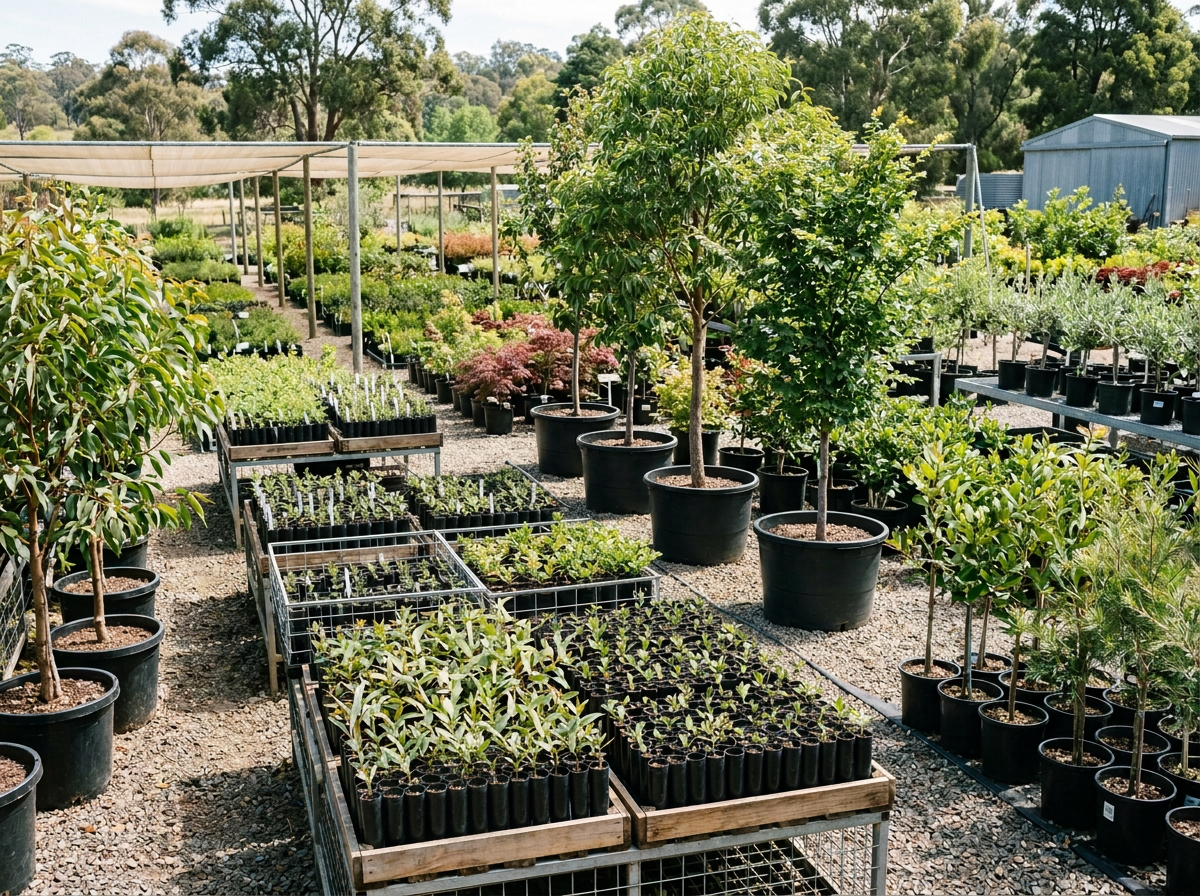
The first problem with this approach is cost. Many of these plants are sold individually in small pots, plugs or tubestock rather than as inexpensive lawn seed. Depending on the plant’s mature spread and how quickly complete coverage is required, filling a large area can require hundreds or even thousands of plants.
There is no universal planting rate that works for every lawn alternatives. The common guideline of about four plants per square metre is too broad, as plants spread at varying speeds. For instance, a groundcover that can spread 50 cm (20 inches) over time can be planted further apart than one that only spreads 15–20 cm (6–8 inches). Planting more densely can speed up the formation of a carpet and reduce weed growth by limiting their space, but it also raises the initial cost significantly.
Chamomile lawns demonstrate this quite clearly. Lawn chamomile is commonly planted 10–20 cm (4–8 in) apart. At 20 cm centres, there are approximately 25 planting positions per square metre; at 10 cm centres, there are approximately 100. This is one reason chamomile lawns are generally used for relatively small feature areas rather than enormous expanses of ground.
The second problem is traffic. Most ornamental groundcovers do not tolerate repeated heavy wear. Creeping plants spread via stems that grow across or just above the soil surface, and repeated trampling can crush leaves, break stems and compact the soil beneath them. Once a regular walking route is established, the plants along that line are repeatedly damaged, and a bare track can eventually develop.
This is why the purpose of an existing lawn needs to be considered before it is removed. If children use it as a play area, dogs run across it, people regularly entertain on it or it provides the main walking route through the garden, a durable turf surface may still be the most appropriate planting for at least part of that area.
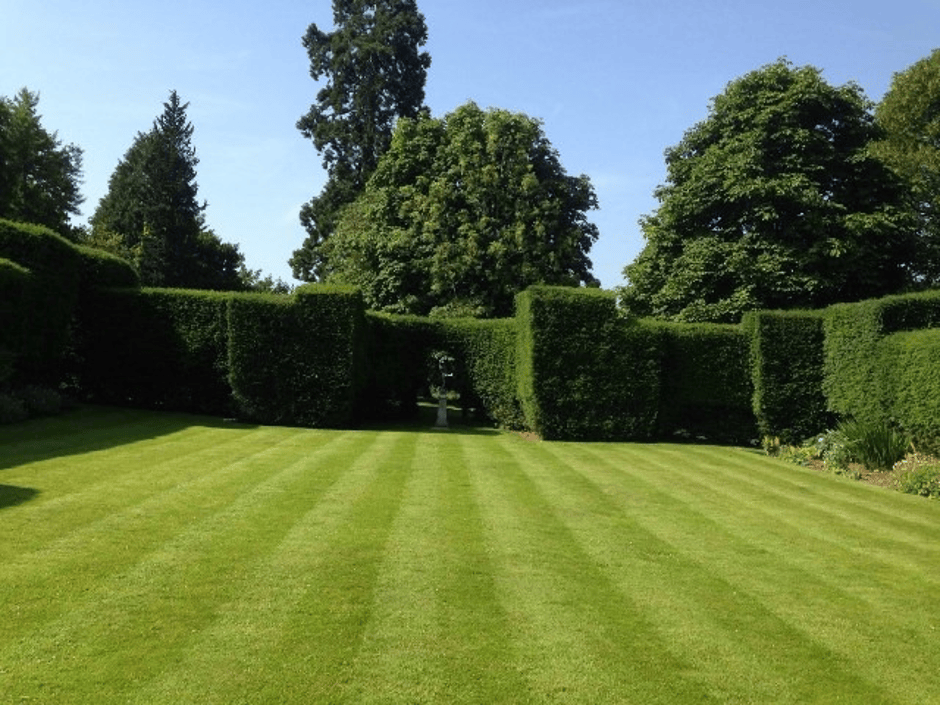
If the lawn is rarely walked on and serves no purpose other than filling empty space, the situation is completely different. It does not need another plant that behaves exactly like grass. It can become a low groundcover planting, a garden bed, an orchard, a pond, a seating area, a path, or any other useful part of the garden.
Maintenance also needs to be considered realistically. Replacing lawn can eliminate or greatly reduce mowing, but it does not eliminate garden maintenance. Newly planted groundcovers need watering until their roots are established. Weeds need to be removed while open soil remains between the plants. Vigorous creeping plants may need edging to stop them spreading into neighbouring beds. Taller flowering plants may need clipping after flowering, and bare or damaged patches occasionally need replanting.
Very flat, dense groundcovers may eventually need little routine attention, while taller forms can become untidy if they are never cut back. The objective is not necessarily to create a garden that requires no work, because living plantings always require some management. The objective is to use plants whose maintenance requirements suit the site and how the area is used.
Choosing the Best Lawn Alternative for the Location
Once the function of the area has been decided, look closely at the growing conditions. Sunlight, summer heat, soil moisture, drainage, winter cold and competition from surrounding plants all determine which lawn alternatives will succeed.
One of the most important distinctions is between hot, dry sites and moist sites. An open position exposed to strong summer sun, particularly beside concrete, bricks or stone, can become considerably hotter and drier than an ordinary garden bed. Paving absorbs solar energy during the day and radiates heat back towards the surrounding plants, while the limited volume of soil between paving stones can dry quickly.

Creeping thyme is particularly useful in these conditions. Several Thymus species and cultivars grow as low mats, including forms of Thymus serpyllum and Thymus praecox. They prefer full sun and freely draining soil and, once established, cope well with relatively dry conditions. They are therefore well suited to rock gardens, path edges, cracks beside paving, stonework and other exposed locations where moisture-loving groundcovers would struggle.

Different creeping thymes do not all grow to the same height. Some remain extremely flat, while others produce taller flowering stems that benefit from being clipped after flowering to keep the plants compact. Their masses of small flowers also provide a useful food source for pollinating insects.
Creeping thyme is sometimes described as being inedible, but that is too broad. Some creeping thyme species and cultivars have leaves that can be used as a culinary flavouring. The more useful distinction is that groundcover thymes are normally selected for their low growth, dense coverage and flowering rather than for culinary quality. Common thyme (Thymus vulgaris) and specifically selected culinary forms are generally better kitchen herbs. Compact groundcover cultivars such as Thymus serpyllum ‘Elfin’ can tolerate some foot traffic and have edible aromatic foliage, but their primary value is as ornamental groundcovers.
Conditions change considerably where more moisture and partial shade are available. Kidney weed (Dichondra repens) is a low-growing, creeping perennial with rounded, kidney-shaped leaves. Its stems spread across the soil and root at the nodes, allowing it to form a continuous mat. It works well in smaller lawn-alternative areas, around pavers, and in sheltered positions where adequate soil moisture is available. Dichondra-type groundcovers can be left unmown or clipped low, but they do not have the wear tolerance of hard-wearing turf and are not suitable for heavily trafficked areas. They are also much less drought-tolerant than dry-site plants such as creeping thyme.

Native violet (Viola hederacea) also thrives where the soil stays moist and the site is partially shaded. It spreads into a soft carpet of rounded leaves and produces small white and violet-coloured flowers. Beneath an open tree canopy, beside shaded paths, or in a protected courtyard, it can provide a much more attractive surface than struggling lawn grass.

Shade, however, should not automatically be taken to mean moist soil. Large, established trees can create very dry conditions beneath their canopies. Their roots draw water from a large volume of soil and compete strongly with smaller plants, while the canopy intercepts some rainfall before it reaches the ground. The result can be dry shade, in which a plant chosen simply for its tolerance of low light may still fail because it cannot tolerate the lack of moisture. Very few plants survive in dry shade.
For this reason, assess light and soil moisture separately. If an area beneath a tree becomes very dry in summer, choose a plant that tolerates both shade and root competition, or be prepared to provide supplementary irrigation. Continuously watering a moisture-loving groundcover simply because it has been planted in the wrong place replaces mowing with another permanent maintenance task.
Matted Pratia is another useful option for areas where moisture is available. The plant is still widely known horticulturally as Pratia pedunculata, but its accepted botanical name is now Lobelia pedunculata. It is a very low, mat-forming perennial whose prostrate stems root at their nodes. The small flowers may be white, blue or mauve, and the plant occurs naturally across an unusually broad range of habitats, from lowland moist forests and riparian areas to swamps, bogs and high-altitude environments.

This variability also explains some of the confusion surrounding plants sold as Alpine Pratia. The name Pratia puberula has been used for a very low-alpine form, but it is not currently recognised as a separate, accepted species in this context. Alpine populations fall within the variable species Lobelia pedunculata. Some have flowers that are more evenly five-lobed and conspicuously patterned with darker bluish veins, so the horticultural observation that alpine forms look different is valid, even though the old separate species name is not.
Corsican mint (Mentha requienii) fills a similar low-growing role but produces a very different effect. It forms an extremely fine carpet of tiny, rounded leaves on slender, creeping stems, often only about 1 cm (0.4 in) high within the main vegetative mat. Disturbing the foliage releases a strong mint fragrance, and tiny lilac flowers appear in the warmer months.
Corsican mint prefers moist but reasonably well-drained soil and performs particularly well in partial shade. It can spread extensively when conditions suit it, so this characteristic should be used rather than fought: plant it where a spreading carpet is wanted and where surrounding paths, paving or garden edges can help define its area.

Pennyroyal (Mentha pulegium) is another low-growing mint that can be used as an aromatic groundcover. It produces a mix of creeping and upright stems, small lilac flowers, and grows in sun or partial shade where moisture is reliable. It can also tolerate heavier, poorly drained soil better than many dry-site lawn alternatives.
Pennyroyal is vigorous enough to spread beyond its intended area, so it is most useful where that ability to cover ground is an advantage or where its spread can be contained. It is not an ordinary edible culinary mint but more of a medicinal herb and insect repellent, specifically used to repel ants.
At the wettest end of the range is Brahmi (Bacopa monnieri). Unlike creeping thyme, which requires well-drained soil, Brahmi naturally grows in marshes, along streams and waterways, on muddy shores, and in other consistently wet environments. Its succulent creeping stems root as they spread, enabling it to form dense mats in moist soil and even around shallow water.

This makes Brahmi useful beside ponds, in bog gardens, along drainage areas and in naturally wet parts of a garden where many conventional lawn plants would struggle. It is not a drought-tolerant groundcover and should not be planted in a dry site unless regular irrigation is available.
Brahmi is a warm-climate plant, so winter conditions matter too. Tender groundcovers often perform better in protected positions than in open, frost-prone areas. Cold air is denser than warm air and flows downhill, collecting in depressions and behind barriers, where frost can be more severe. In climates near a plant’s lower temperature limit, avoiding these frost pockets can make a substantial difference.
Brahmi is also an edible medicinal herb used in Ayurvedic medicine, particularly for memory, learning and neurological health. Its small succulent leaves can be eaten raw, added to salads and sandwiches, cooked in soups or as a vegetable, or pickled, while the flowers are also edible. For a detailed discussion of Brahmi’s medicinal properties and the research on its neuroprotective effects, see [The 8 Best Herbs for Preventing and Treating Alzheimer’s Disease and Dementia].
Not all lawn alternatives need to be ornamental creeping groundcovers. If the aim is to retain a mowable open surface, plants that behave more like conventional lawn may be more appropriate.
Roman chamomile (Chamaemelum nobile), formerly widely listed as Anthemis nobilis, has a long history of use as an aromatic lawn. The ordinary flowering species develops longer stems and white daisy-like flowers, so it requires more frequent clipping to maintain a close lawn appearance. The dwarf cultivar ‘Treneague’ is much better suited to this purpose because it grows only about 5–10 cm (2–4 in) high and does not flower. It can be left unmown, although straggly growth can be lightly trimmed.
Chamomile prefers sun or light, dappled shade and soil that retains moisture without becoming waterlogged. It is not a hard-wearing recreational lawn. Even established chamomile tolerates only light pedestrian traffic, so stepping stones should be provided wherever people regularly cross the area.
White clover (Trifolium repens) offers another lawn alternative. Unlike most ornamental groundcovers, it can be established from seed and mixed with grasses across much larger areas. It is a creeping perennial legume that spreads by stolons and by rooting at the nodes, producing white to pale-pink flower heads that provide nectar for pollinating insects.
Clover also forms a symbiotic association with nitrogen-fixing bacteria in nodules on its roots. These bacteria convert atmospheric nitrogen into forms that enter the plant-soil nutrient cycle, which is one reason clover can persist in low-nitrogen lawns and contribute nitrogen to associated grasses. White clover can be included in mixed low-growing or pollinator lawns, although its tolerance of heavy foot traffic remains lower than that of hard-wearing turfgrass.
Where a genuine grass surface is still desired, locally adapted turf-forming grasses are another option. Weeping grass (Microlaena stipoides) is one example. This perennial Australian grass naturally ranges from prostrate to more upright forms, and selections have been developed specifically for turf and amenity use. ‘Griffin’ is a fine-leaved, prostrate turf selection that, once established, can be maintained at approximately 20–40 mm (0.8–1.6 in) and performs particularly well in shade on suitably acidic soils. ‘Shannon’ was selected as a lower-maintenance amenity grass.
The broader lesson applies anywhere in the world. If the area genuinely needs to remain a large mowable surface, investigate grasses, sedges and other turf-forming plants adapted to the local climate, rather than assuming the only alternative is planting thousands of individual ornamental groundcovers.
Preparing and Establishing a Lawn Alternative
Once a suitable plant has been chosen, proper establishment determines how quickly it forms a dense cover.
Begin by thoroughly removing existing weeds. This is particularly important for perennial weeds and vigorous lawn grasses that spread via rhizomes, stolons, bulbs or persistent roots. A new lawn alternative will eventually suppress many germinating weeds once it forms a dense canopy, but young plants cannot smother an already established perennial weed growing through them.
If an old lawn is being replaced, ensure the existing grass is properly removed before installing the new plants. Leaving living fragments of vigorous turf among small groundcover plants creates a difficult maintenance problem because the old grass becomes intertwined with the replacement planting and is much harder to remove.
Soil preparation should suit the chosen species rather than following a single formula for every lawn alternative. Creeping thyme needs free drainage and should not be planted in soil that remains saturated. Chamomile also dislikes waterlogging. Corsican mint needs more consistent moisture. Brahmi can grow in genuinely wet ground. Improving the soil therefore means correcting conditions that are unsuitable for the plant being grown, not automatically adding the same amendments everywhere.
Plant spacing then determines how quickly the surface closes. Closer spacing costs more but provides faster coverage, reduces the amount of exposed soil, and shortens the period during which weeds can become established. Wider spacing reduces initial costs but requires more patience and more weed control while the plants spread.
The expected mature spread and growth rate of each species should be used to calculate plant numbers. There is no universal rule for the number of lawn-alternative plants required per square metre.
Watering is especially important during establishment. Even a drought-tolerant plant such as creeping thyme starts with a small root system largely confined to the original root ball. It cannot immediately draw water from the same volume of soil as an established plant. Regular watering is therefore necessary until new roots have grown into the surrounding soil.
After establishment, irrigation should match each plant’s natural requirements. Creeping thyme can tolerate increasingly dry conditions. Native violet and Corsican mint need more reliable moisture. Brahmi remains a moisture-loving plant throughout its life. Calling all of these plants “lawn alternatives” does not imply they have the same water requirements.
The same principle applies to ongoing maintenance. Flat groundcovers may eventually need little more than occasional edging and weeding. Taller thymes can be clipped after flowering. Flowering chamomile requires more trimming than dwarf, non-flowering forms. Mints may need to be restrained at their edges. Clover or grass-based lawns still need mowing if a close surface is desired.
A good lawn alternative reduces unnecessary work because the plant suits the site. A poorly chosen one simply swaps mowing for constant watering, trimming or replacement.
Protecting Alternative Lawns with Access Paths
Once the lawn alternative is established, regular access needs to be directed onto durable surfaces.
If the area lies between the house and a garage, garden shed, barbecue area, clothesline, gate, vegetable garden, or another frequently visited destination, there should be a path connecting those places. This prevents concentrated foot traffic from gradually destroying the groundcover.
Pavers and stepping stones work particularly well because the groundcover can grow around their edges and sometimes between them, while most of a person’s weight is borne by the hard surface. Gravel, crushed rock, mulch and other path materials can also be used where appropriate.
Paths provide another practical benefit in wet weather by keeping feet away from muddy or saturated soil, but their layout is as important as their construction.
They do not need to be perfectly straight. Gentle curves can add visual interest and make a garden feel less rigid. What they should not do is wander unnecessarily.
People typically choose reasonably direct routes. If a path takes a wide detour while the destination is clearly visible straight ahead, someone will eventually walk directly across the planting to create a shortcut. The most successful path therefore combines good garden design with the way people actually move through the space.
What If There Is Too Much Space to Fill?
If a lawn covers a very large area, replacing the entire lawn with a single groundcover may not be the most sensible solution.
The same question should be asked before creating a very large conventional lawn: what purpose does all this open space serve?
If part of it is needed for recreation, retain enough durable lawn for that purpose. If another part is simply empty ground that is mown because it has always been mown, there are many more useful ways to use it.
Fruiting trees can turn part of the area into productive space while also providing summer shade. Ornamental trees can add height, structure, flowers, autumn colour or interesting bark. Garden beds can support vegetables, herbs, perennial flowers, shrubs or mixed plantings. A pond can introduce aquatic habitat and water into the landscape. Pergolas, arbors, gazebos and seating areas can make parts of the garden useful for people. Paths can connect these different areas, while lawn-alternative groundcovers fill lower-traffic spaces between them.
The aim is not simply to replace a vast grass monoculture with another equally vast monoculture. Dividing the area into several functional spaces generally creates a more useful and visually interesting garden.
Where a large open living surface genuinely is required, a seed-grown clover mixture, mixed low-growing lawn or locally appropriate turf-forming grass may be much more practical than planting thousands of individual creeping groundcovers.
In summary, lawn alternatives work best when they are treated as different ways to use garden space rather than as universal substitutes for turfgrass.
A conventional lawn still makes sense where a durable, open surface is needed for regular recreation, pets, or heavy foot traffic. In parts of the garden where that durability is unnecessary, low-growing groundcovers can offer very different benefits. They can cover bare soil, reduce weed establishment, soften paving, add flowers and fragrance, provide food and habitat for insects, and eliminate the need to mow areas that never needed to be lawns in the first place.
The key is to start with the site’s conditions and function. Determine how much traffic the area receives, how much sun and summer heat it receives, whether the soil is dry, moist or genuinely wet, how well it drains, whether tree roots compete strongly for water, and whether frost is likely to be a problem.
Then choose a plant whose natural growth habit suits those conditions.
When the plant, place and function all match, a lawn alternative becomes more than a different-looking lawn. It becomes part of a better-designed garden.
References
- Australian National Botanic Gardens. (n.d.). Viola hederacea or native violet. Australian Government. https://www.anbg.gov.au/gardens/News/flowers_summer14.html
- Klett, J. E., & Cox, R. A. (1995, December). Ground cover plants. Colorado State University Extension. https://extension.colostate.edu/resource/ground-cover-plants/
- National Institute of Diabetes and Digestive and Kidney Diseases. (2020, March 28). Pennyroyal oil. In LiverTox: Clinical and research information on drug-induced liver injury. National Library of Medicine. https://www.ncbi.nlm.nih.gov/books/NBK548673/
- North Carolina State University Extension. (n.d.). Bacopa monnieri. North Carolina Extension Gardener Plant Toolbox. https://plants.ces.ncsu.edu/plants/bacopa-monnieri/
- NSW Department of Primary Industries and Regional Development. (n.d.). Microlaena stipoides (Microlaena or weeping grass). https://www.dpird.nsw.gov.au/agriculture/pastures-and-rangelands/rangelands/publications-and-information/grassedup/species/microlaena
- Pase, M. P., Kean, J., Sarris, J., Neale, C., Scholey, A. B., & Stough, C. (2012). The cognitive-enhancing effects of Bacopa monnieri: A systematic review of randomized, controlled human clinical trials. Journal of Alternative and Complementary Medicine, 18(7), 647–652. https://doi.org/10.1089/acm.2011.0367
- Royal Botanic Gardens Victoria. (2019, February 6). Dichondra repens. VicFlora. https://vicflora.rbg.vic.gov.au/flora/taxon/3b9d7141-690a-4800-91d9-81b7c62a9dc0
- Royal Botanic Gardens Victoria. (2022, June 22). Lobelia pedunculata. VicFlora. https://vicflora.rbg.vic.gov.au/flora/taxon/164e01e1-4712-4348-8307-5501b7378ae8
- Royal Botanic Gardens, Kew. (n.d.). Mentha requienii Benth. Plants of the World Online. Retrieved September 16, 2026, from https://powo.science.kew.org/taxon/urn:lsid.org:names:451048-1
- Royal Horticultural Society. (n.d.). Chamomile lawns and alternatives. https://www.rhs.org.uk/lawns/chamomile-lawns-and-alternatives
- Royal Horticultural Society. (n.d.). Mentha corsica: Corsican mint. https://www.rhs.org.uk/plants/63599/mentha-corsica/details
- Royal Horticultural Society. (n.d.). Mentha pulegium: Pennyroyal. https://www.rhs.org.uk/plants/59137/mentha-pulegium/details
- University of California Statewide Integrated Pest Management Program. (n.d.). Dichondra. University of California Agriculture and Natural Resources. https://ipm.ucanr.edu/TOOLS/TURF/TURFSPECIES/dichondra.html
- University of Minnesota Extension. (n.d.). Dutch white clover. https://extension.umn.edu/garden-and-home/yard-and-garden/gardening-in-minnesota/yard-and-garden-problems/dutch-white-clover

The standards for lawn and lawn alternatives are of course regional. I still can not believe how popular lawns are in some of the chaparral and desert climates like Los Angeles and San Jose. Just a few miles from San Jose, in the Santa Cruz Mountains, lawn is only planted where it actually gets used. It is perfectly acceptable to leave bare ground covered with litter from redwood trees. It makes a nice mulch, but does not let much grow through it. In Trona, bare dusty soil is acceptable because no one wants to go outside in that nasty climate anyway.
Great comment, thanks! There’s nothing as natural as the leaf litter mulch under trees, it breaks down to make amazing soil and supresses and plant growth underneath, Nature has it all worked out!
Hello, we’ve been trying to plant Alpine Pratia (blue flowers) in between our pavers however we are constantly trying to weed it as weeds grow through the Pratia, do you have any suggestions on whether there are weed killers or ideas to remove weeds from between our pavers?
Preparation is the key! First get rid of all the weeds and weed seeds by pouring boiling water between the pavers if gaps are small, if the gaps are larger, loosen the soil and dig in some compost to improve the soil structure so the pratia can get its roots easier into the soil. The soil disturbance will trigger any weed seeds to grow, so leave the soil after digging in the compost for two weeks till all the weeds come up, then weed it and plant, it’s much easier that way. If you have large areas to weed that can’t be done by hand, use an organic weed killer such as ‘Slasher’. Hope this helps! 🙂