
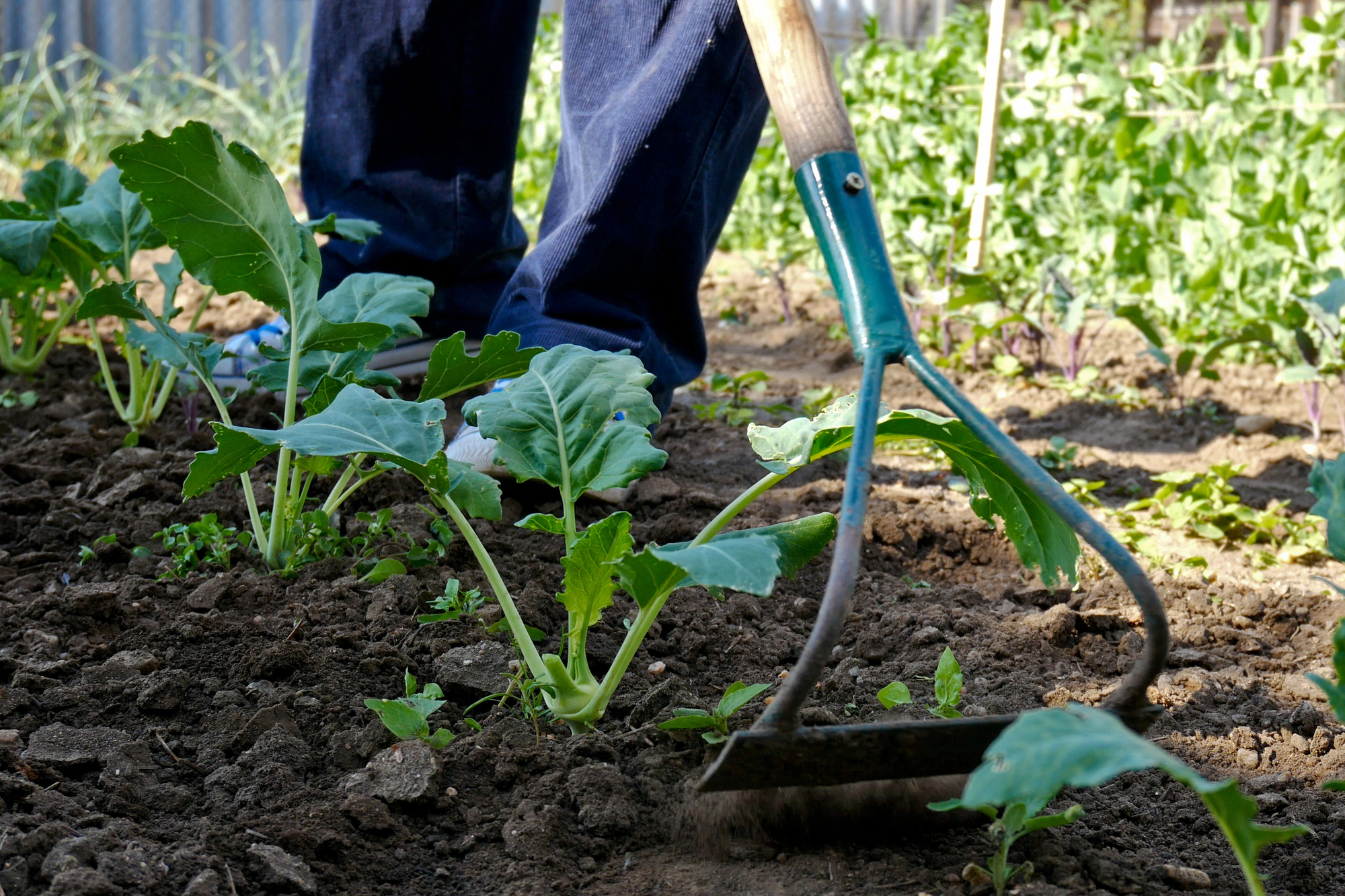

The garden hoe is one of the oldest and most enduring hand tools in cultivation, used for thousands of years to manage soil and control weeds. Despite its simple appearance, the hoe is a highly specialised tool whose effectiveness depends on blade shape, angle, and technique. Modern hoes come in a wide range of designs, each adapted to a particular style of cultivation, soil condition, or planting layout. This guide explains the anatomy of the garden hoe, the main types in common use, how to choose the right one, and how to use and maintain it effectively.
1. Anatomy of a Garden Hoe

A garden hoe consists of two primary components: the blade and the handle. Variations in their design determine how the hoe interacts with soil and weeds.
Blade: The blade is the working end of the hoe and is typically made from forged or stamped steel. Blade shapes vary widely and may be flat, rectangular, triangular, looped, or narrow and elongated. The orientation of the blade relative to the handle—whether perpendicular, angled, or parallel to the ground—determines whether the hoe chops, slices, or skims beneath the soil surface. Most hoes are designed to cut weeds just below the soil line rather than dig deeply.
Handle: The handle provides leverage and control and is usually made from hardwood, fibreglass, or steel. Handle length influences posture and working style: long handles allow standing operation and reduce bending, while short handles provide greater control for detailed work. Handle material affects weight, vibration, and durability.
2. Types of Garden Hoes and Their Uses

Different hoes are designed around distinct cutting actions, and selecting the appropriate type greatly improves efficiency.
Draw Hoe (Garden Hoe): The draw hoe has a flat, rectangular blade set at a right angle to the handle. It is designed to be pulled toward the user, chopping and moving soil. Draw hoes are effective for shaping beds, opening furrows, hilling crops, and breaking up surface crusts. They are less efficient for fine weeding and are best suited to heavier soil work.
Dutch Hoe (Push Hoe): The Dutch hoe has a flat, sharpened blade angled slightly upward and is used with a forward pushing motion just below the soil surface. This action slices weeds off at their roots with minimal soil disturbance. Dutch hoes are highly efficient for maintaining weed-free beds between rows once soil has been prepared.
Stirrup Hoe (Oscillating or Hula Hoe): The stirrup hoe features a loop-shaped blade mounted on a pivot, allowing it to cut on both the push and pull strokes. As the hoe moves, the blade oscillates to maintain the correct cutting angle beneath the soil surface. Stirrup hoes are particularly effective in loose or moderately friable soils and allow rapid weeding over large areas with minimal effort.
Push–Pull Hoe: Push–pull hoes use a rigid, angled blade designed to cut in both directions without a pivoting mechanism. While less adaptive than a stirrup hoe, they are robust and effective for shallow cultivation and weed control where soil conditions are consistent.
Collinear Hoe: The collinear hoe has a narrow blade aligned almost parallel to the soil surface and to the handle. It is used with small, controlled movements to slice weeds at the soil line. This hoe excels at precise weeding in tightly spaced plantings and is often favoured in intensive vegetable gardens.
Warren Hoe (Heart‑Shaped or Ridging Hoe): The warren hoe has a triangular or heart-shaped blade that is effective for forming furrows, working close to plants, and shaping soil. The pointed tip allows accurate placement, making it useful for planting rows and cultivating between established crops.
Onion Hoe: The onion hoe features a narrow rectangular blade designed for shallow cultivation in closely planted crops. Its shape allows weeds to be removed without disturbing shallow root systems, making it particularly suitable for onions and similar vegetables.
3. Selecting the Right Garden Hoe

Choosing a hoe depends on soil condition, planting layout, and the type of work required.
Blade shape and size should match the task. Broad blades suit shaping and soil movement, while narrow or looped blades are better for weeding. For ongoing weed control, slicing hoes are generally more efficient than chopping designs.
Handle length should allow comfortable use without excessive bending. Taller users typically benefit from longer handles, while shorter handles improve control in confined spaces.
Weight influences both cutting power and fatigue. Heavier hoes provide momentum for chopping, while lighter hoes are preferable for repetitive weeding.
Ergonomics matter for frequent use. Well-balanced tools with smooth handles reduce strain on wrists, shoulders, and the lower back.
4. Proper Technique for Using a Garden Hoe
Correct technique improves effectiveness and reduces physical strain.
For weeding, use a hoe with a sharp blade, keep the blade just below the soil surface and use smooth, shallow strokes. The goal is to sever weeds at the root crown rather than uproot large amounts of soil.
When cultivating and loosening soil, use controlled pulling or pushing motions to loosen surface soil without turning deeper layers. This preserves soil structure and reduces moisture loss.
To create furrows, draw the hoe steadily through the soil, adjusting angle and pressure to control depth.
For shaping and hilling, pull soil toward plants in layers rather than moving large volumes at once.
Precision hoes should be used with small, deliberate movements close to the soil surface to avoid damaging crops.
5. Maintenance and Care
Routine maintenance keeps a hoe effective and extends its service life.
After use, remove soil and plant residue from the blade and dry it thoroughly. Hardened soil can be removed with a scraper or wire brush.
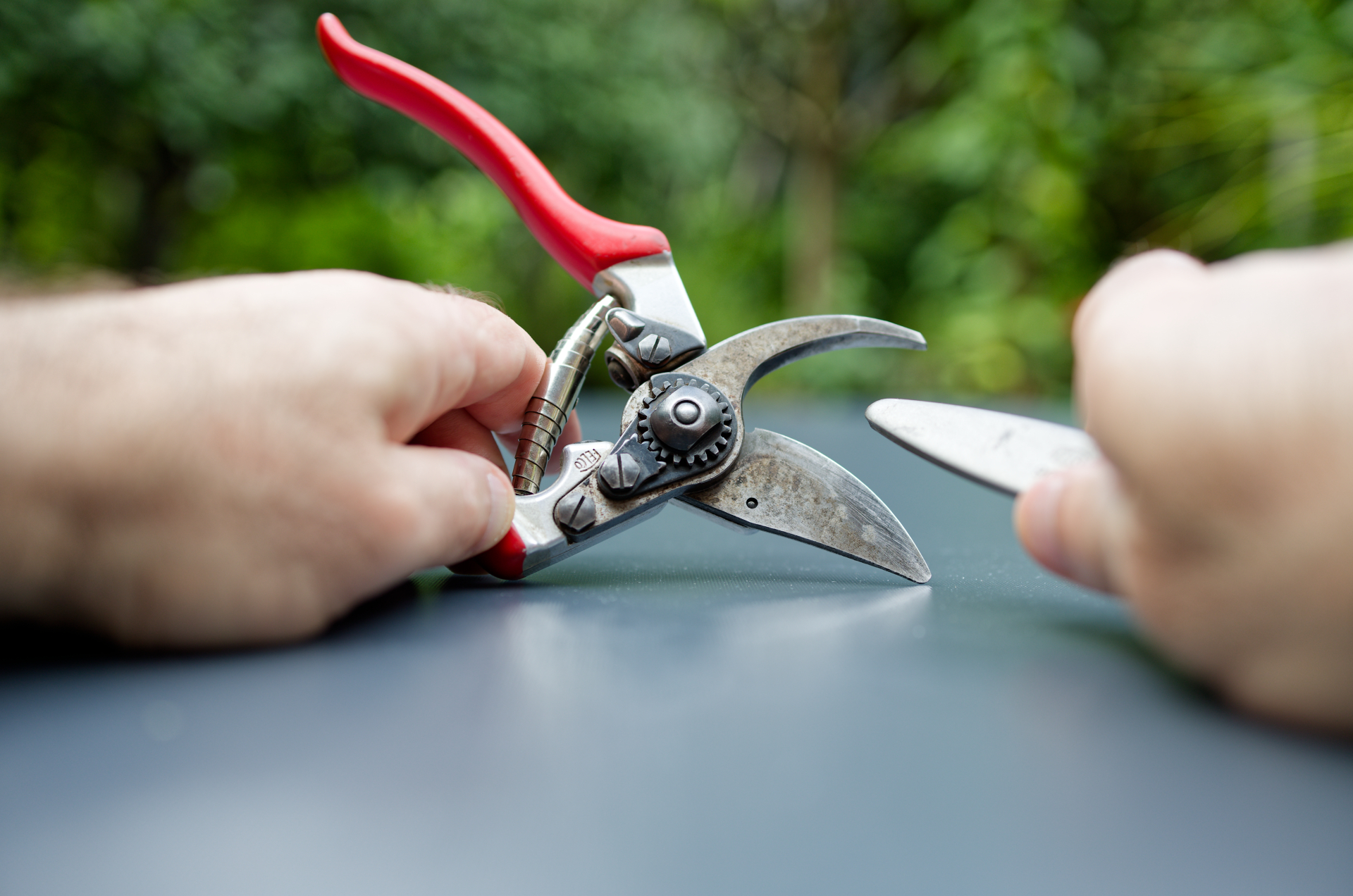
Hoes benefit from regular sharpening, particularly slicing types. Use a file to maintain a durable cutting edge rather than a razor-sharp bevel. Most hoes are sharpened on the working face only, following the original bevel.
To reduce rust, apply a light coat of linseed oil or vegetable oil to clean, dry steel blades. Synthetic mineral oils such as machine oil or penetrating oils such as WD-40 are not environmentally friendly, and are best avoided where tools contact the soil. Store hoes in a dry location, preferably hanging.
Wooden handles should be sanded if rough and treated periodically with linseed oil. Fibreglass and metal handles require minimal care but should be inspected for cracks or loosening.
6. Safety Considerations
Wear sturdy footwear to protect feet from accidental strikes. Maintain an upright posture and use arm and shoulder movement rather than excessive bending. Be alert to stones, roots, and other obstructions that can deflect the blade, and take regular breaks during prolonged use.
In conclusion, the garden hoe is a highly efficient surface-working tool designed for weed control, soil shaping, and light cultivation. By selecting the correct hoe for each task and using proper technique, gardeners can manage weeds effectively while preserving soil structure and reducing physical effort. With regular maintenance and safe handling, a well-chosen hoe remains an indispensable part of the productive garden.
Be the first to reply